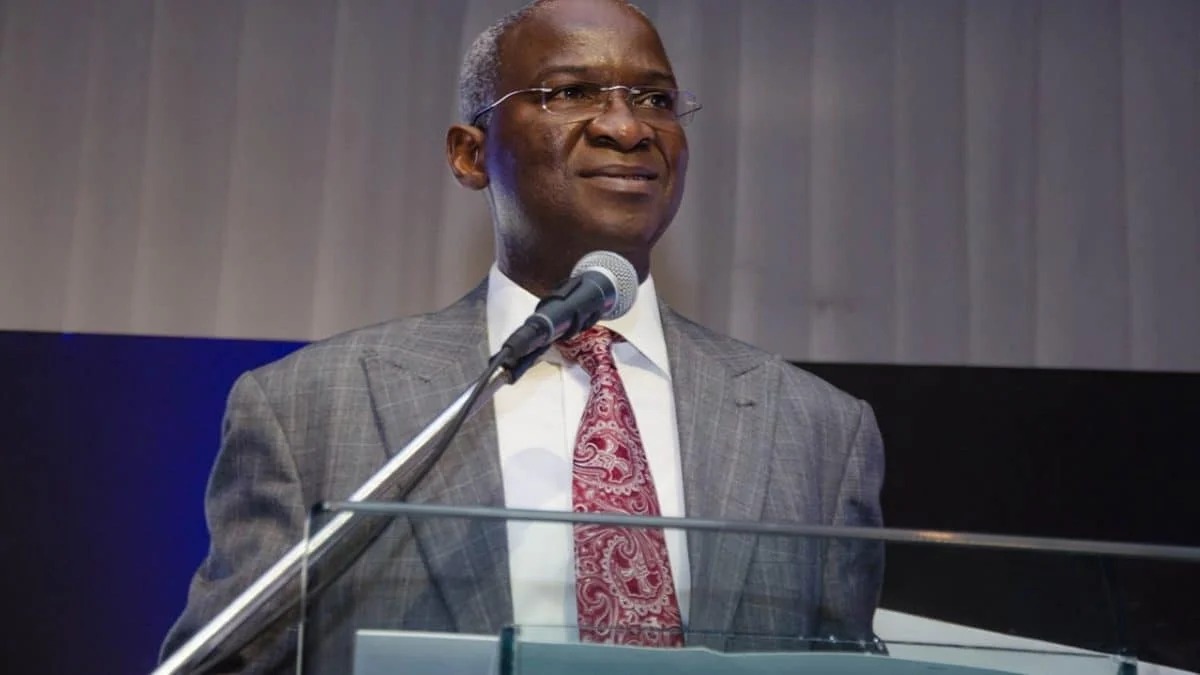
Former Lagos State Governor Babatunde Fashola (SAN) has attributed Nigeria’s prevailing cost-of-living pressures largely to global economic shocks rather than domestic policies alone, citing the lingering fallout of the COVID-19 pandemic, the Russia-Ukraine war, and ongoing conflicts in the Middle East.
Fashola, who also served as Nigeria’s Minister of Works and Housing, made the remarks on Tuesday evening, November 17, 2026, during a live broadcast appearance on Channels Television’s flagship current affairs programme, Politics Today, anchored by broadcast journalist Seun Okinbaloye.
Speaking during the televised interview in Lagos, Fashola argued that Nigeria’s economy is not insulated from severe disruptions to international supply chains, energy markets, and global food production.
He explained that post-pandemic supply bottlenecks initially triggered worldwide price surges, which were subsequently compounded by the Russia-Ukraine conflict’s disruption of critical commodities such as diesel and wheat.
Pointing to escalating hostilities in the Middle East, specifically maritime disruptions around the Strait of Hormuz, a vital global shipping corridor for petroleum products, Fashola noted that international freight and energy costs directly dictate everyday retail prices across Nigerian markets.
“It’s also important to contextualise the factors and the circumstances that have exacerbated the cost-of-living challenges,” Fashola said. “Even the tomato seller knows the Strait of Hormuz and prices his or her goods according to replacement costs now.”
While acknowledging that Nigerian households continue to endure economic hardship and that a gap remains between policy formulation and tangible relief, Fashola urged citizens not to “abort this journey mid-term,” expressing confidence that President Bola Tinubu’s administration is laying the groundwork for sustainable macroeconomic recovery.
Addressing the disconnect between macro-level economic indicators and household finances, Fashola emphasised that rising aggregate growth rates require time to trickle down to everyday budgets. “That’s Economics 101. And I’m talking public finance, not home economics,” he remarked during the programme.
Rather than advocating indiscriminate cash handouts, which he warned would only fuel “hyper-demand inflation”, the former governor pointed to structured policy interventions designed to protect citizens’ disposable income.
He highlighted the nationwide rollout of Compressed Natural Gas (CNG) infrastructure to lower transport costs and the Nigerian Education Loan Fund (NELFUND) as targeted cushions relieving financial pressure on families.
Turning his attention to the political landscape ahead of the 2027 general elections, Fashola challenged opposition parties to declare whether they would dismantle NELFUND, noting that the scheme currently supports over one million beneficiaries.
He also dismissed proposals by former Vice President Atiku Abubakar to restore fuel subsidies, describing the pledge as “not realistic” given Nigeria’s domestic crude oil supply constraints.