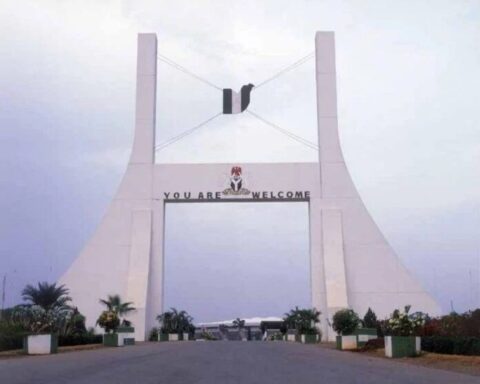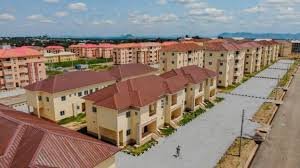
The Federal Government of Nigeria has formally initiated the application process to secure a new $500 million credit facility from the World Bank to set up a dedicated infrastructure financing platform aimed at closing the country’s severe national infrastructure funding deficit.
According to official project documents updated by the World Bank on November 4, 2026, the proposed facility forms the financial core of a broader $3.85 billion initiative titled the Nigeria INFRAGROW Project.
The World Bank Executive Board has scheduled the final approval vote for May 25, 2027, just four days before the constitutional May 29 presidential inauguration, raising political and fiscal questions about debt commitments made in the final days of an outgoing administration.
Under the proposed framework, the Federal Ministry of Finance will act as the official borrower on behalf of the country, while the Nigeria Sovereign Investment Authority (NSIA) has been designated as the primary implementing agency.
The financial architecture relies on private sector capital mobilization, with the International Finance Corporation (IFC) and the Multilateral Investment Guarantee Agency (MIGA) serving as co-investors and credit risk guarantors to attract institutional investors.
The formal timeline established by the multilateral lender following the initial November 4 disclosures schedules a Technical Design Review at the World Bank Headquarters in Washington, D.C., on January 21, 2027, preceding the final board decision in late May.
In its project evaluation report, the World Bank noted that Nigeria faces an annual infrastructure funding gap estimated at $100 billion, calling it a binding constraint on economic growth, fiscal sustainability, national competitiveness, and job creation.
The bank explained that the INFRAGROW operation is designed to build domestic institution-level capacity while de-risking private investments to expand sustainable energy, transport, and water infrastructure nationwide.
However, the bank also classified the environmental and social risk rating for the platform as high. Evaluators cited concerns over potential land acquisitions, physical displacement of local communities, and occupational health hazards associated with large-scale public works projects across the country.
Spokespersons for the Ministry of Finance and the NSIA maintained that the structured de-risking mechanisms embedded within the project will leverage up to $3.35 billion in private sector investments, ultimately easing direct pressure on public treasury reserves despite the political debates surrounding the timing of the approval.