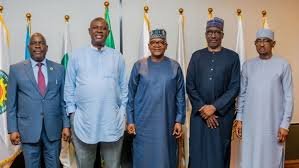
The Central Bank of Nigeria (CBN) reaffirmed its commitment to boosting foreign exchange liquidity and maintaining market transparency during a quarterly monetary policy briefing on Monday morning, November 9, 2026.
Addressing financial institutions, market dealers, and media representatives at 10:00 AM inside the CBN Headquarters Auditorium in Abuja, apex bank officials reviewed early trading across official foreign exchange windows. As trading opened for the week at the Nigerian Autonomous Foreign Exchange Market (NAFEM), the naira traded steadily at ₦1,349.33 per US dollar.
Hakama Sidi Ali, Acting Director of Corporate Communications at the Central Bank of Nigeria, addressed the audience on the regulator’s policy direction. She emphasized that structural reforms within the official foreign exchange window continue to produce positive results.
Ali explained that the apex bank remains fully committed to expanding dollar liquidity across commercial banks, suppressing unearned currency speculation, and guaranteeing that legitimate demands for foreign exchange, such as import bills, international tuition, and medical services, are efficiently met through approved banking channels.
The private sector’s perspective was presented shortly after in Lagos. Speaking from the Lagos Chamber of Commerce and Industry (LCCI) Secretariat in Victoria Island at an 11:30 AM press briefing, Dr. Chinyere Alabi, Vice President of the LCCI, offered a practical assessment of the currency’s behavior.
Alabi noted that while the naira’s relative stabilisation around the ₦1,345 to ₦1,350 exchange corridor allows domestic manufacturers and business owners to draft short-term operational budgets with higher predictability, consistent dollar supply remains the ultimate metric for sustaining raw material orders and maintaining production capacity.
The central bank’s morning gathering in the capital and the private sector response in Lagos underscore a shared focus on market predictability.
Financial analysts observe that ongoing foreign exchange management strategies, supported by stable crude oil revenue and domestic debt market participation, should help maintain currency stability through the fourth quarter.