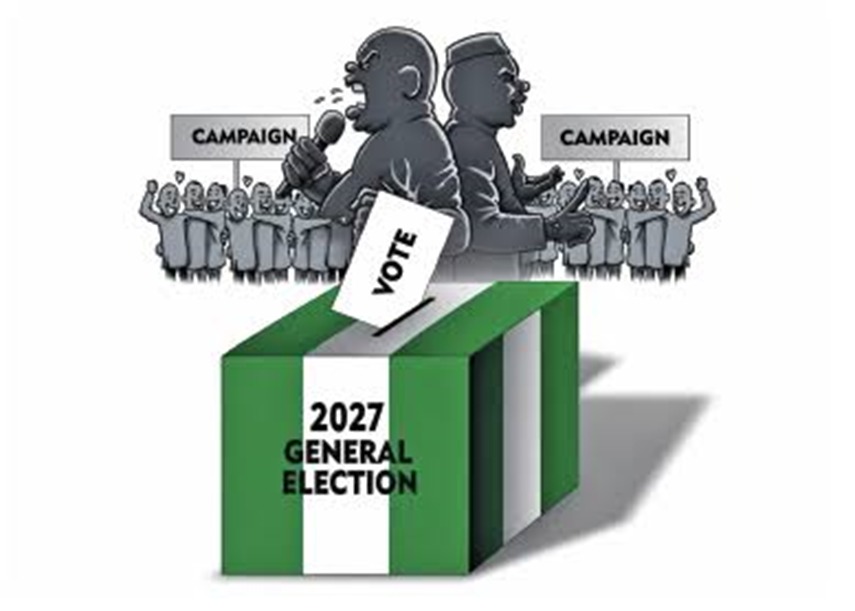
As Nigeria grapples with another election season, the era of carnival-like flamboyant and empty political campaigns should be over in view of the untold hardship in the land. Nigerians are fed up with the betrayal and deceit by the political class. With the birth of democracy in 1999, the plight of ordinary citizens has not changed for good.
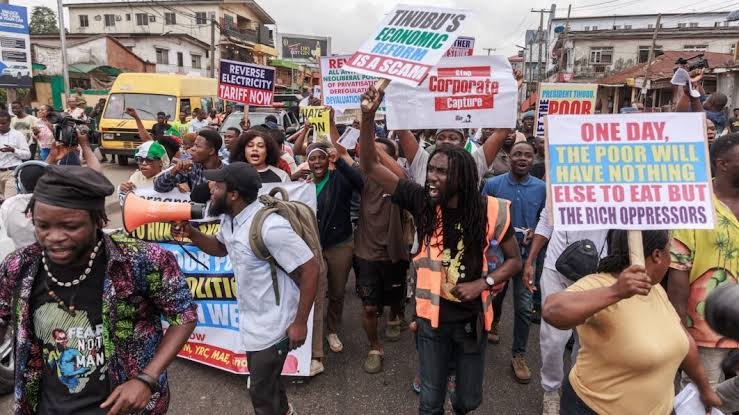
Instead, the advent of the ruling APC administration has visited Nigerians with hardship, frustration and anomie in every facet of life. Millions of people have lost faith in political campaigns except if there is promise of benefit in cash or kind.
As it were, before now, the campaign season often is made into a carnival. With the lifting of the ban by INEC since August 19, 2026 – our highways disappear under billboards, our skies throb with helicopters, our streets choked with convoys of SUVs, and our airwaves drown in jingles. Presidential candidates now budget N15 billion to N30 billion for campaigns that last 5 months. And yet, with all the noise, what does the voter gain in return? The flamboyant campaigns are built on three illusions:
First is that crowd equals votes. Politicians rent crowds at N3,000 per head, bus them from three states, give them branded T-shirts and caps, and film them with drones. The aerial shot looks massive on TV. But in 2023, candidates who pulled the largest crowds in Kano and Lagos still lost those states at the polling unit. Crowds cheer, voters decide in silence.
Second, loud noise equals credibility. Parties spend billions on giant stages, foreign musicians, private jets branded with party logos. In Osun 2022, a candidate spent an estimated N4 billion on billboards and media, his opponent spent less than half but spent time in ward meetings. The flamboyant lost by 28,000 votes. Why? Because voters were tired with flamboyant dramas, not spoken with.
Third, money equals message: In 2023, presidential campaign expenditure exceeded N1.2 trillion across all parties – more than INEC’s entire budget. Yet Afrobarometer shows 62 percent of Nigerians could not recall a single policy promise from their preferred candidate, only the slogan and the cap colour. Flamboyance replaces substance. It is all deceit. What makes flamboyance futile in 2027? Four realities make 2027 the worst year to be flamboyant:
a) The voter is broke and angry. Inflation is more than 28 percent; youth unemployment at 33 percent. When politicians land in a helicopter in villages where people have not seen electricity for weeks, they do not inspire – rather they insult. Flamboyance now reads as “he is spending the money he stole” not “he is capable.”
b) BVAS has killed magic numbers. Politicians can no longer bus and inflate with one man, one BVAS accreditation. All the billboards in the world cannot accredit one ghost voter. Elections are now won at the 176,846 polling units, not at Eagle Square rallies.
c) Gen Z is not watching NTA. As many as 60 percent of registered voters for 2027 are under 35. They are on TikTok, X, WhatsApp Channels. They fact-check a promise in 10 seconds. They are immune to convoys; they are allergic to waste. A candidate dancing on stage with an imported artiste loses them. A candidate answering 10 unscripted questions in pidgin English on Instagram Live wins them.
d) The law is finally biting. Electoral Act 2026 caps presidential campaign spending at N5 billion and demands audited returns. INEC’s joint monitoring team with EFCC and NFIU is tracking helicopter charters, billboard companies, and media buys. Flamboyance leaves a paper trail that is now prosecutable.
What wins instead? The future of campaigns in Nigeria is not louder, it is leaner and closer. Ward-level conversations: In 2023, Peter Obi’s town-halls in markets and Labour’s door-to-door without money proved that retail politics travels faster than a convoy.
Policy clarity over pageantry: One clear promise – “I will fix power in 24 months, here is how” – repeated in every language, beats 20 billboards with smiling faces. Digital accountability: Live debates, public manifesto breakdowns, and citizen Q&A where candidates cannot hide behind a stage.
Flamboyant campaigns in Nigeria were never about persuading voters. They were about intimidating opponents and impressing financiers. They signalled: “We have money to burn, so we have already won.”
But 2027 voters are poorer, smarter and more cynical. They have seen that the candidate with the longest convoy builds the shortest road.
The candidate who understands that a single meeting under a mango tree in Abakaliki is worth more than a million-naira drone shot over Abuja will win on January 16. The rest will have beautiful posters for a funeral.
What wins in 2027 is not the longest convoy, but the most honest conversation. It is the ward-level town hall under a mango tree in Abakaliki, not the drone shot over Abuja.
Retail politics proved its power in 2023. Labour’s door-to-door without cash, and market town-halls where candidates were questioned without scripts, travelled faster and deeper than any convoy. That lesson must be learnt.
The 2027 voter is poorer, smarter and more cynical. He has seen that the candidate with the longest convoy often builds the shortest road. The candidate who understands this will win on January 16. The electorates can no longer be easily deceived with empty campaign billboards and frivolities. The people have learnt their lesson.
Dr. Onyekakeyah, a former member of The Guardian Editorial Board, is a public affairs commentator and columnist for Daily Query.