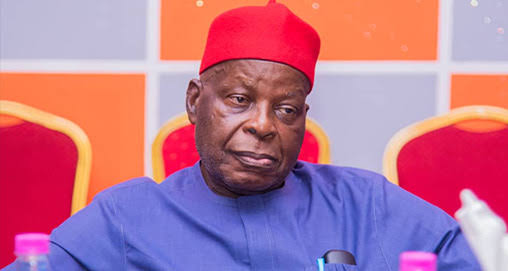
Former Inspector-General of Police and former Chairman of the Police Service Commission, Sir Mike Okiro, has called for robust constitutional safeguards to protect police leadership from political abuse as Nigeria moves closer to establishing state police forces.
Speaking during an exclusive media interview at his residence in Abuja on Monday, Sir Mike Okiro addressed the operational, financial, and administrative mechanics of introducing sub-national policing across the federation.
He emphasized that while decentralized policing addresses local security challenges, it requires explicit legal frameworks to prevent state governors from turning local commands into private political instruments.
Central to his argument is the need for strict checks and balances embedded directly within the ongoing constitutional amendment process. Section 214 of the 1999 Constitution, currently undergoing legislative review with concurrence from nearly 30 State Houses of Assembly, must be carefully re-engineered to prevent state executives from exercising total operational authority over local commands.
”Governors could become so powerful that they exploit their positions,” Okiro said during the session. “There should be checks and balances to make it impossible for a governor to have 100 per cent control. This is a federation, and no governor should be able to take actions detrimental to other states.”
Okiro stressed that both the Inspector-General of Police at the federal level and sub-national Commissioners of Police must be legally insulated from arbitrary removal or political coercion, particularly during election cycles and inter-state disputes.
Addressing financial sustainability, the former police chief noted that state governments will bear full financial responsibility for funding their respective forces once presidential assent is granted.
He explained that states can draw from expanded security votes and increased monthly allocations from the Federation Account Allocation Committee to fund salaries, infrastructure, and modern equipment.
However, Okiro warned against fragmented operational standards across state lines. To prevent lawlessness and maintain professional ethics, all state police recruits must undergo standardised national training programs managed by a centralised oversight body to guarantee human rights compliance, unified tactical protocols, and seamless inter-agency cooperation.