Disability advocates, public finance analysts, and media experts have described the ₦8.2 billion total allocation for persons with disabilities in the 2026 Appropriation Act as grossly inadequate, calculating that the sum translates to roughly ₦234 to ₦273 per individual for Nigeria’s population of over 30 million disabled citizens.
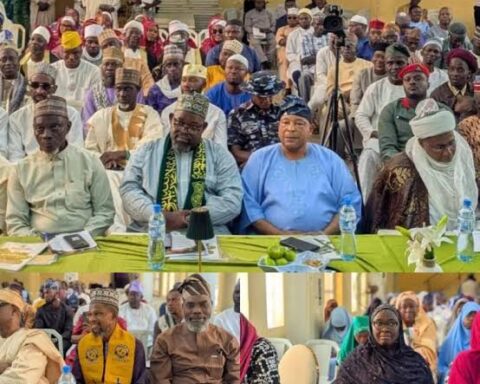
The panel voiced these concerns during a virtual media round-table hosted by PWDSpotlight on Sunday evening, November 1, 2026. Key stakeholders warned that persistent underfunding and poor budget execution threaten to stall the implementation of the Discrimination Against Persons with Disabilities (Prohibition) Act.
A detailed analysis of the 2026 Appropriation Act presented by BudgIT public finance analyst Adisa revealed that out of the total ₦8.2 billion allocation, the largest share, ₦2.0044 billion, is slated for awareness campaigns and policy development. Infrastructure construction projects account for ₦1.8600 billion, while ₦1.4130 billion has been earmarked for skills acquisition and empowerment initiatives.
Adisa noted that while sub-national and national policies exist on paper, actual fiscal allocations consistently fail to reflect the population’s real economic needs. He emphasized that scrutiny around how ministries, departments, and agencies implement cross-cutting disability mandates will intensify ahead of the 2027 general elections.
Expanding on the financial realities, BOFIM founder and BO News publisher Blessing Oladunjoye pointed out that although ₦8.2 billion appears significant as a single figure, its per-capita value is negligible. She urged journalists to look past top-line announcements and aggressively monitor actual disbursements, procurement transparency, and tangible outcomes on the ground.
Disability rights advocate and journalist Daud Olatunji emphasized that Nigeria has largely moved past the policy formulation stage, with over 30 of the 36 states having already enacted sub-national disability laws. He stressed that moving from policy to action requires substantial budget backing, asserting that persons with disabilities must be involved not just as beneficiaries, but as active participants, suppliers, and contractors in decision-making processes.
Echoing these demands, BudgIT representatives called for full disclosure of project costs, contractors, beneficiaries, and actual fund releases, criticizing the historical exclusion of disabled citizens from primary budget preparation processes.
The panel concluded with a collective call for civil society organisations, disability coalitions, and the press to audit procurement across all government agencies and track 2026 budget implementation closely. They urged the Federal Government to revise future annual allocations upwards to ensure equitable, inclusive growth across all geopolitical zones.