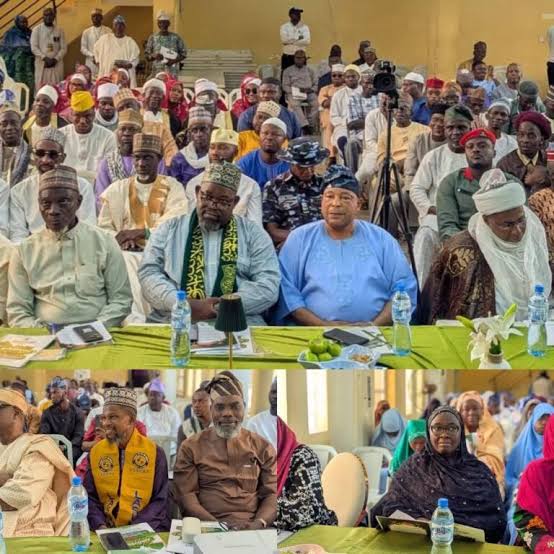
Islamic scholars, legal experts, and urban planning officials have warned that widespread deficiencies in property documentation, institutional governance, and environmental hygiene pose severe threats to the long-term sustainability and legal standing of several mosques across Lagos State.
The warning was issued on Sunday, November 1, 2026, during the annual flagship conference organized by the Mosque Guidance and Development Lagos Initiative (MGDLI). Held from 9:00 AM to 1:00 PM at the Lagos Central Mosque on Lagos Island, the program convened stakeholders around the theme “Building Better Mosques: Documentation, Good Governance and Hygiene Environment.”
Delivering the keynote paper, Prof. Saheed Timehin of the Department of Foreign Languages at Lagos State University (LASU) emphasized that places of worship must reflect Islamic values through administrative transparency, complete record-keeping, and stringent sanitation.
He observed that many facilities currently operate without structured ledgers for finances, assets, or membership, leaving them vulnerable to leadership squabbles and the total loss of property. To safeguard these sacred assets, Prof. Timehin called for the immediate establishment of dedicated sanitation committees, allocated cleaning budgets, and meticulous land record preservation, including survey plans and waqf deeds.
Addressing the regulatory and legal risks, Dr. Oladimeji Animashaun, General Manager of the Lagos State Urban Renewal Agency (LASURA), warned that mosques built without approved building plans or registered titles face imminent government enforcement actions, including demolition.
Licensed surveyor Alhaji Adegbenga Ojikutu echoed these concerns, noting that treating donated mosque land as family property leaves religious facilities exposed to illegal land sales. He urged land donors and community leaders to execute proper deed transfers, secure the Lagos State Governor’s consent, and register titles directly in the name of the mosque.
In his remarks on administrative integrity, former Lagos State Commissioner for Home Affairs, Hon. AbdulHakeem AbdulLateef, cautioned mosque administrators against running religious institutions as personal sole-proprietorships. He advocated instead for board-based governance structures anchored on strict public accountability and institutional oversight.
Highlighting public health concerns, Chief Imam Abdul-Raham Dauda of Satellite Town, Lagos, expressed grave concern over deteriorating environmental standards in several worship centers. He urged mosque managers to enforce strict hygiene regulations, retain dedicated cleaning staff, and ensure ablution areas are continuously maintained, warning that unsanitary worship conditions spread communicable diseases and directly contradict Islamic teachings on cleanliness.
The conference, chaired by legal practitioner and community advocate Dr. Muiz Banire, SAN, and moderated by Hajia Shakirah Adunola, concluded with a unified call for mosque committees statewide to adopt formal legal compliance, regularise their planning approvals, and institutionalize routine maintenance protocols to protect their spiritual and community spaces.