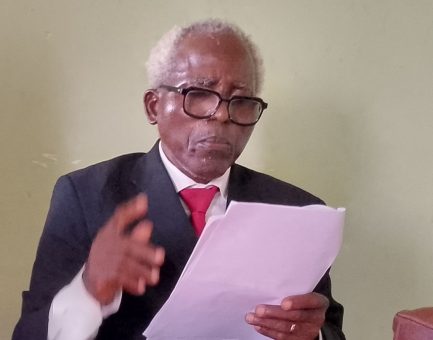
Renowned Professor of Technology Management, Francis Eniterai Ogbimi, has warned that Nigeria’s crippling poverty, mass youth unemployment, and worsening insecurity will remain unresolved unless the federal government embarks on a deliberate, accelerated national industrialisation campaign set to commence in 2027.
Speaking on Friday, October 30, 2026, during a press briefing at the School of Labour and Economic Policy (SOLEP) Conference Center in Abuja, Professor Ogbimi presented a comprehensive policy framework designed to redirect the nation’s socio-economic trajectory.
Under the proposed roadmap, a nationwide mobilization of citizens for integrated learning and rapid skill acquisition is slated to begin on May 24, 2027. To ensure the country remains undivided in its commitment to this economic transition, Professor Ogbimi called for a complete suspension of the general elections scheduled for early 2027.
He advocated redirecting all national focus, administrative capacity, and financial resources toward citizen development and capability building.
According to the framework, Nigeria can attain full, self-sustaining industrialisation within a 20-year horizon if the strategy is adopted and strictly implemented.
Addressing members of the press and key economic analysts, Professor Ogbimi emphasized that traditional classroom education alone is inadequate for driving technological breakthroughs.
He noted that global powers such as Japan, China, and Singapore achieved industrial prominence not by relying solely on theoretical schooling, but by mobilising their populations toward hands-on technical competencies and structured practical research.
”Learning encompasses education, training, employment, and research. For rapid growth in industrialisation, youths must have integrated exposure to all four components simultaneously. Mere education does not promote rapid industrialisation,” Professor Ogbimi declared.
He cited global productivity metrics, noting that while the United Nations recognizes roughly 195 countries, only 60 to 70 have attained true industrial sophistication, with none located in Sub-Saharan Africa.
He attributed Africa’s persistent reliance on foreign goods to critical deficits in scientific knowledge application and technical capability.
Derived from policy recommendations compiled by the School of Labour and Economic Policy (SOLEP), the call to action urges President Bola Ahmed Tinubu and key policymakers to prioritize long-term national capability building over short-term political cycles.
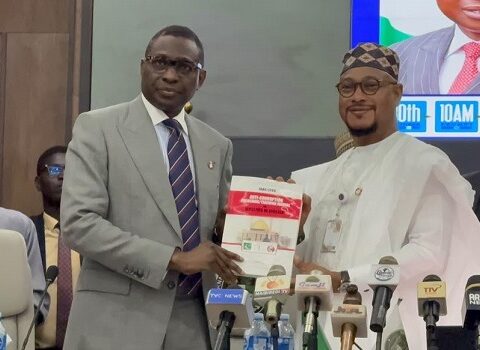
Dr. Anthony Idowu, spokesperson for SOLEP and co-host of the briefing, confirmed that the policy document has been officially submitted to the Federal Ministry of Industry, Trade and Investment, as well as the National Planning Commission, for urgent evaluation ahead of the proposed 2027 implementation date.