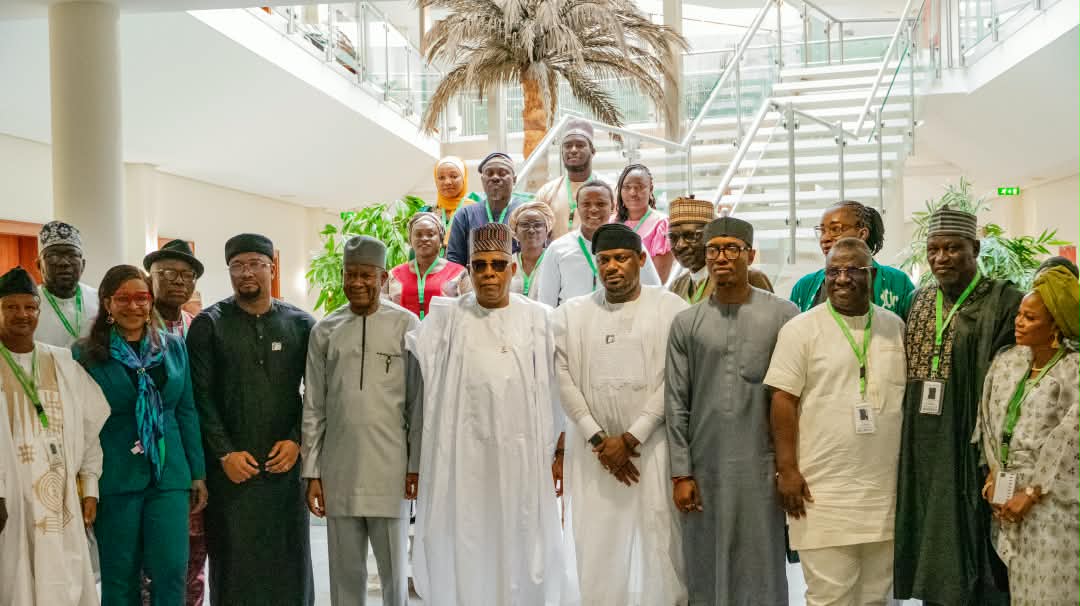
Vice President Kashim Shettima has called for the inclusion of the Micro, Small and Medium Enterprises (MSMEs) in the government’s policy and decision-making processes.
Shettima made the call on Friday during the MSMEs stakeholders’ meeting at the Presidential Villa, Abuja. He also called for increased collaboration between the government and economic stakeholders.
He emphasised that small business owners must have a meaningful voice in the government’s policy and decision-making processes.
Shettima directed the Special Adviser to the President on MSMEs and Job Creation, Mr Temitola Adekunle-Johnson, to expand membership of the MSMEs Stakeholders’ Meeting.
The vice president also urged Adekunle-Johnson to ensure that the forum convenes the meeting quarterly.
Shettima, who noted the interconnected nature of governance and enterprise, demanded a seat at the table for the private sector. He added that small business owners must have a direct voice in shaping government policy.
He commended Adekunle-Johnson for the pace and persistence he had brought to the MSME assignment. “I therefore direct him to expand this forum’s membership and convene this meeting once every quarter.
“Business owners must have a more decisive voice in our deliberations, and each meeting must account for the decisions taken at the previous one.”
The vice president emphasised the importance of MSMEs in the country, noting that “the smallest shop on a Nigerian street may carry the weight of an entire household.
“Behind its counter are school fees, a parent’s medicine and an apprentice’s first chance at independence.
“Whenever that shop closes, the loss travels far beyond its owner. Whenever it grows, a little more of our country stands on its own feet,” he added.
Shettima described the stakeholders’ meeting as a human mathematics to acknowledge the significance of what small business owners do for the nation.
He reassured them of government’s enduring commitment to making MSMEs a national priority. The vice president thanked stakeholders for their cooperation which strengthened MSMEs.
According to him, government agencies, financial institutions, state governments and private sector partners have helped in turning public commitments into assistance that people can use.
“We do this because millions of Nigerians earn their living from businesses that survive, and those businesses survive more readily when institutions perform their duties.
“This is because President Bola Tinubu has placed business financing at the centre of his economic agenda, because he understands that ambition without access to capital can become a lifetime of postponed possibilities.
“The woman who can fulfil a larger order and the artisan who can afford better equipment are helping to build the economy we seek.
“We know that the cost of staying in business has tested even the most resourceful Nigerians. Their perseverance places an obligation upon us,” he said.
Shettima disclosed that Tinubu’s interventions in MSMEs included the approval of N200 billion in business support, comprising N50 billion in grants, N75 billion in loans for MSMEs.
“And N75 billion for manufacturing, with eligible manufacturers able to access up to N1 billion through the Bank of Industry.”
Shettima said the interventions give enterprises the means to withstand pressure and pursue expansion.
He recalled that under the Tinubu administration, the MSMEs team had travelled from one state to another.
“Carrying the weight of our promises and demonstrating, through action, our determination to honour every commitment made to the Nigerian people.”
Earlier, Sen. John Owan-Enoh, the Minister of State for Industry, Trade and Investment, described MSMEs as the backbone of Nigeria’s economy.
He stressed the need for sustained government support to strengthen their contributions to national development.
“These are people who run businesses that we see every day. It goes beyond MSMEs being the engine room of the economy; they are the Nigerian economy,” he said.
Owan-Enoh commended Tinubu for recognising the strategic importance of manufacturing and small businesses.
“This is through the establishment of the Directorate of Manufacturing and MSME Sector Mobilisation in the All Progressives Congress (APC) 2027 Presidential Campaign Council.
Owan-Enoh urged stakeholders to acknowledge the administration’s commitment to creating an enabling environment for businesses to thrive.
In his remarks, Adekunle-Johnson, applauded the partnership between government and stakeholders in the MSME space over the past few years.
He attributed the achievements recorded in the sector to the robust and productive engagements within the ecosystem.
He assured various associations, cooperatives and groups in the MSME space of continued support from government, especially in the areas of access to affordable finance, provision of modern production facilities, among others.
Mr Charles Odii, the Chief Executive Officers of Small and Medium Enterprises Development Agency of Nigeria (SMEDAN), reaffirmed commitment to deepening government interventions for the growth of MSMEs across the country.
Odii assured small business owners across the country that more interventions were planned for the benefit of stakeholders in the areas of training and capacity building.
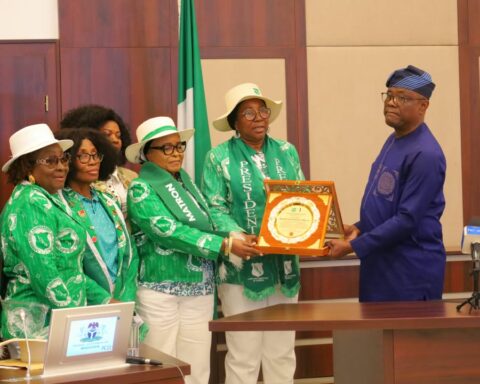
Also speaking, Hauwa Abubakar, the President, Association of Women in Textile and Garments, appealed for improved access to affordable financing, training and international markets.
This, according to her, will enable women entrepreneurs to expand their businesses and create more jobs.
“Women are determined and have the skills to run their businesses, create jobs and contribute to the economy.
“But most women in my association face challenges with training, funding, access to international markets and engagement with relevant stakeholders,” she said.
Similarly, Mr Solomon Vongfa, the President of the National Association of Small Scale Industrialists, called for deliberate government interventions to strengthen MSMEs.
He described the sector as critical to Nigeria’s industrial development.
“Because of the numerical strength of MSMEs, we need more government support.
“We are very relevant, and the government must make deliberate efforts to strengthen this sector for the country to attain its full industrial potential,” he stated.
Vongfa urged the Federal Government to deepen engagement with small businesses and expand targeted support to enable them to contribute more effectively to economic growth and job creation.