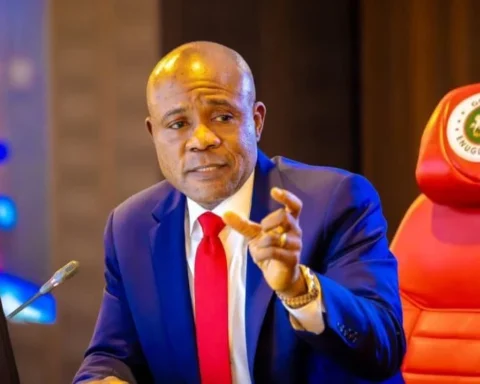
The Nigerian Economic Summit Group (NESG) has issued a stern warning that exorbitant production costs, unreliable electricity supply, and severe logistics bottlenecks are eroding Nigeria’s manufacturing competitiveness and crippling local industrial growth.
Speaking at a high-level breakout session titled “Building an Integrated Industrial Ecosystem” during the 32nd Nigerian Economic Summit, held on October 27, at the Transcorp Hilton Hotel in Abuja, Lumun Feese, Co-Facilitator at the NESG, urged the Federal Government to establish a specialised Industrialisation, Competitiveness, and Regional Integration Council positioned directly within the Presidency.
Addressing a room of delegates, economic experts, and key policymakers, Feese emphasized that Nigeria’s industrial sector has suffered continuous setbacks due to deep-seated structural defects. Persistent power grid failures force manufacturing firms to rely heavily on expensive, self-generated energy, while severe road degradation and port congestion drive transportation overheads to unsustainable levels.
These ongoing challenges have visibly impacted the nation’s international standing. Feese revealed that Nigeria recently slipped from 8th to 14th place on the African Development Bank’s (AfDB) Africa Industrialisation Index.
While noting that the drop was partially influenced by updated methodologies and an expanded pool of evaluated countries, she stressed that the lower ranking highlights an urgent need for structural intervention.
Without a unified policy, Nigerian manufacturers will continue to struggle in both domestic markets and regional trade arrangements under the African Continental Free Trade Area (AfCFTA). To reverse this decline, the NESG outlined a comprehensive, multi-pronged strategic pathway for the Federal Government.
Central to these recommendations is the establishment of the presidential industrial council, which would serve as a supreme coordinating body to align conflicting ministerial policies, eliminate bureaucratic red tape, and enforce reform implementation across federal agencies.
Alongside governance reforms, the group stressed the necessity of prioritizing critical infrastructure by developing dedicated power corridors for industrial clusters and modernizing transport networks to significantly lower freight costs. The summit group also called for greater private sector involvement in the NESG’s Industrial Policy Commission beyond the annual summit, ensuring that high-level policy ideas are translated into actionable, long-term programs.
Finally, the group urged the government to improve export readiness by dismantling trade barriers and providing targeted credit facilities, enabling local businesses to maximize the benefits of regional integration. The call for centralised oversight comes as federal authorities consider stronger legal frameworks to safeguard economic policies from sudden regulatory shifts, signaling a growing consensus between public policy ambitions and private sector realities.