The Nigerian Communications Commission (NCC) issued a stark warning on Tuesday, October 27, 2026, declaring that cyberattacks targeting the country’s telecommunications infrastructure have escalated into a direct threat to national security.
Speaking at the 2nd International Cyber Security Conference (ICSC-2026) in Abuja, Executive Vice Chairman of the NCC, Dr. Aminu Maida, emphasized that artificial intelligence (AI) is equipping cybercriminals with tools to execute faster, highly evasive, and increasingly complex attacks on critical systems.
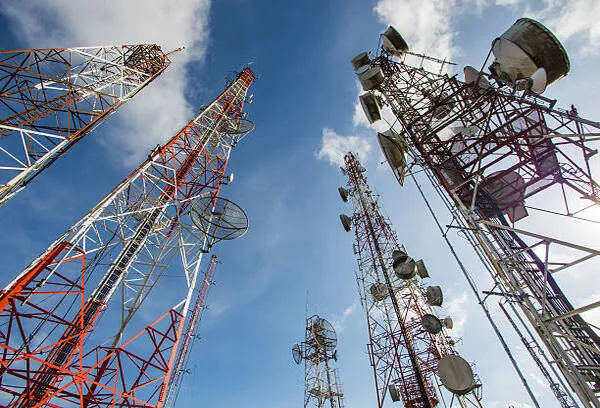
Dr. Maida’s address, delivered on his behalf by the NCC’s Executive Commissioner of Technical Services, Engr. Abraham Oshadami, underscored the critical role telecommunications plays as the central pillar of Nigeria’s digital economy. He noted that every digital transaction, conversation, essential public service, and enterprise operation across the nation relies entirely on these interconnected networks.
Defending this infrastructure has evolved beyond human capabilities, as defense teams are no longer simply countering human adversaries operating at human speeds, but are now confronting machine-learning systems capable of making attack decisions at microsecond computational speeds.
This rapid technological evolution has introduced volatile new threat vectors. Malicious actors are deploying self-modifying malware, automated credential-harvesting mechanisms, AI-driven phishing campaigns, and deepfake technology specifically designed to bypass legacy defense protocols and exploit network vulnerabilities.
The regulatory body warned that the ramifications of a successful breach extend far beyond temporary network downtime or corporate data loss. Given the deep integration of telecom networks across the national architecture, significant disruptions threaten key pillars of state security, including financial system stability, military defenses, emergency response services, and core public sector operations.
To counteract these escalating risks, the NCC has developed a comprehensive cybersecurity resilience framework aimed at standardising minimum security requirements for all licensed telecom operators. This framework is engineered to bolster operator preparedness, enforce strict incident reporting protocols, and ensure rapid recovery capabilities in the event of a system breach.
Additionally, the commission is expanding real-time threat intelligence sharing by linking the operations of the NCC Computer Security Incident Response Team (NCC-CSIRT) with the Nigeria Computer Emergency Response Team (ngCERT).
Emphasizing that institutional isolation is no longer viable against automated threats, Dr. Maida called for an integrated defense strategy involving network operators, financial institutions, security agencies, and international partners, concluding that effective cyber defense in the age of AI must be treated as a collective national priority.