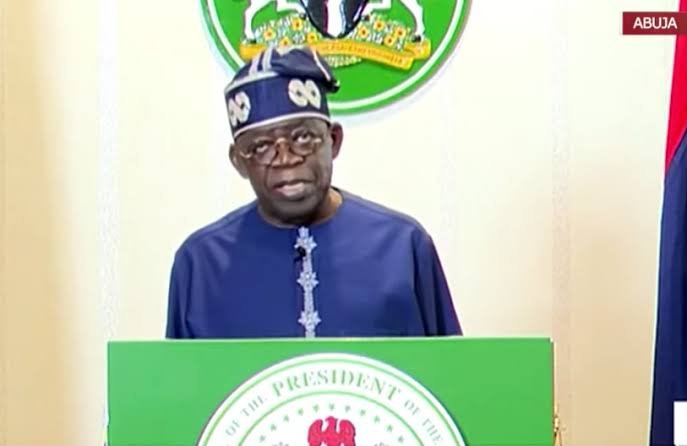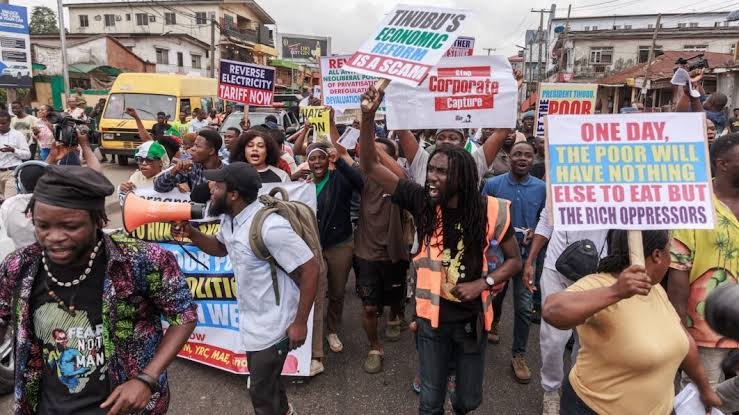
At an APC campaign rally in Kaduna, President Bola Ahmed Tinubu looked into a crowd of weary citizens and issued a declaration that defies both economic history and basic calendar mathematics. He alleged that opposition politicians created the hunger and poverty in the land, claiming his administration was merely struggling to eradicate it. It is a classic move in the playbook of political survival, when a structure collapses under the weight of reckless engineering, construct a phantom and blame it for the debris.
But governance is not an exercise in fiction, it is recorded in official ledgers, presidential decrees, and empty cooking pots across thirty-six states. To suggest that an opposition party, stripped of federal executive authority over a decade ago, is responsible for the empty tables of today is not merely political amnesia,it is an insult to the intelligence of every citizen who goes to sleep on an empty stomach.
The question Nigerians are asking as echoed in recent national television broadcasts capturing public reaction is straightforward.
The APC has been in power since 2015; that’s approaching twelve years. When exactly did the opposition cause today’s hunger? Is President Tinubu still blaming Goodluck Jonathan? And even if we concede, purely for the sake of argument, that the PDP left behind deep structural problems, what has the ruling party done with more than eleven years of total control of the federal government?
At what point does blaming a predecessor cease to be an explanation and become an admission that those who promised to do better have failed to deliver? A political party cannot spend years campaigning against the failures of its predecessors, win power, retain it for over a decade, and still expect the public to accept those same predecessors as the permanent explanation for its own shortcomings.
If we are to audit the origin of this hardship, let us strip away party slogans and examine the documented factual baseline. The numbers do not belong to opposition strategists; they are archived by the Central Bank of Nigeria (CBN) and the National Bureau of Statistics (NBS).
Under the last opposition administration of President Goodluck Jonathan (2010–2015), Nigeria was far from economic paradise. The country suffered from severe security threats in the North-East, systemic oil theft, and fiscal leakages. Yet, macro-economic indicators maintained a baseline of purchasing power for ordinary households.
Between 2010 and early 2015, official NBS records show that headline inflation averaged around 10.2%. The official foreign exchange rate remained under ₦200 to $1, while the parallel market hovered nearby. Pointing out these figures is not an attempt to romanticize that administration’s clear governance failures; it simply establishes the empirical baseline from which the current slide began.
Nigerians remember when petrol sold for ₦87 a litre, when a single egg cost around ₦30 to ₦50, and when a packet of spaghetti could be bought for approximately ₦150. These are historical market prices that capture a reality millions of households remember: the cost of ordinary necessities was substantially lower in nominal naira terms.
Today, families confront dramatically higher prices—petrol surging past ₦1,400 per litre, eggs selling at ₦250 to ₦300 each, and spaghetti exceeding ₦1,200 a pack while many struggle to make their stagnant incomes stretch to the end of the month. The question is not whether the old economy was perfect. It was not.
The question is how the country moved from those prices to today’s crushing costs, what policy decisions contributed to that change, and why a party that has governed since 2015 believes it can escape scrutiny by pointing backwards. When the price of feeding a family rises beyond its means, the people paying the bills are entitled to ask those in power for answers.
Then came the turn of the ruling All Progressives Congress. Across eight continuous years under President Muhammadu Buhari (2015–2023), economic stability was systematically eroded by fiscal and monetary mismanagement. The administration resorted to an unprecedented ₦22.7 trillion in Ways and Means borrowing an extra-budgetary financing mechanism from the CBN that violated Section 38 of the CBN Act of 2007 regarding statutory limits.
This unbacked money creation, combined with uncoordinated land border closures and rigid exchange-rate rationing, drove headline inflation past 22% by late 2022. President Tinubu did not inherit an opposition-created collapse, he inherited a deeply flawed house built by his own political party, having campaigned on an explicit promise of “Renewed Hope” and policy continuity.
When President Tinubu assumed office in May 2023, his administration accelerated these economic pressures through twin policy decisions: the sudden, unbuffered removal of the petrol subsidy and the unmanaged floating of the Naira.
Policy reform was undeniably necessary; decades of fuel subsidies and artificial exchange-rate pegs were unsustainable and enriched cartels. However, a government is judged on implementation and risk management, not intention alone. The abrupt floating of the Naira executed without adequate foreign exchange reserves to defend the currency saw the Naira crash from approximately ₦460/$1 to over ₦1,500/$1 in the official window, while pump prices surged over six-fold.
In a country reliant on road transportation for agricultural transit and imported machinery for local production, these twin shocks acted as a flame thrown onto dry grass. Food inflation spiked past 40%, pushing basic staples beyond the reach of average families.
To claim that opposition parties engineered this specific wave of hyper-accelerated inflation between 2023 and 2026 is to ask Nigerians to disbelieve their own bank accounts and market receipts.
No opposition signature appears on the 2023 executive decrees, nor did opposition politicians execute the haphazard distribution of post-subsidy palliatives.
Granted, food security is influenced by global shocks, climate disruptions, and deep-seated structural issues. But the central instruments of federal power,monetary policy, trade barriers, customs tariffs, national security apparatus, and fiscal allocations have been entirely in the hands of the ruling party for nearly twelve years.
There is a fundamental principle in both institutional management and statecraft: tenure equals ownership.
The APC cannot claim the authority that comes with eleven years in power while treating responsibility for the country’s condition as though it still belongs exclusively to the people it displaced. A decade is an eternity in policy life. A child born when this party took power in 2015 is now an eleven-year-old student. A primary school built at the start of their reign is already due for structural renovation.
At what point does an administration stop pointing at the grave of its predecessor and take responsibility for the water pouring through its own roof? If nearly twelve years of continuous executive authority, parliamentary majorities, and budgetary dominance are not enough time to take responsibility for national welfare, then no amount of time ever will be.
The danger of the President’s statement in Kaduna goes beyond routine political rhetoric; it signals a refusal to take ownership of policy execution. Hunger is aggressively non-partisan. It does not inspect a citizen’s voter registration card, nor does it ask whether a family voted for the ruling party or the opposition before it gnaws at the ribs of a child.
True statesmanship requires looking citizens in the eye and saying: “The burden is heavy, the decisions were ours, and the responsibility to fix it stops at my desk.”
To point fingers across the political divide at opponents who have not held the nation’s purse strings, controlled its military apparatus, or drafted its economic policies for over ten years is an attempt to rewrite economic history in broad daylight. But history cannot be rewritten when the proof sits on an empty dinner table. The archives are permanent, the timeline is indisputable, and the daily reality of the Nigerian people tell the ultimate truth: the present suffering is not a phantom from the past, but the direct causes of decisions made in the present.
Shaakaa can be reached on: shaakaastephanie@yahoo.com