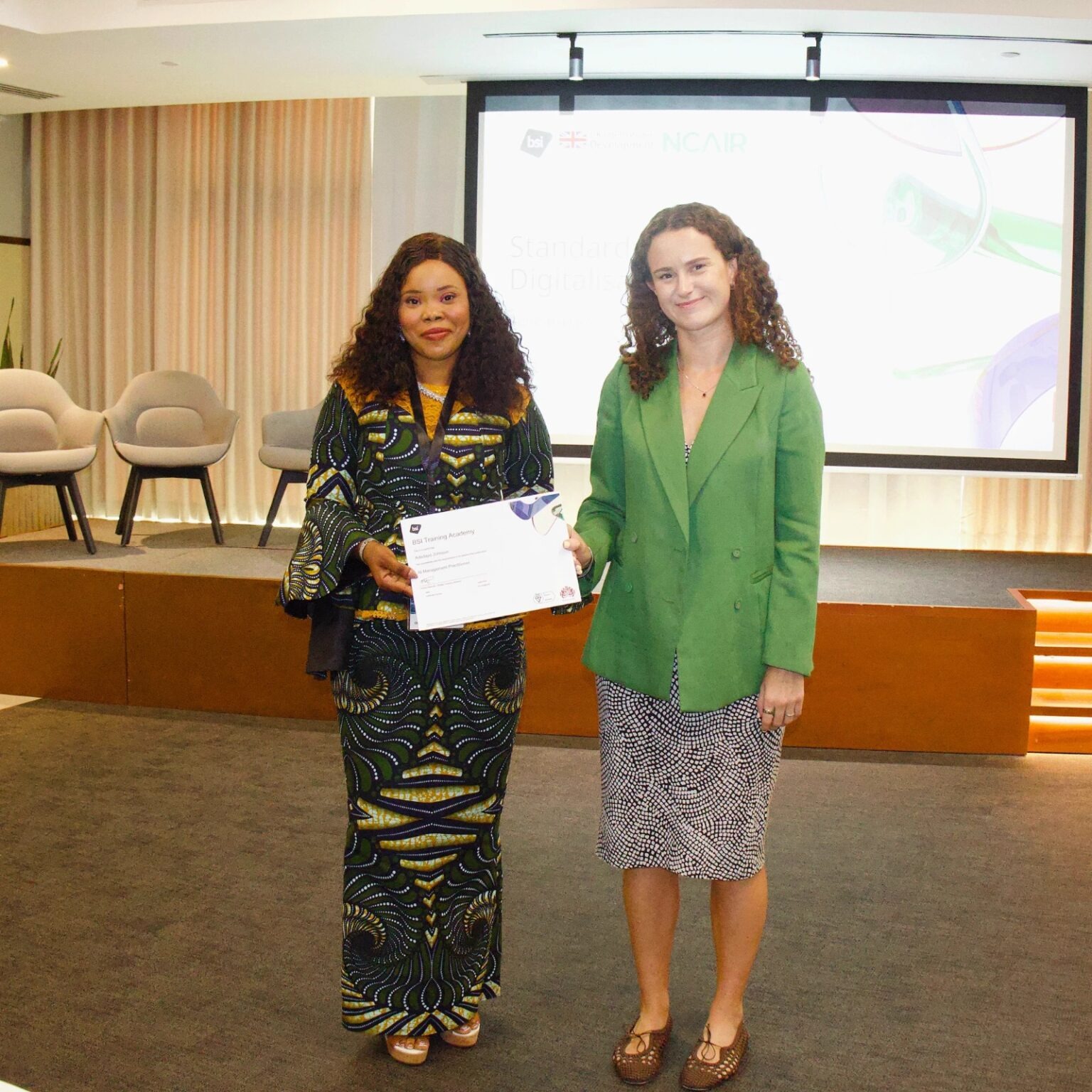
The British High Commission in Nigeria has reaffirmed the UK’s strong commitment to supporting Nigeria’s digital transformation agenda, following a successful series of high-level engagements and a strategic visit by the British Standards Institution (BSI).
The collaborative events, which included a three-day intensive Executive Workshop on AI Governance and Standards held in October 2026, brought together key Nigerian and British stakeholders, including the Federal Ministry of Communications, Innovation and Digital Economy (FMCIDE), the National Information Technology Development Agency (NITDA), the National Centre for Artificial Intelligence and Robotics (NCAIR), and the Standards Organisation of Nigeria (SON).
The landmark engagements focused on accelerating Nigeria’s ambition to become a leading AI and digital economy in Africa by embedding robust international standards into public policy and technology regulation.
Over the course of the three-day program, senior public sector leaders, regulators, and technology practitioners explored practical frameworks for AI governance, risk management, data security, interoperability, and digital trade compliance.
Speaking on the strategic significance of the partnership, Grace Bell, First Secretary for Economic Partnerships and Digital at the British High Commission, emphasized the vital role of standards in modern economies.
”Artificial Intelligence presents enormous opportunities for economic growth, innovation and social development. However, realising these benefits requires the right governance frameworks, strong institutions and trusted standards that can underpin safe, secure and responsible adoption,” Bell stated.
She added that aligning around internationally recognised standards helps create optimal conditions for sustainable digital growth, benefiting businesses, governments, and citizens alike.
Echoing this sentiment, the National Coordinator of the National Centre for Artificial Intelligence and Robotics (NCAIR), Dr. Olubunmi Ajala, praised the UK government and the BSI for their continuous cooperation in bridging theoretical policy ambitions with tangible execution.
”Together, we have moved beyond theoretical conversations about emerging technology to build genuine, sovereign institutional capacity,” Dr. Ajala noted.
Beyond artificial intelligence governance, the successful visit and stakeholder discussions paved the way for a broader scope of bilateral cooperation. Future initiatives are expected to extend into environmental management frameworks, cross-border digital commerce, and enhanced cybersecurity postures, such as aligning supplier ecosystems with advanced digital trust guidelines.
The British High Commission concluded by pledging that the UK will continue working closely with BSI and its Nigerian institutional partners to champion standards-led innovation, ensuring that Nigeria’s rapidly expanding digital economy remains secure, inclusive, and globally competitive.