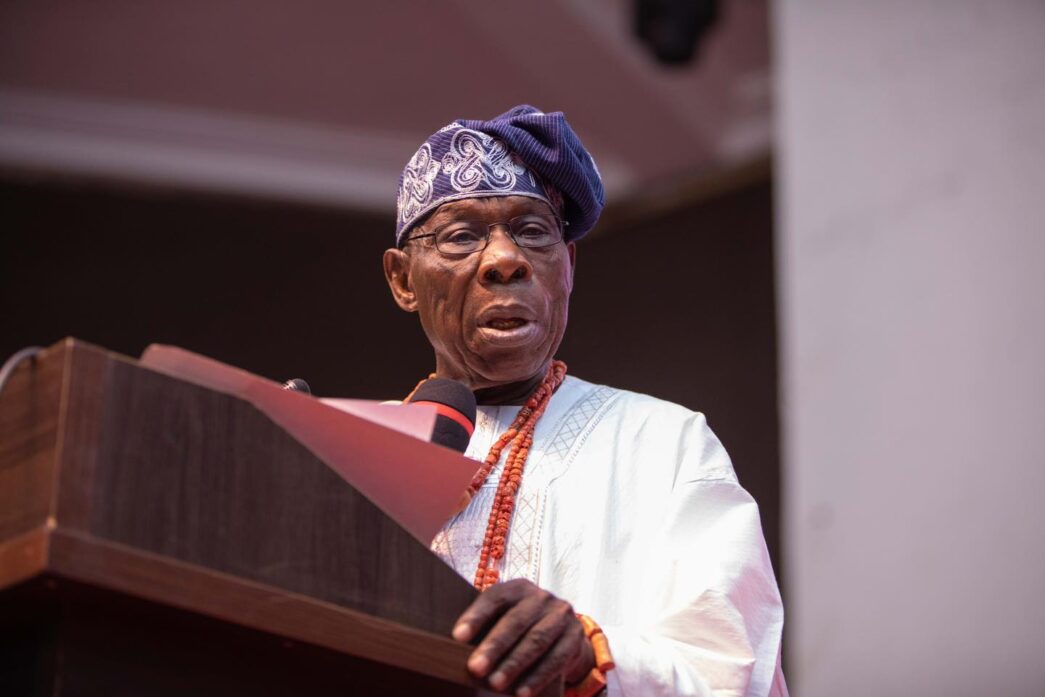
Former Nigerian President Olusegun Obasanjo delivered a stinging assessment of President Bola Ahmed Tinubu’s administration, accusing its economic reforms, particularly the floating and devaluation of the naira, of impoverishing Nigerians by 300 per cent and plunging the country into becoming “the poverty capital of the world”.
Speaking on Wednesday, October 21, 2026, during an address at the Financial Times Africa Summit 2026 held in London, United Kingdom, the former elder statesman heavily criticized the sudden foreign exchange unification policy enacted shortly after President Tinubu took office in mid-2023.
Addressing an international audience of policymakers, corporate executives, and global investors, Obasanjo argued that the dramatic shift in currency value directly eroded household purchasing power across Nigeria.
“We do not live in isolation as a country. We interact with the rest of the world. And overnight, you devalue the currency by 300 per cent. The naira went from N500 to a dollar to N1,500 to a dollar,” Obasanjo stated.
“What that meant was that every Nigerian is made poor by 300 per cent. That made Nigeria become the poverty capital of the world, which means Nigeria has the largest number of poor people in the world. You cannot say to me that that is good for Nigeria. You cannot say to me that that is good for us in any sense.”
Obasanjo further dismissed calls by government defenders asking citizens to give the administration more time to allow foreign exchange reforms and subsidy removals to yield results.
“For the economy, I don’t see anything getting better. What policies are you seeing through? You impoverish your people, and you want to see impoverishment through? Nobody can deny that,” he added.
Since President Bola Tinubu announced the end of the petrol subsidy and unified the foreign exchange windows in mid-2023, Nigeria has experienced high inflation and currency volatility, leading to elevated transportation, food, and energy expenses nationwide.
Efforts to obtain an official rebuttal from the Presidency regarding Chief Obasanjo’s remarks were initially unsuccessful, as Bayo Onanuga, Special Adviser to the President on Information and Strategy, could not immediately be reached for comments following the session.
However, administration officials historically maintain that market unification and subsidy removal are vital, long-overdue structural corrections required to stabilise foreign reserves and attract foreign direct investment.