Health officials revealed during an emergency briefing held on Wednesday, October 21, 2026, that Nigeria’s first detected Ebola patient is a foreign diplomat whose condition has severely deteriorated into multi-organ failure.
The update was delivered during a joint emergency session convened by the Nigeria Centre for Disease Control and Prevention (NCDC) and public health stakeholders in Abuja.
According to officials, the patient, a female diplomat who traveled from Uganda to Nnamdi Azikiwe International Airport in Abuja on October 3, 2026, tested positive following extensive molecular screening.
”We did three levels of tests, but all molecular. The strain was Bundibugyo,” announced Olajumoke Babatunde, Director of the Public Health Laboratory Service at the NCDC.
The World Health Organisation (WHO) has also confirmed the identification of the Bundibugyo ebolavirus strain. Unlike the more common Zaire strain, there is currently no licensed vaccine or specific antiviral treatment available for the Bundibugyo strain, presenting heightened challenges for containment and clinical management.
Briefing officials noted that the patient has developed critical complications. An official at the briefing confirmed that the patient’s health has deteriorated into multi-organ failure.
The development follows warnings from Dr. Jean Kaseya, Director General of the Africa Centres for Disease Control and Prevention (Africa CDC), who highlighted on Tuesday, October 20, that the expanding regional outbreak represents “an extremely serious threat” to the continent.
The current epidemic in the DRC has grown into the deadliest in the country’s history, claiming over 4,380 lives out of more than 9,000 confirmed cases, while neighboring countries like Kenya have also reported rising infection figures.
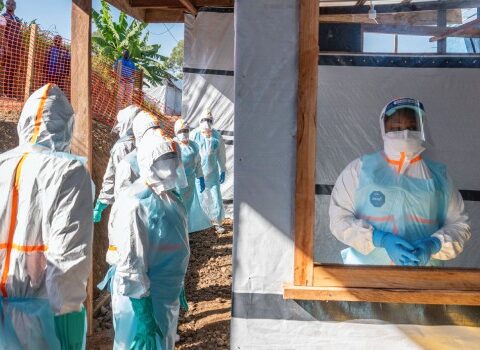
The NCDC, alongside local health agencies, has activated rapid response protocols to trace all individuals who came into contact with the diplomat since her arrival on October 3. Isolation units across major transport hubs and hospitals in the Federal Capital Territory have been placed on high alert to prevent further community transmission.