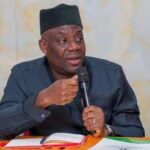
The House of Representatives has called for stronger food safety laws and stringent enforcement mechanisms to tackle the rising threats of malnutrition, severe food insecurity, and health hazards associated with toxic agricultural chemicals and adulterated food items across the country. The call was made on Friday morning, October 16, 2026, during a media parley organised to commemorate the 2026 World Food Day.
Held at the National Assembly Complex in Abuja, the event was hosted by the House Committee on Nutrition and Food Security in partnership with the Centre for Food Safety and Agriculture Research (CEFSAR) and the LoveWorld Ministry of Food Technology and Sovereignty. Delivering a keynote address on behalf of the Chairman of the House Committee on Nutrition and Food Security, Hon. Chike Okafor, the Committee’s Clerk, Mrs. Millicent Egenti, warned that persistent food safety lapses and unregulated chemical usage pose severe health risks to millions of citizens.
”Nigeria continues to face alarmingly high levels of malnutrition, stunting, wasting, anaemia, and poor exclusive breastfeeding practices despite existing regulatory frameworks,” Egenti stated. “The indiscriminate use of toxic chemicals and hazardous preservers in farming, processing, and storage is directly linked to an uptick in chronic organ failures and foodborne illnesses across the nation.” To address these vulnerabilities in the national food supply chain, the House Committee outlined several key legislative and enforcement priorities.
The Committee disclosed ongoing work on a bill to establish the Nutritionist Registration Council of Nigeria, designed to professionalise, regulate, and standardise nutrition practices across the federation. A call for severe legal penalties against vendors and farmers using unauthorised chemical ripening agents, dangerous pesticides, and toxic artificial preservatives. Provisions targeting the aggressive marketing of highly processed, unhealthy foods to children and enhanced legislative oversight to guarantee that public nutrition funds are ring-fenced and utilised strictly for intervention projects.
Speaking at the parley, representatives from the civil society sector and agricultural research institutions urged lawmakers to fast-track legislation that protects local agricultural ecosystems. Stakeholders urged the federal government to empower regulatory agencies, including the National Agency for Food and Drug Administration and Control (NAFDAC), to systematically monitor farms, open markets, and processing facilities to ensure compliance with global standards.
The committee reaffirmed its commitment to collaborating with relevant executive ministries and private stakeholders to ensure the proposed legislative measures are passed swiftly into law.