By Anthony Isibor
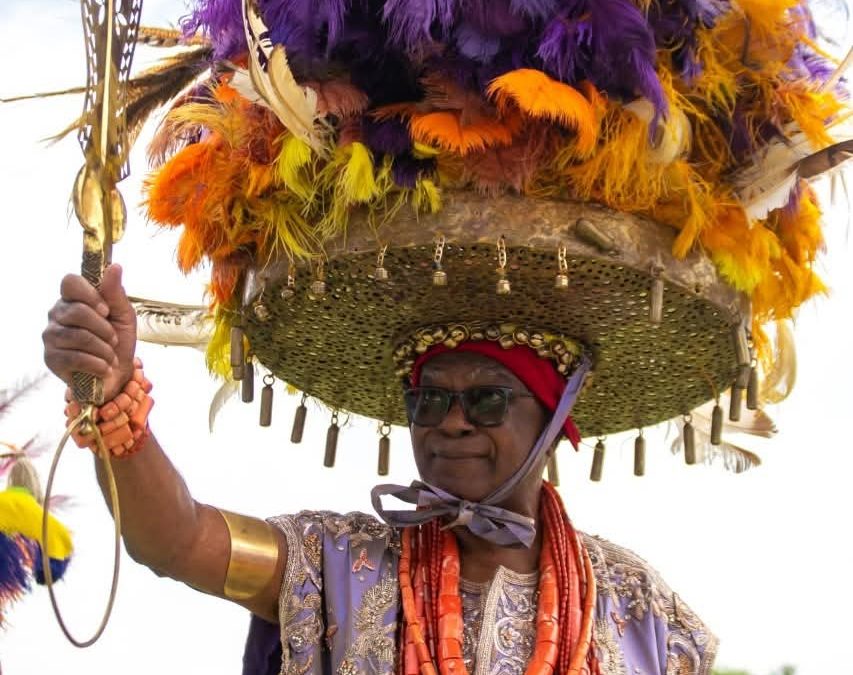
THE rhythmic beat of traditional drums, the sound of ceremonial music and the chants of praise singers filled the air as chiefs in colourful traditional regalia arrived with their entourages at the Ime-Obi, the palace of the Obi of Onitsha, to mark the Iru Ofala Festival.
One after another, the chiefs made their entrance, each accompanied by a retinue of singers, dancers and musicians whose performances reflect the richness and diversity of the Onitsha cultural heritage.
Their colourful outfits, distinctive to their respective chiefdoms, added to the spectacle. Traditional ornaments adorned their bodies, while bangles rested firmly around their ankles, producing a rhythmic sound as they danced to the music of their accompanying troupes.
It was a display of tradition, identity and allegiance, with each entourage bringing its own unique character to the gathering.
Before long, the mini stadium within the Ime-Obi was filled to capacity. The excitement extended beyond the immediate venue, as people gathered in groups around the surrounding areas, eating, drinking, exchanging greetings and enjoying the festivities.
Men, women and youths, many dressed in colourful uniforms representing their various groups, added to the lively atmosphere. Conversations mingled with the sounds of drums and traditional songs, while the anticipation of the Obi’s appearance continued to build.
Then came the moment everyone had been waiting for.
As Igwe Nnaemeka Alfred Achebe, the Obi of Onicha, emerged in his royal splendour, the atmosphere changed almost instantly.
A deafening roar of excitement rose from the crowd. People cheered, sang and chanted in praise of their monarch, while the sound of traditional music grew louder to welcome him.
Having gone into seclusion ahead of the festival to seek the face of the gods of the land on behalf of the Onitsha people, his appearance marked a significant moment in the celebration.
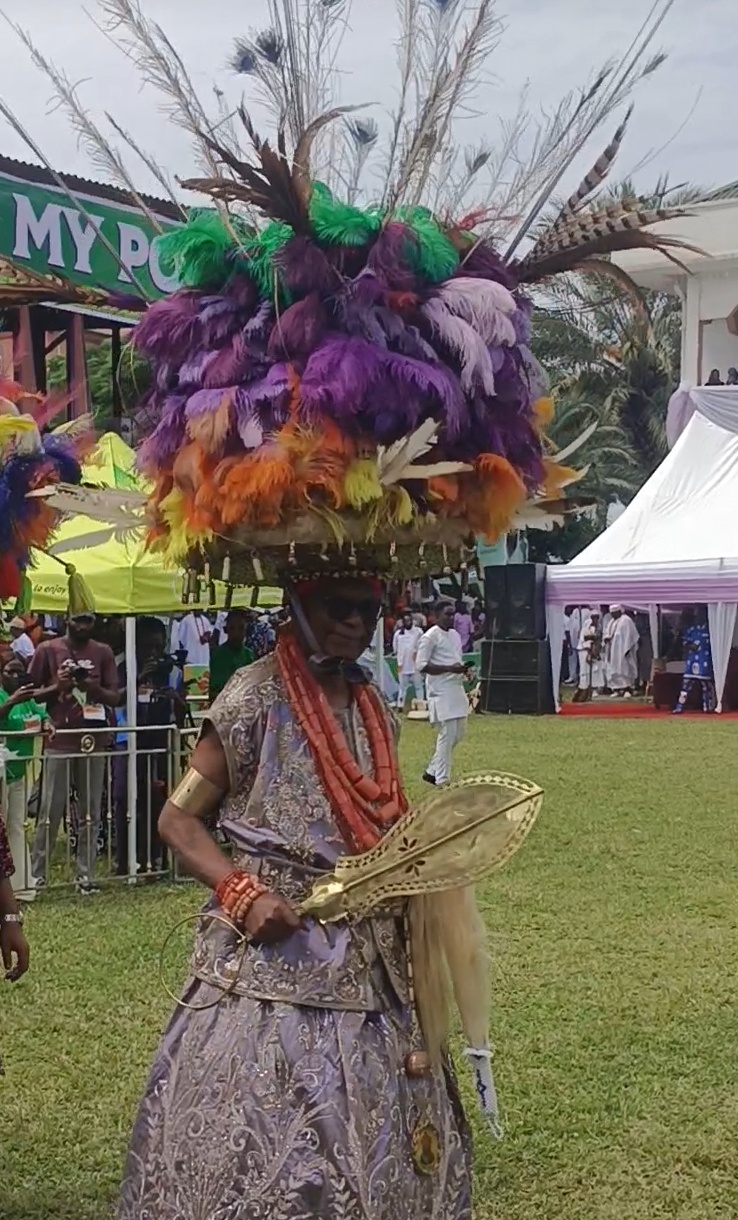
Dressed in his royal regalia, Achebe moved with measured steps, acknowledging the gathering as the crowd responded with unrestrained enthusiasm.
For many present, it was more than the sight of a monarch making a ceremonial appearance. It was an opportunity to witness a tradition that connects the throne, the community and the cultural heritage of the Onitsha people.
This year’s celebration marked Achebe’s 25th Ofala Festival and his 24th as the Obi of Onicha, adding another chapter to his reign and the community’s continuing observance of one of its most important cultural festivals.
As he danced around the arena, his chiefs followed behind him. Their procession, punctuated by cheers and songs, offered a public display of respect for the throne and support for the monarch.
The moment captured the relationship between the Obi and his chiefs, whose participation remains central to the ceremonial life of the kingdom.
After the dance, Achebe took his seat on the royal throne, bringing the procession to another important stage of the ceremony.
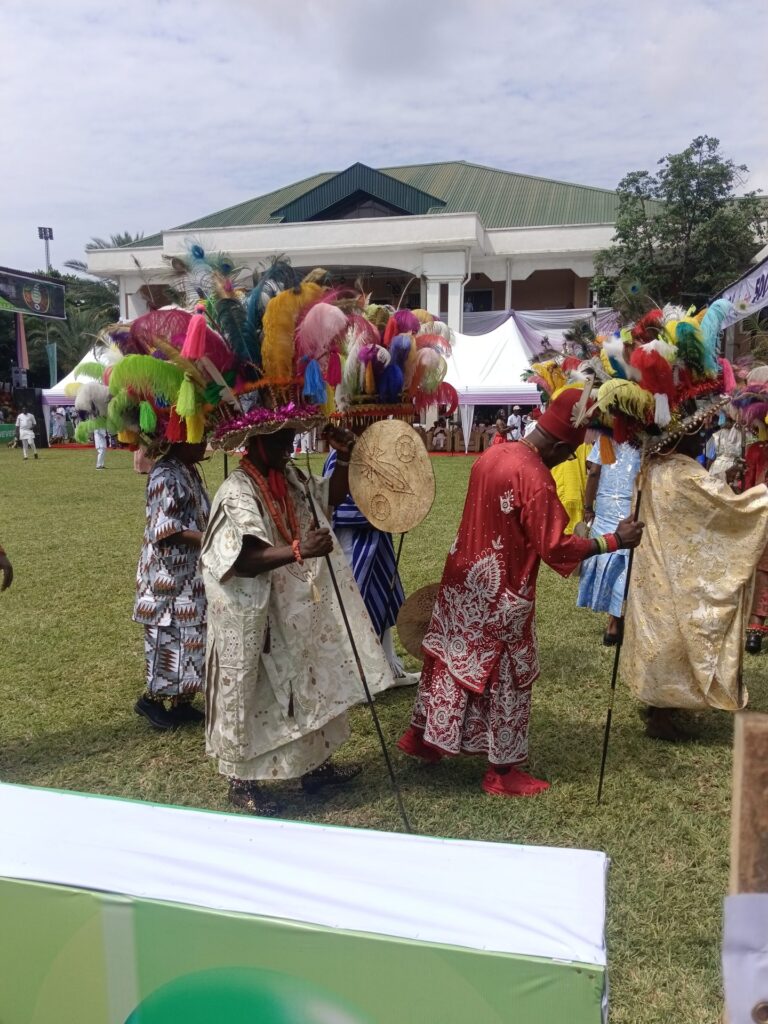
One after another, the chiefs removed their feathered crowns and approached the Obi to bow before him in acknowledgement of his leadership.
The gesture, performed in the presence of the assembled crowd, was a formal expression of deference to the throne. It also provided one of the ceremony’s defining images: chiefs who had earlier arrived in the full splendour of their individual chiefdoms now standing before the monarch in recognition of his position as the traditional ruler of Onitsha.
The ceremony brought together the different elements that give the Ofala its distinctive character: royal protocol, traditional music, dance, colourful regalia and the participation of the wider community.
Beyond the palace grounds, the gathering also offered a meeting point for people of different generations and backgrounds, united by their connection to Onitsha and its the traditions.
For the older generation, the festival provided an opportunity to witness and sustain customs passed down through generations. For younger participants, the occasion offered a visible expression of their cultural identity, presented through the language of dress, music, dance and ceremony.
The Ofala Festival occupies an important place in the cultural life of Onitsha. Through its ceremonies, the community publicly celebrates its monarchy, honours established customs and brings together people whose lives and identities are connected to the kingdom.
The Iru Ofala, with the Obi’s appearance following his period of seclusion, is particularly significant in the sequence of events surrounding the festival.
At the Ime-Obi, the chiefs’ processions, the energetic performances of traditional troupes and the crowd’s enthusiastic reception of Achebe combined to create a spectacle in which the past and present met.
The celebration was not confined to the palace or the royal court. It extended to the men and women in their colourful uniforms, the youths who joined the festivities, the musicians whose instruments supplied the rhythm and the spectators who filled the venue and its surroundings.
Each formed part of the larger gathering that gave the occasion its character.
As the cheers, songs and drumbeats continued, the Iru Ofala stood as a vivid expression of Onitsha’s cultural heritage and the enduring place of the traditional institution in the community’s public life.