The International Monetary Fund (IMF) has cautioned Nigerian regulatory authorities against over-reliance on increased capital reserves following the country’s recent bank recapitalisation exercise.
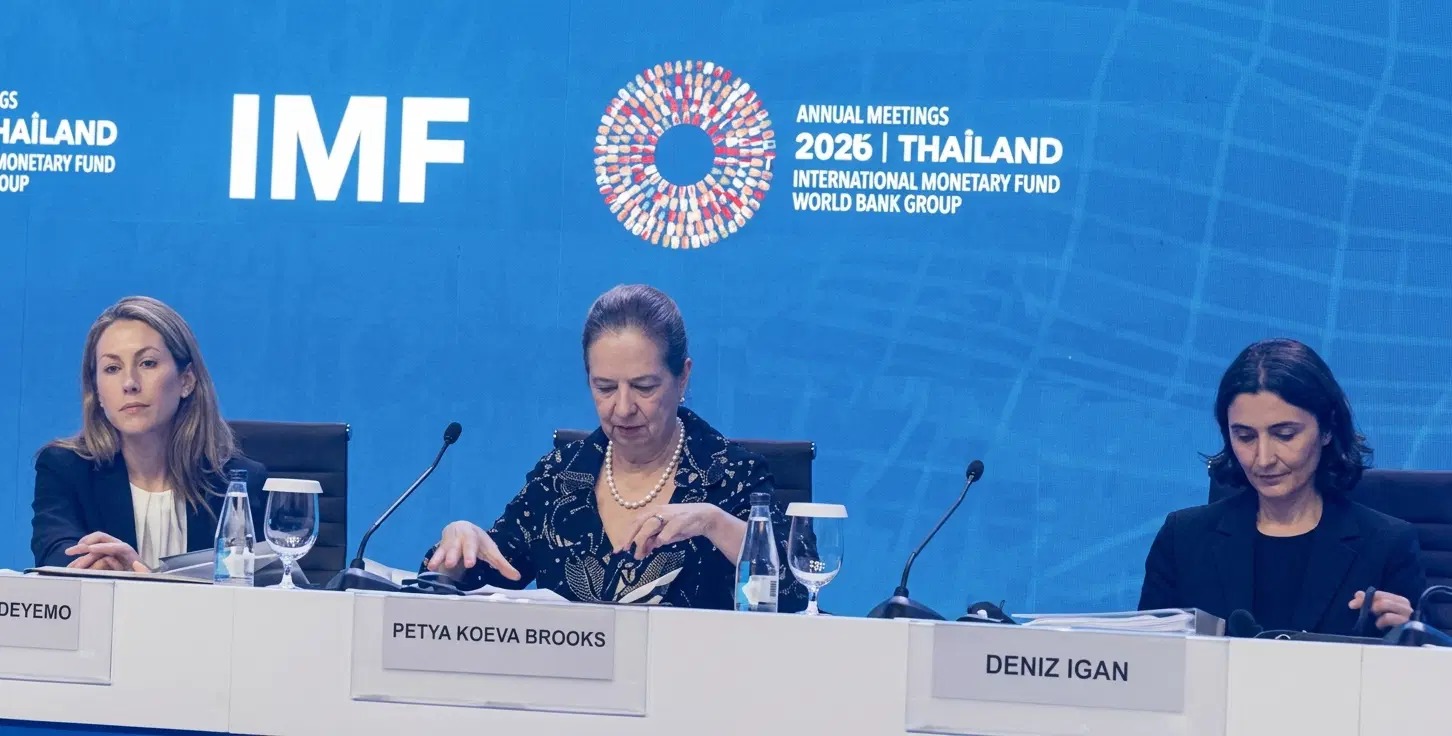
Addressing global media during a press briefing at the World Bank/IMF Annual Meetings in Bangkok on Tuesday, October 13, 2026, the Fund warned that enhanced capital buffers alone cannot guarantee financial sector stability unless supported by rigorous supervisory frameworks and strict risk management controls.
Speaking on behalf of the Fund, Jason Wu, Assistant Director of the IMF’s Monetary and Capital Markets Department, emphasized that emerging economies often face systemic vulnerabilities immediately following recapitalisation drives if regulatory oversight fails to keep pace with balance-sheet growth.
”What we often see in emerging economies is that, after recapitalisation, there is a need to impose appropriate regulations to prevent risks from building up in the future,” Wu stated at the press conference. “These include adequate capital and liquidity requirements as well as timely recognition of credit losses and bad loans.”
The warning follows the completion of the Central Bank of Nigeria’s (CBN) recapitalisation exercise, which required commercial and merchant banks to scale up their minimum capital bases to cushion against macroeconomic shocks.
While acknowledging the successful capital buildup, the IMF highlighted emerging structural vulnerabilities, most notably the growing interdependence between commercial banks and government fiscal paper.
Wu underscored the risks associated with commercial banks holding significant concentrations of public sector debt. “In Africa in particular, I think the sovereign-bank nexus is an important area, understanding the exposure to sovereign risks,” he noted, urging regulators to closely monitor sovereign risk exposure to prevent contagion.
The Fund stressed that Nigerian financial institutions must systematically recognize non-performing loans (NPLs) and build adequate provisions, rather than relying solely on capital buffers to absorb hidden credit losses.
Beyond static solvency, the IMF recommended accelerated implementation of dynamic liquidity controls, including the Basel III Liquidity Coverage Ratio (LCR) and Countercyclical Capital Buffers (CCyB).
The IMF acknowledged recent structural progress in Nigeria’s macroeconomic landscape, including exchange-rate stability, improved foreign reserve position, and moderating domestic inflation rates.
Regarding monetary stance, Wu indicated that as inflation eases, the CBN may transition toward a more calibrated policy stance, provided decisions remain strictly data-driven and transparently communicated to maintain market trust.
The Fund concluded its briefing by calling on Nigerian authorities to maintain momentum on structural financial sector reforms, emphasizing that transparent debt disclosures and sustained supervisory vigilance remain vital to protecting Nigeria’s banking system from domestic shocks and international market volatility.