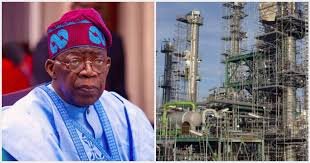
The International Monetary Fund has warned Nigeria against restoring broad petrol subsidies, urging the government to rely instead on targeted cash transfers to cushion vulnerable citizens against soaring energy costs.
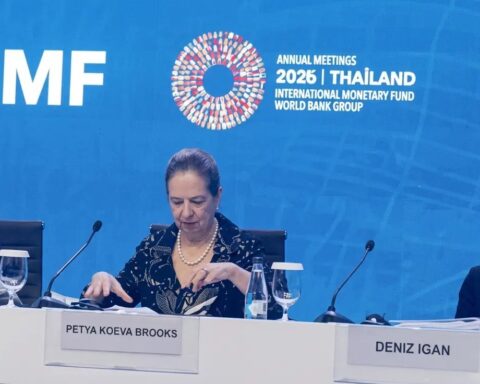
Speaking at a news conference at the Fund’s headquarters on Wednesday, Axel Schimmelpfennig, the IMF’s Mission Chief for Nigeria, said returning to universal fuel subsidies would severely strain public finances without reaching those most in need.
”Blanket energy subsidies disproportionately benefit higher-income households while draining critical public resources from health, education, and infrastructure,” Schimmelpfennig told reporters. “The effective pathway forward is expanding targeted social safety nets that directly support the poorest households.”
The advisory comes as Nigerian authorities face growing domestic pressure over rising transport and living costs following recent subsidy rollbacks.
The Fund underscored several key recommendations for the government to scale up direct, verified cash transfer programs to protect low-income families from price shocks.
To maintain tight monetary policy and support the Central Bank of Nigeria’s measures to rein in stubborn inflation and stabilize the naira, while enhancing non-oil tax collection and streamline public spending to keep debt levels sustainable.
The IMF emphasized that sustaining structural economic reforms alongside well-targeted social protection remains essential for long-term macroeconomic stability in Africa’s largest economy.
Nigerian officials have strongly backed the IMF’s stance, explicitly ruling out a return to petrol subsidies.
Minister of Information Mohammed Idris and key economic advisers warned that reintroducing subsidies would cause severe economic disruption, while market analysts highlight several compounding consequences if a reversal were attempted:
Information Minister Mohammed Idris stated that returning to subsidies would “reverse Nigeria’s economic gains,” drain $15.8 trillion in federation resources, and force the government to defund critical sectors like security, roads, education, and healthcare.
Finance leaders similarly noted that subsidies are unsustainable and that current policy focus remains on tax reforms, infrastructure funding, and targeted relief.
Reintroducing blanket price caps would instantly reignite multi-trillion naira fiscal deficits, stripping funding from capital infrastructure and forcing heavy public borrowing to cover fuel shortfalls.
The Federal Government warned that attempting to subsidize fuel again could severely weaken national currency reserves, potentially pushing the naira past $N3,000/1 due to expanded import bills and market distortion.
Re-establishing artificial price floors historically incentivised cross-border smuggling into neighboring West African states and created widespread artificial fuel queues and black-market hoarding.
While a temporary price drop at the pump might offer brief relief, the resulting fiscal deficit and currency depreciation would ultimately drive systemic inflation higher, increasing prices on food, transport, and imported goods long-term.