By Okoh Aihe
A small discussion with telecom industry personality, Engr Gbenga Adebayo, stirred something bigger in me that pushed me down memory lane paved with emotions.
Usually we talk about the industry and how well it is doing. On this very day, he probably just sprang a trap on me expecting a reaction. Do you know that one day the power sector could go the way of NITEL?
God forbid, I wanted to shout. But I am now very mindful not to capitalize on that expression which literally translates to us, citizens of this great nation, ceding nearly every job to God, including the ones he has given us the capacity to handle.
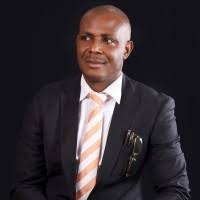
Even though I would see the demise of the public power sector very farfetched, I also know that Adebayo who is the Chairman of the Association of Licensed Telecoms Operators of Nigeria (ALTON) is not glib but handles words in the manner of all engineers – very precise and direct.
One can really not defend the power sector anyway. As I write there is outage and for the first time in about two decades, I had to revert to long hand. What an irony!
Just a memory prod. NITEL was the former monopoly in the nation’s telecommunications industry – very big and rich in its own eyes. At the GSM auction in 2001, NITEL even had a reserved GSM license from the industry regulator, the Nigerian Communications Commission (NCC) which it was only meant to pay for without going through the rigors of a bid. Unfortunately, its inability to adjust to modern telecoms practices and adopt new technologies knocked NITEL out of reckoning and inexorably set it on the way to oblivion.
How can this be a wish for the power sector? The long conversation started and Adebayo had figures to amplify his position.
“The comparison is not necessarily a prediction that the power sector will collapse in the same manner of NITEL. Rather, it is a warning about what happens when a public utility consistently fails to provide a service that individuals and businesses increasingly regard as indispensable.”
“NITEL,” Adebayo pointed out, “was once the dominant telecommunications service provider in Nigeria. However, as its services became increasingly inadequate, Nigerians embraced alternative solutions. The emergence of private telecommunications operators, the liberalization of the sector, and the rapid deployment of mobile networks fundamentally changed the industry. Consumers and businesses migrated to alternatives that offered greater accessibility, reliability and value.”
The foregoing narrative is a story we all know but what is revealing is that the telecommunications sector which should be a major customer to the power industry is so suspicious of the capacity and reliability of the sector that the telecom services providers have chosen to be the masters of their fate by investing in other sources of energy in order to keep their operations running.
Asked to name the energy configuration of the telecommunications industry, Adebayo listed them as follows: Public Electricity Supply, Diesel-powered Generators, Solar Energy, Battery Storage Systems, and Hybrid Power Systems. The last one integrates grid electricity, solar panels, batteries and generators, with intelligent controls to optimize power availability and operating costs.
Unfortunately, reliance on the public power grid for telecoms service provisioning is only about 5 percent, leaving operators to carry their can of concerns as telecommunications infrastructure cannot operate on the assumption that electricity will always be available when required.
“From the operational experience reported by operators, public electricity supply can account for as little as 5 percent of the daily power requirement at some particularly underserved locations. At other sites, grid electricity may be unavailable for weeks or even months. These figures should be understood as industry-observed examples rather than a verified nationwide average,” he cautioned.
Adebayo has not been smoking something and like we observed from the onset, he is not a glib talker. The experience of his industry is the lived experience of most Nigerians, and the situation has been so consistent that it is a shame how we are not always able to improve on anything except to hoodwink or praise-sing.
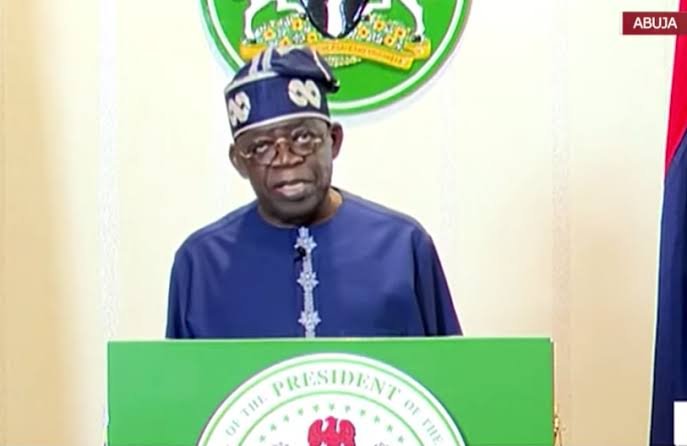
As the Nigerian President, Bola Ahmed Tinubu, was speaking in New York at the United Nations General Assembly (UNGA 78) in September 2023, the national power grid collapsed twice in two weeks. At the time, the grid had between 42.7MW and 273MW when our President was inviting the international community to look towards Africa as the next frontier of economic development.
Although the nation was entirely in the dark, we had interpreted the development from the point of view of telecoms in an article titled: For telecoms, an industry perennially challenged. Plus other issues we posited that the failure in public power supply was a major problem to the sector, arguing that no investor would risk his money in an uncertain environment.
This is 2026. Has the story changed? Are the industries or even anybody happier? Let me be frank here, this story is not about Tinubu and his government but about a system, nurtured over the years to romanticize with failure.
Before returning to the nation’s power sector, let’s look at some other jurisdictions since we often like comparisons. South Africa with a population of just over 65.45m, has an installed capacity of between 51,000MW and 58,095MW. Operating capacity is 32,246MW while peak demand is 34.665MW.
The Installed capacity of the United Kingdom is 74,800MW while generation and demand hover between 33,000MW and 36,000MW. The population is 69.48 million.
At some point, around 2017, the United States had an installed capacity of 1,118,000MW utility-scale electricity generation. Presently, the generation stands at 1,280,799MW. All that power is for a population of 349.5million people.
Now, let’s return to our dear country. The installed capacity is 13,625MW while available generation stands at 5,403MW. However, the allocation to the DisCos is 4,379.07MW for a population of 242.4 million people. The nation’s power demand is between 20,000MW and 30,000MW although global development benchmarks estimate that Nigeria should actually need about 200,000MW based on our population. Something must be responsible for this miserable generation which doesn’t move a pin.
Nigeria has always searched for power solutions. The death of NEPA gave rise to the Power Holding Company of Nigeria (PHCN) which itself dissolved into 6 Generating Companies (GenCos), 11 Distribution Companies (DisCos), and 1 Transmission Company of Nigeria (TCN). For me this is a convoluted value-chain that makes responsibilities amorphous and even more difficult to hold anybody responsible for anything, including sustained failure. Who holds them responsible for investment and service rollout plans?
“There must be transparent, independently verifiable performance reporting, effective enforcement of service commitments and appropriate remedies where promised supply is not delivered,” Adebayo suggested.
Why would anybody now want to associate the power sector with imminent demise, like NITEL? Before the GSM auction in 2001, the telecoms industry could only boast of about 500,000 connected lines for the nation’s population and could hardly improve on its network just as the power sector can only contribute less than 5,000MW to the entire market demand. How much longer can the sector live without demonstrable efforts at improvement?
Before you have your anxiety build up to an intolerable level, here is one conclusion drawn by Adebayo, and which I share in because I sincerely believe we must begin to do things differently in order to get desired outcomes.
This is the way Adebayo captures it: “We must move beyond the question of how much money is being invested in electricity and ask the more important question – how much reliable, affordable and productive electricity is the investment delivering to Nigerians?”
Yes, to all Nigerians. Just the way the telecoms industry is stressed and stretched on service delivery, somebody needs to permanently point a touch at the power sector to save operators from the demise they plan for themselves inadvertently.