By Charles Obiajulu Ugwu PhD
Nigeria does not need another reform. It needs an escape.
I will go further, and I expect to be quarrelled with. Reform, as we have practised it for forty years, is the very thing that keeps us where we are. Every roadmap, every bold budget, every presidential committee has added to our motion without changing our direction. We are not a stalled country. We are a country in orbit, and orbits are not broken by trying a little harder.
Look around before you disagree. Stand in Balogun market at nine in the morning, or watch a boy in Yaba write code on a laptop powered by a generator he fuels himself. This country has never lacked energy. What it lacks is a path that leads anywhere new.
An orbit is a strange bargain. A moving body wants to travel in a straight line; a heavy mass at the centre keeps bending that line into a curve. Strike the balance and it circles for as long as the balance holds, covering great distances and arriving nowhere. Our momentum is our people. The mass at the centre is the rent, and the web of interests that feeds on it.
Orbital physics holds a lesson every Nigerian reformer should carry in his breast pocket. When a spacecraft fires its engine forward, it does not leave its orbit. It only raises the far side of it. The circle grows and the journey takes longer, but the new path still runs through the exact spot where the engine was fired. Every revolution brings the craft back to where the effort began.
That is our story in one sentence of science. Each government fires its engine and we get a wider arc. Then, as surely as harmattan follows the rains, we swing back through the same place: the same fuel queue, the same fiscal crisis, the same insecurity, the same restructuring debate, the same solemn vow to diversify away from oil. We have mistaken bigger circles for progress.
Breaking an orbit takes escape velocity, and escape velocity is not a little extra effort. From a circular orbit it is roughly forty percent more speed, delivered in one sustained burn. The other route is to lighten the mass at the centre so that the same momentum is no longer held. Nigeria must do both, and at once. That calls for something we have never attempted: a reset, standing on three pillars.
The Weight at the Centre
What is so heavy at the centre? I count six weights, and they behave like one body.
Begin with the rent. The Nigerian state does not live chiefly on what its citizens produce. It lives on what comes out of the ground and through the ports; petroleum still earns more than four of every five dollars we make from exports. That money flows to Abuja, is shared downward through allocation and patronage, and buys political quiet on the way. Under this arrangement production is optional. Proximity is compulsory.
The rent hollows out our federalism. BudgIT’s recent figures tell the story. Federal allocations to 34 states more than tripled between 2022 and 2025, from about N3.43 trillion to N11.38 trillion. Yet the share of state revenue drawn from those allocations rose, from 68.7 to 73.3 percent, and 26 of the 34 could not pay their own workers from what they raised themselves. Subsidy removal freed money that largely fattened the dependence it should have cured. A governor who does not need his taxpayers will not answer to them. He answers to the monthly sharing table in Abuja.
Politics follows the money. The ruling party has priced its 2027 presidential nomination form at N100 million, before a single poster goes up. Politics becomes an investment, and investors expect returns. The winner inherits the debt of winning, and the office repays it. Under that pressure our institutions decay into titles and payrolls that no longer do the work their laws describe. Ask anyone who has tried to register a land title: the law is a price, not a wall.
Then there is our worship of the certificate, and here the savanna teaches better than any textbook. The male weaver bird builds his nest before he has a mate. When a female comes, she does not ask after his family or his diplomas. She inspects the nest: the weave, the entrance, its grip on the branch. If it fails, it comes down, and the building starts again. Competence is proven by the thing made, judged by those who must live in it, and what fails is taken down without ceremony. We have turned all three rules on their heads. We accept the builder’s word, let him inspect his own work, and keep failed nests standing for decades because pulling them down would offend someone important.
The last weight implicates all of us. Nigerians have concluded, sensibly, that survival is a private project. The generator replaced the grid, the borehole the water board, the gateman the police, the visa queue the ballot box. Each choice makes sense for one family. Together they withdraw the very pressure that might force the state to work.
Line them up and the loop shows itself: rent pays for patronage, patronage for costly politics, costly politics needs hollow institutions, and a resigned public lets it all run. Push on one part and the rest push back.
The Three Pillars of the Reset
A weight this old has calcified. Its parts have hardened into habit, and habit into a national inertia that greets every reform the way a river greets a stone: it flows around it and carries on. The reset stands on three pillars, and each must be defined with care.
Total. Every weight at the centre is engaged in the same window, under one mandate, so that no part of the old system is left standing to rescue the others.
Traumatic. The reset deliberately and visibly breaks the comfort of those who profit from the circle, beginning at the top, and tells the whole nation the truth about what the burn will cost.
Transformational. Success is measured in behaviour, not in laws passed. The old ways become unprofitable, the new ones become habit, and the country settles around a new centre of gravity.
Now consider why our reforms have stalled, because each pillar answers one cause of failure. The first cause is partiality. We have reformed in pieces, and the untouched pieces have always swallowed the reformed one. The Oronsaye report on trimming our sprawling agencies sat on a shelf for twelve years while the agencies multiplied. The report of the 2014 National Conference was received with ceremony and then forgotten. Totality removes the hiding place: when everything moves at once, the old order has nowhere to launch its rescue from.
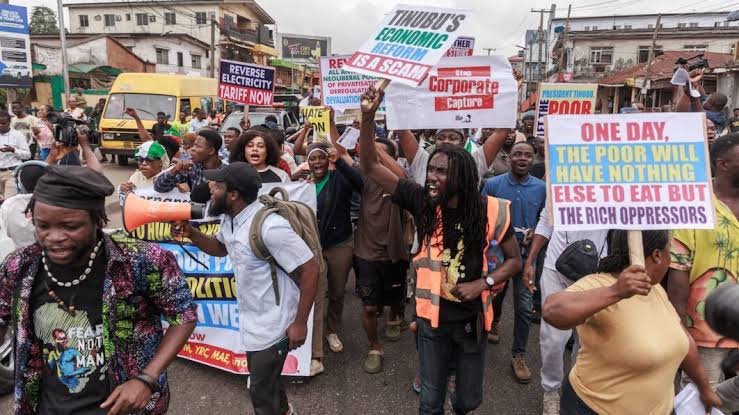
The second cause is disbelief. In January 2012, Nigerians poured into the streets over the removal of the petrol subsidy, and the government retreated within days. The anger was about who was being asked to pay. Citizens watched the poor tighten their belts while official convoys lengthened, and they concluded, correctly, that sacrifice in Nigeria flows only downhill.
The traumatic pillar reverses that flow. Pain begins at the top, where everyone can see it, and only then travels down. Let me be plain about the word. I do not mean violence, and I do not mean any suspension of constitutional order; we have had our fill of men in uniform promising to set the country right. I mean honest, designed and shared hardship, which a people can carry, in place of hidden hardship, which they will always resist.
The third cause is relapse. Our rare successes fade because they change rules without changing incentives. The transformational pillar is met only when a governor finds it more rewarding to grow his state than to lobby for a bigger allocation, when an aspiring senator learns that money buys less than credibility, and when a civil servant discovers that the nest, and not the certificate, moves a career.
Separately, each pillar is a familiar idea. Together they are something Nigeria has never tried. Think of the three stones of the traditional hearth. Remove any one and the pot falls into the fire. Totality without trauma produces a beautiful document that changes nothing. Trauma without transformation is simply cruelty. Transformation without totality builds an island the old orbit will sweep back within a decade. Standing together, the three do what no single reform has done. They deny calcification its refuges, they deny inertia its excuses, and they deny the old order the time it has always relied on to wait us out.
Who Resets the Resetters?
Here is the wall most reform plans walk politely around. Those who profit from the orbit are not outside the state waiting to be reformed. They are inside it. The rentier class that lives on allocations, waivers, contracts and licences is the same network found in the National Assembly and the state houses, on the senior benches of the judiciary, at the top of the civil service, and in the high command of the army, the police and the other agencies. Not all of them. But enough, at enough choke points, to hold a veto over their own undoing.
They will not fold their arms. We know their moves: the convenient injunction, the bill that dies in committee, the sudden discovery that a reform is really an attack on one’s region or faith, and, surest of all, the quiet purchase of the reformers. We cannot purify these people. The task is to build something their self-interest cannot block, cannot buy and cannot outwait. I would build it on four supports.
The first is the lot. The covenant that defines the reset should be written by citizens chosen by public lottery, one from each of our 774 local government areas, voting by secret ballot. You cannot bribe in advance someone you cannot name in advance, and no patron pays for a vote he cannot check. Ireland broke a decades-old political deadlock by handing its most bitter constitutional question to 99 citizens chosen at random.
The second is the lock: devices that make passing the reset cheaper for incumbents than blocking it. Cuts to the pay and privileges of office take effect from the next term, so legislators vote on rules for their successors rather than themselves. From the National Assembly we ask for one amendment only, a door through which the citizens’ covenant goes straight to a referendum. Disputes go to a dedicated bench with fixed deadlines and no power to freeze measures by interim order. The reset bodies are funded as a first charge on the Consolidated Revenue Fund, so nobody can starve them.
The third is the ladder, and it runs both ways. Downward, for the incumbent elite: one public window to declare questionable wealth, return an agreed share and keep the rest lawfully, with total forfeiture for those who stay out. Distasteful? Yes. But a class offered only ruin fights to the end. Upward, and far more important, for the hostages inside captured institutions.
The constable is not the inspector general. The captain is not the general. Give them promotion by the weaver’s test, pensions no politician can raid, protection when they speak up, and, for soldiers and police, a professional covenant of decent welfare, apolitical promotion and firm civilian oversight. Win the lower and middle floors of every institution and the top floor finds itself surrounded, without a shot fired.
The fourth is the light. Rent lives in discretion: who gets the waiver, which contractor is paid first, how a container is valued. Every such decision is a toll gate. Turn as many as possible into automated, published rules, and make every naira entering the Federation Account traceable in public from source to project. What is automated cannot be negotiated, and what is seen is harder to steal.
None of the four is proof against capture. Together they make it slow, costly and visible. And every reset body must dissolve on a fixed date, because a reset that cannot end is only a new centre of gravity.
What the Burn Must Carry
Within that frame, six changes move together. Take most oil revenue out of the monthly sharing formula and into an openly governed trust, sunset the waivers, and move states, over a defined transition, onto revenue they raise themselves. At 8.2 percent of GDP in 2023, by the OECD’s count, our tax take was about half the African average. A state that has never needed its citizens’ money has never needed their consent.
Devolve policing, resources and most development functions so that states compete on governance. Cap and disclose campaign spending and fund the electoral commission directly. Audit every agency for what it actually does, and close, merge or rebuild each within two years, starting at the top. Hire and promote on demonstrated competence. Publish local budgets, debate them at ward level, and tie taxes visibly to roads, clinics and classrooms, until the comfortable cynic who expects nothing and therefore owes nothing finds his position harder to hold.
The Dosage of Pain
Pain that is not governed becomes collapse. So the order of sacrifice is fixed: officeholders first, then senior officials, then the companies fattened on waivers, and only then the public, with no stage beginning until the one above it is visibly in force. The poorest households receive direct, verified support through the transition, paid from the rents being cut rather than from fresh loans. Every month the public hears plainly what was cut, who bore it and where the money went, because people will carry pain whose purpose they can see and revolt against pain they suspect is theft. Our churches, mosques and traditional institutions have a part no economist can play: keeping hardship from curdling into despair.
The work will take about a decade, in stages with gates that must be passed, and it is finished only after two peaceful handovers of power under the new rules. Through all of it the reset must remain civilian, constitutional and time-bound. The day it needs a strongman, it has become the thing it set out to destroy.
A New Centre of Gravity
Our problem has never been stillness. It has been motion bent into a circle by a centre too heavy to escape and too profitable to lighten. We have fired our engines many times and each time swung faithfully back to where we began.
What I am proposing asks for one sustained burn and a deliberate lightening of the weight at the centre. It will hurt. It should. The alternative is another lap, handed down to children who will be told, as we were, that this time the circle is bigger.
A country that breaks its orbit does not drift into the void. It finds a new centre of gravity, and for Nigeria that centre can only be its own people: their work, their taxes, their judgement and their consent. The weaver builds; the one who must live in the nest inspects it; what holds becomes a home. We have never built a state that could pass that test. It is time we did.
About the Author
Charles is a contrarian thinker writing from Lagos