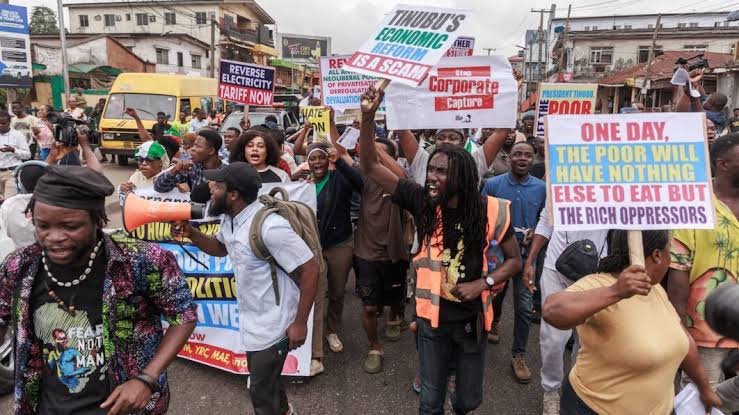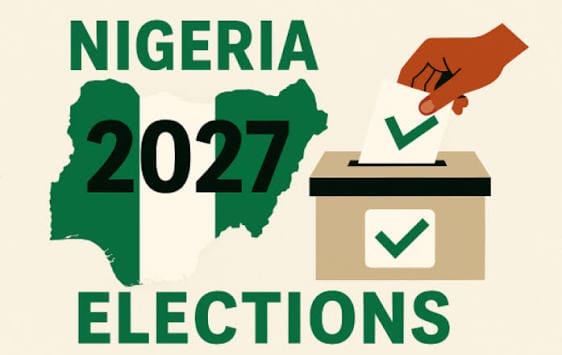
As the 2027 general elections draw closer, those who believe that election in Nigeria can only be won through rigging and violence need to be reminded that things have changed dramatically. Nigerians are angry and have realized that the suffering and hardship in the land are as a result of rigged elections that foisted the worst elements as leaders. Rigged elections foisted looters and all manners of criminal elements as leaders to toy with the destiny of innocent Nigerians.
The savage suffering, pain and hardship have made people draw a line to say enough is enough with political enslavement. That is why 2027 will be very different from 2023 and 2019 and the rest. With the destiny of the people now in their own hand, there would be no passive on-lookers while disgruntled elements wreck the elections for their selfish interest. As it were, a number of measures have been put in place to protect the elections against rigging.
First, the law has changed. The Electoral Act 2022 is now fully in force. BVAS and IReV electronic transmission is mandatory. In 2023 INEC had excuses. In 2027, failure to upload in real time will cause instant nationwide outrage. Parties now know how to screenshot results at polling units. Going by Section 65 of Electoral Act, INEC can review declaration made under duress within 7 days. That clause was used in Adamawa 2023, it will be used more.
Second, the voter register has changed. In 2023, there were 93.4 million registered voters. The 2027 projection is around 102–105 million. Over 60 percent will be under 35. And 40 percent are first-time or second-time voters who did NOT vote in 2015. They don’t care about old party loyalties, they care about jobs, migration, data cost, and security. They live on TikTok, not NTA. INEC continuous voter registration captured a lot of new voters in North Central and South.
Third, the economy is the ballot. The 2023 election was about ENDSARS anger, Muslim-Muslim ticket, and “structure vs movement”. 2027 will be about naira, fuel subsidy removal, high cost of food and medicines, high cost of electricity band A. Everyone now feels the economy personally. The incumbent cannot run on promises, they will run on record. Debt servicing, minimum wage N70k vs N200k bag of rice — that’s what people argue about at motor parks.
Fourth, insecurity has moved. In 2019, it was Boko Haram in North East. In 2023, it was banditry in North West, IPOB sit-at-home in South East. But in 2027, it’s Benue/Plateau farmer-herder killings, Yelwata-type massacres, kidnapping on highways like the road blockades, ravaging bandits, etc. Candidates will be judged on whether they even dare to visit IDP camps. Safe zones for campaigning have shrunk.
Fifth, parties are no longer the same. APC is no longer just opposition; it’s the incumbent with internal factions following Tinubu’s purported reforms. PDP is weaker and split. Labour Party that gave Obi 6 million votes in 2023 is now fractured. Obi himself is now with NDC (National Democratic Congress), Sowore with AAC, Atiku still around, Kwankwaso with Obi in NDC. Coalitions are forming earlier than 2023. We may see a strong third-force coalition against APC, not many small parties.
Sixth, the courts will matter less, the polling unit will matter more. After the Supreme Court judgment in 2023 saying IReV failure is not enough to cancel election, parties learned that you must WIN at the polling unit, not in court. So 2027 will have more party agents with power banks, more parallel vote tabulation by Situation Room, Yiaga, etc.
Seventh, state power vs federal power: Governors showed in 2023 they can influence presidential results in their states. In 2025–2026 we saw governors trying to block opposition visits (Benue). Expect more: denial of stadium, road blockades, and traditional rulers told not to receive candidates. The fight over “who controls the state” will be fiercer.
Eight, diaspora and social media influence will matter. Albeit, there is no diaspora voting yet, but diaspora money and WhatsApp influence is huge. A video of a road blockade in Benue reaches London in 10 minutes. Parties now have full-time content teams. As a matter of fact, the chant in 2023 was “We want to try someone new”. That of 2027 will be “You had 4 years, what did you do with it?” It is less about tribe and more about survival — can I travel Benin-Ore Expressways safely? Can I afford transport? Will my farm be attacked?
Since 2023, Benue APC has had two parallel structures — Governor Hyacinth Alia camp vs SGF George Akume camp. This is not just personality clash. Akume brought Alia in 2023. Alia now says “no emperor can decide Benue in 2027.” Akume says “all incumbents must get automatic tickets.”
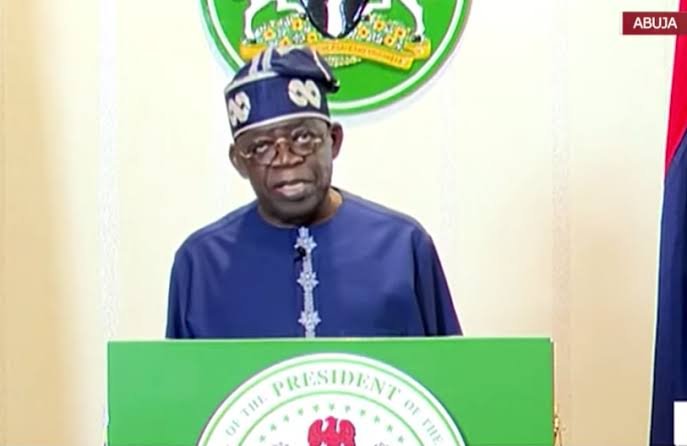
President Tinubu called a reconciliation on May 3, 2026 at Government House Makurdi, but it ended in public disagreement. Akume claimed agreement on automatic tickets, Alia denied it, saying APC national chairman said “there is no automatic ticket.”
As it were, tickets have become the war. Leadership newspaper reported that Akume loyalists finally won — serving Senators Titus Zam, Emmanuel Udende and Reps like Dickson Tarkighir, Regina Akume kept tickets submitted to INEC, while some Alia loyalists announced at primaries were dropped. So 2027 in Benue is direct primary vs imposed list.
Why road blockade of Peter Obi matters in Benue: Benue has 2 million IDPs. In 2023, Peter Obi won Benue with 40 percent because of IDP anger. Any opposition candidate visiting Yelwata where 200 were killed in June 2025 hits Alia’s weakest point: insecurity. So blocking Obi is about who owns the sympathy narrative. Alia’s base says “follow protocol, security is fragile.” Opposition says “you are politicizing victims.” In 2027 Benue vote will be: Can Alia show performance — free primary school, clinics, roads vs Akume’s structure that still controls most NASS members.
What makes 2027 different in Rivers State: PDP is dead in Rivers, APC is now two parties inside one. In 2023 Wike delivered Rivers for Tinubu while still in PDP. Fubara was Wike’s chosen godson. They fell out over who controls money, assembly, LG chairmen. 27 lawmakers loyal to Wike defected to APC. Then Fubara himself defected to APC, declaring “without Mr. President I would have been a former governor.”
Now both Wike and Fubara are in APC, but fighting. Wike says “I have LG chairmen, Assembly members, party chairmen of APC and PDP, I don’t need governor to mobilize votes for Tinubu”. Fubara says he stepped aside from APC guber primary in 2026 for peace.
Wike claimed there was a presidential peace deal: impeachment dropped, Fubara should NOT seek second term. Fubara bought APC nomination forms, was screened and cleared, then voluntarily withdrew ahead of primaries according to APC chairman Yilwatda. So Rivers APC guber ticket went to House Minority Leader Kingsley Chinda, Wike’s ally. Therefore, 2027 Rivers guber is NOT Fubara vs PDP. It’s Wike’s coalition vs whoever Tinubu wants.
Why it’s different from Benue: Benue fight is structure vs performance inside same party. Rivers fight is federal power vs state power. Wike as FCT Minister controls federal appointments. Fubara controls state allocation and grassroots. Both claim to love Tinubu. Tinubu’s choice will decide who gets “001” in APC.
Conclusively, in Benue, it is Alia vs Akume for APC soul. Has insecurity improved or not? Who can protect Tiv/Idoma farmers? Obi won here in 2023, IDP visit amounts to direct attack on incumbent Governor.
In Rivers, it is Wike vs Fubara for who is real APC? Who controls oil money and can deliver peace? Is godfatherism over? Low in guber, but high for presidential — Rivers presidential votes will be shared based on who mobilizes better.
In both states, 2027 is not about PDP vs APC manifesto. It’s about who the authentic APC is and whether blocking opponents (like blocking Obi in Benue, or blocking Fubara in Rivers primaries) will be accepted by voters tired of “structure” politics.
Dr. Onyekakeyah, a former member of The Guardian Editorial Board, is a public affairs commentator and columnist for Daily Query.