Investment stakeholders have called for interstate collaboration to transform investment opportunities into tangible outcomes and support Nigeria’s drive to achieve a one trillion dollars economy by 2030.
The stakeholders made the call on Wednesday in Abuja at an investment mobilisation stakeholders’ roundtable organised by the Forum of State Investment Promotion Agencies of Nigeria (FOSIPAN), in collaboration with Brave Icons Global (BIG).
The event focused on the theme ‘From Opportunity to Capital Outcomes: Building Nigeria’s Subnational Investment Mobilisation Structure’.
Speaking at a panel titled “Closing the Conversion Gap: What It Takes to Move State Opportunities from Pipeline to Capital Deployment,” the stakeholders said the move would help de-risk investments and drive outcomes.
Mr Ahmed Abdulrazak, Director, Contract Compliance, Infrastructure Concession Regulatory Commission (ICRC), said states needed to understand investment risks and strengthen their capacity for project preparation to translate opportunities into tangible outcomes.
Abdulrazak said many state governments often undertook projects independently, urging them to collaborate as well as pool their finances and resources to facilitate project implementation.
He said effective project preparation was crucial to attracting private capital, but often costly.
“Most times, based on our experience in ICRC, we find out that the cost of project preparation is always so high. So, over the years, we have trained a lot of ministries, departments and agencies in understanding how investments work and how you can attract private capital,” he said.
According to him, states should assess the financial viability of projects and adopt measures to mitigate associated risks, which partnerships can facilitate.
Similarly, Mr David Oke, Vice President, World Trade Centre, Lagos, said collaboration among states should be properly structured and operationalised to enable them to harness their comparative advantages, attract investments and promote sustainable development.
Oke urged sub-nationals against politicising investment promotion and called on states to invest in local capacity, particularly among people driving investment and economic development.
Mr Paul Healey, Head, Green Growth and Private Sector, British High Commission, Nigeria, said that although collaboration among states could be challenging, requiring agreements, trust and strong relationships, joint risk assessments and project preparation could be beneficial.
Healey said that most institutional investors from overseas preferred to work with credible local partners, saying such partnerships provided assurance that local investors understood the market and had a stake in the project.
According to him, effective de-risking should encompass not only financial considerations but also the legal environment, which is a key concern for the commission’s commercial partners.
Earlier in his remarks, FOSIPAN Chairman, Dr Terhemen Kpenkaan, said the roundtable sought to explain why promising opportunities across states failed to become financed projects, productive enterprises and measurable development outcomes, improving citizens’ livelihoods.
Kpenkaan said a one trillion dollars economy could not be proclaimed into existence but had to be built.
Kpenkaan, also the Executive Secretary, Benue State Investment Promotion Agency, said a one trillion dollars economy could not be proclaimed into existence but had to be built
He said State Investment Promotion Agencies had therefore become strategically important, serving increasingly as investor-facing coordination points by guiding investors through government and convening relevant ministries and agencies.
“Capital does not move towards opportunity alone. It moves towards credible institutions, prepared transactions, manageable risks and clear pathways to decision.
“This is the challenge that the Subnational Investment Pipeline Nigeria (SIP-NG) programme, seeks to address,” he said.
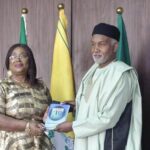
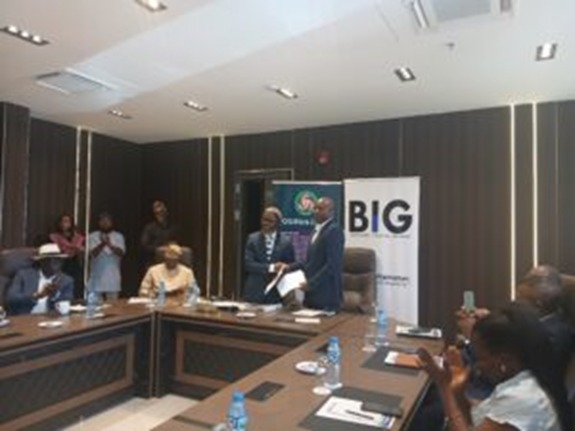
The FOSIPAN and BIG signed Memorandum of Understanding for SIP-NG programme development , stakeholder consultation and institutional alignment.
Kpenkaan explained that the agreement neither admitted states into implementation nor approved projects or committed institutions to financing, but provided a transparent basis for refining the programme and engaging institutions essential to its development.