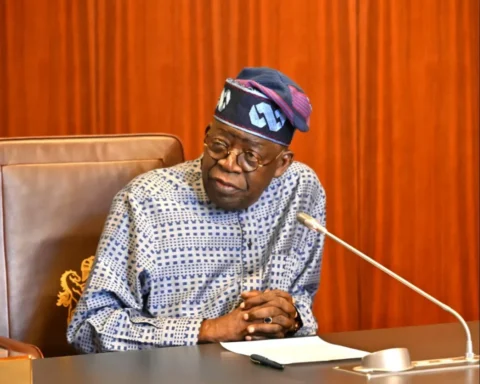
President Bola Ahmed Tinubu has issued a fiery charge to African leaders, demanding an immediate end to the continent’s long-standing practice of exporting raw critical minerals only to buy back processed goods at inflated prices.
Addressing global stakeholders on Monday, September 21, 2026, the President called for an “aggressive continental alliance” to enforce local value addition, build regional industrial capacity, and retain mineral wealth within Africa.
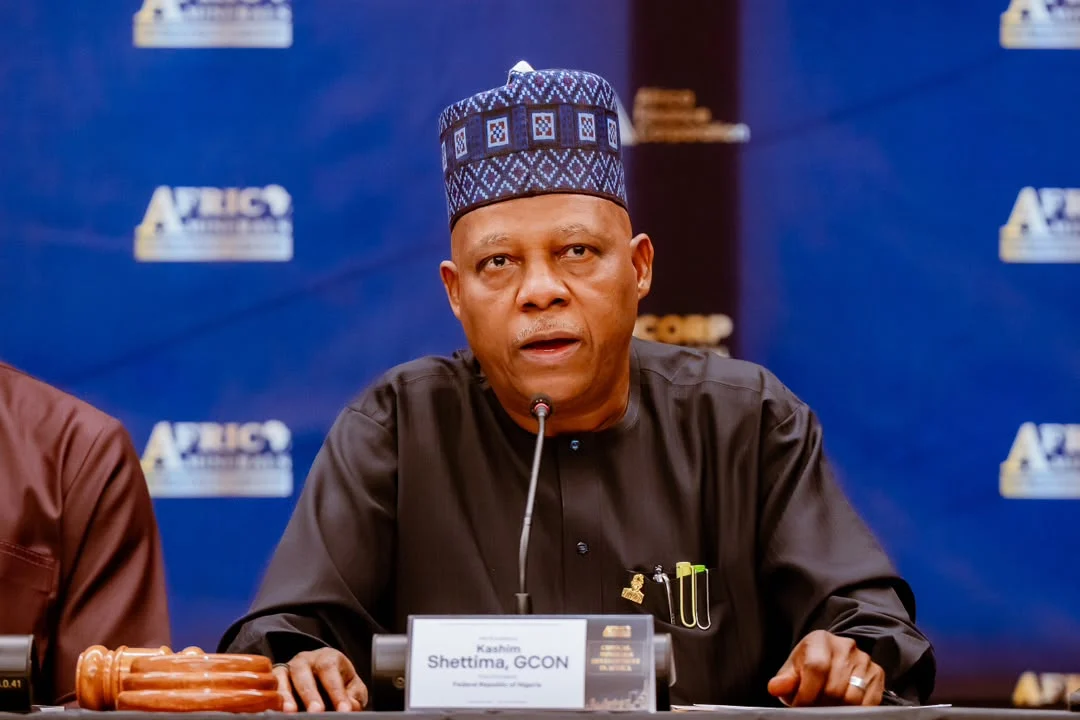
The address was delivered by Vice President Kashim Shettima, who represented President Tinubu as chair of the 3rd Africa Minerals Strategy Group (AMSG) High-Level Roundtable on Critical Minerals Development in Africa.
Held on the sidelines of the ongoing 81st Session of the United Nations General Assembly (UNGA 81) at the UN Headquarters in New York, the summit convened ministers, global investors, and development finance executives under the theme: “From Resources to Wealth: Continental Cooperation for Mineral Value Addition, Data Sovereignty, Innovative Financing and Critical Minerals Security.”
Opening the roundtable, President Tinubu rejected the historical trajectory that has left mineral-rich communities impoverished while supplying the raw inputs for global technology and green energy transitions. ”For generations, Africa has furnished the materials of prosperity elsewhere.
Our duty is to ensure that the future being fashioned from African minerals has room for African ambition,” Tinubu declared. “The worth of a mine must be counted in the lives it improves. Jobs, industries, infrastructure, technology transfer, and prosperity retained across generations must measure our progress from resources to wealth.”
Tinubu cautioned African governments against destructive internal competition, warning that undercutting one another through lower royalties, weaker local-content rules, or excessive tax concessions only destroys the continent’s collective bargaining power.
”Fragmentation leaves us exporting raw materials and buying finished goods at a premium,” he stressed. “Cooperation gives our markets scale, our industries integration, our financing reach, and our negotiations authority. No outsider will organize our continent or place our industrial interests above their own.”
Highlighting Nigeria’s ongoing domestic mining overhaul as proof of concept, President Tinubu pointed to key regulatory shifts, including mandatory local processing plans before issuing new extraction licenses, formalizing artisanal miners into cooperatives, and strengthening geological data accessibility.
According to the official statement issued by Stanley Nkwocha, Senior Special Assistant to the President on Media and Communications (Office of the Vice President), Nigeria’s solid minerals revenue experienced exponential growth under these policies.
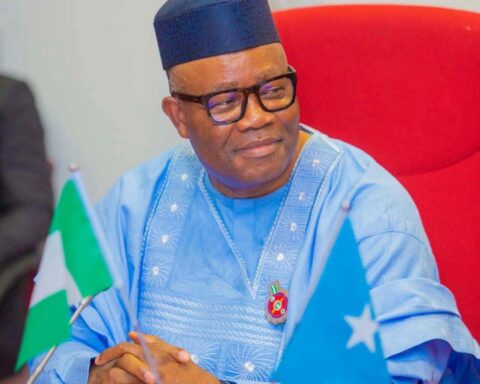
Tinubu cited major foreign investment commitments and operational, large-scale lithium processing plants in Nasarawa State as tangible evidence that local value addition is both viable and profitable. Co-chairing the high-level meeting, Dr. Dele Alake, Nigeria’s Minister of Solid Minerals Development and Chairman of the AMSG, presented the landmark Continental Integration and Economic Assurance Declaration (CIEAD).
Signed by participating member states, the framework establishes unified mineral corridors, harmonizes licensing standards across borders, and facilitates shared processing infrastructure. Dr. Alake also advocated for formalizing artisanal mining across the continent and proposed an African Mine Emergency and Community Recovery Fund to improve safety, mitigate pit disasters, and support local mining communities.
The roundtable drew key contributions from leaders across the continent and the global communit; Samaila Zubairu CEO, Africa Finance Corporation, stated that Africa cannot wait to industrialize if it is to sustain over one billion citizens over the next two decades, calling for joint regional infrastructure financing.
Hassan Ali-Joho, Kenya’s Minister of Blue Economy and Maritime Affairs, emphasised domestic resource mobilization and transparent, harmonized licensing procedures as crucial to unlocking capital. Chris Kulukundis (Special Advisor, U.S. State Department Bureau of African Affairs): Affirmed the U.S. government’s readiness to build mutually beneficial processing and technology partnerships with African nations.
Closing the session, Vice President Shettima urged the AMSG to move swiftly from policy declarations to execution, calling on member nations to build bankable, cross-border projects that will transform Africa’s critical minerals into sustainable economic security.