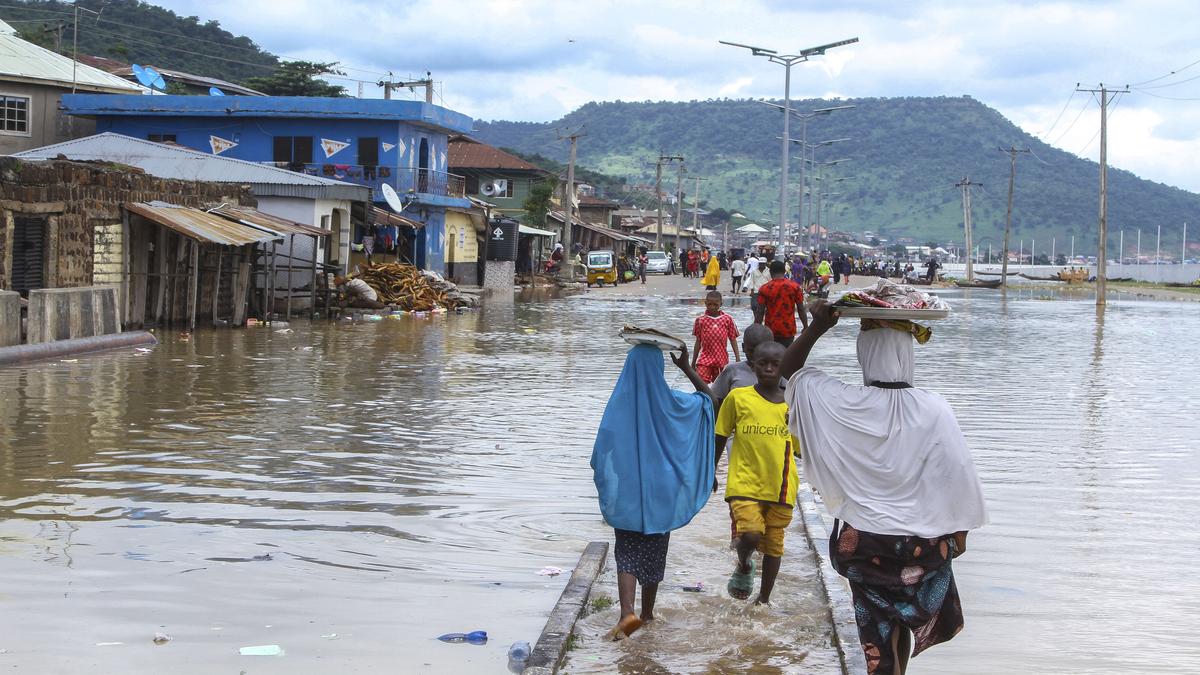
The Nigeria Hydrological Services Agency (NIHSA) has issued an emergency high flood risk warning for 15 states, effective from September 19 through September 25, 2026.
The critical alert, designated as NFA-2026-262, follows recent hydrometeorological evaluations pointing to rapidly rising river levels and an imminent threat of widespread riverine flooding.
According to official advisories released on Saturday from the agency’s headquarters in Abuja, the affected states include:- Cross River, Imo, Ebonyi, Benue, Anambra, Akwa Ibom, Lagos, Rivers, Edo, Kogi, Taraba, Delta, Bayelsa, Enugu and Abia.
In an official public briefing, the Director-General and Chief Executive Officer of NIHSA, Umar Ibrahim Mohammed, emphasized that nine key river monitoring stations require continuous, close oversight.
Specific high-risk zones highlighted include the Obubra, Itigidi, and Epento river basins along the Cross River. The agency’s preliminary exposure assessment indicates that significant human populations, critical infrastructure, and agricultural lands face severe risk:
Within Cross River alone, the forecast identifies 2,471 communities, 703 schools, 344 health facilities, 145 open markets, 453 religious centers, and 854 hectares of farmland directly in harm’s way.
Addressing state executives, local government authorities, emergency managers, and traditional rulers, Umar Ibrahim Mohammed stressed that proactive measures must be initiated immediately to prevent avoidable loss of life and property.
“Early action and compliance with official flood warnings remain critical to reducing the risk of casualties, destruction of infrastructure, and damage to livelihoods.” said Umar Ibrahim Mohammed.
Residents in low-lying floodplains are advised to move family members, livestock, and essential items to higher ground. Local authorities are directed to designate safe shelter centers for possible evacuations.
Residents are being advised to locate areas with pre-positioning of first-aid kits, clean drinking water, and water purification agents across vulnerable communities. Citizens are strongly cautioned against driving or walking through flooded roads, submerged bridges, or swift currents.
NIHSA confirmed its teams will maintain 24/7 monitoring of hydrological conditions and water levels across all affected river basins and will issue subsequent technical advisories as conditions evolve.