By Agbafo Ijeoma
On the morning of September 11, 2001, New York City began the day beneath a clear blue sky, with commuters heading to work and passengers boarding flights unaware that history was about to change. At 8:46 a.m., American Airlines Flight 11 struck the North Tower of the World Trade Center, followed 17 minutes later by United Airlines Flight 175 crashing into the South Tower.
Two other hijacked aircraft would strike the Pentagon in Virginia and crash into a field near Shanksville, Pennsylvania, after passengers attempted to overpower the hijackers. By 10:28 a.m., both towers had collapsed. In 102 minutes, 2,977 people had been killed, alongside the 19 al-Qaeda hijackers, and the world had witnessed one of the defining tragedies of the 21st century.
Twenty-five years later, the attacks remain more than a memory of burning towers and a cloud of dust sweeping through Manhattan. They became a dividing line between the world before 9/11 and the one that followed. The attacks fundamentally reshaped global aviation security, forcing governments and airlines to introduce stricter passenger screening, tighter restrictions and stronger cockpit protections.
In the United States, the creation of the Transportation Security Administration transformed airports into heavily secured environments, while procedures that once seemed extraordinary became routine for travellers around the world.
The transformation did not stop at airports. The attacks exposed serious weaknesses in intelligence sharing and counter-terrorism systems, prompting major changes in how governments identified and responded to threats. In the United States, expanded intelligence-gathering and domestic surveillance powers followed, including those introduced through the USA PATRIOT Act.
While such measures were presented as necessary to prevent another attack, they also sparked an enduring debate over the balance between national security, privacy and civil liberties. The question of how much freedom a society should surrender in the pursuit of safety remains one of the lasting legacies of September 11.
Beyond America’s borders, the consequences were even more profound. The United States launched military operations in Afghanistan less than a month after the attacks, beginning what became known as the War on Terror.
The years that followed reshaped international alliances, military strategies and diplomatic relations, while conflicts in Afghanistan and Iraq affected millions of lives through war, displacement and political instability. The impact of 9/11 therefore extended far beyond the buildings that were destroyed that morning, influencing international politics and security policies for decades.
Yet the deepest legacy of September 11 remains human. Behind the figure of 2,977 were parents, children, spouses, colleagues and friends whose lives ended without warning. Firefighters, police officers, medical workers and other first responders ran towards the burning buildings as thousands attempted to escape.
For many who survived, however, the tragedy did not end when the towers collapsed. Rescue and recovery workers, volunteers and residents exposed to the dust and debris at Ground Zero have continued to face serious health consequences, meaning that for many families, the effects of that morning have stretched across 25 years.
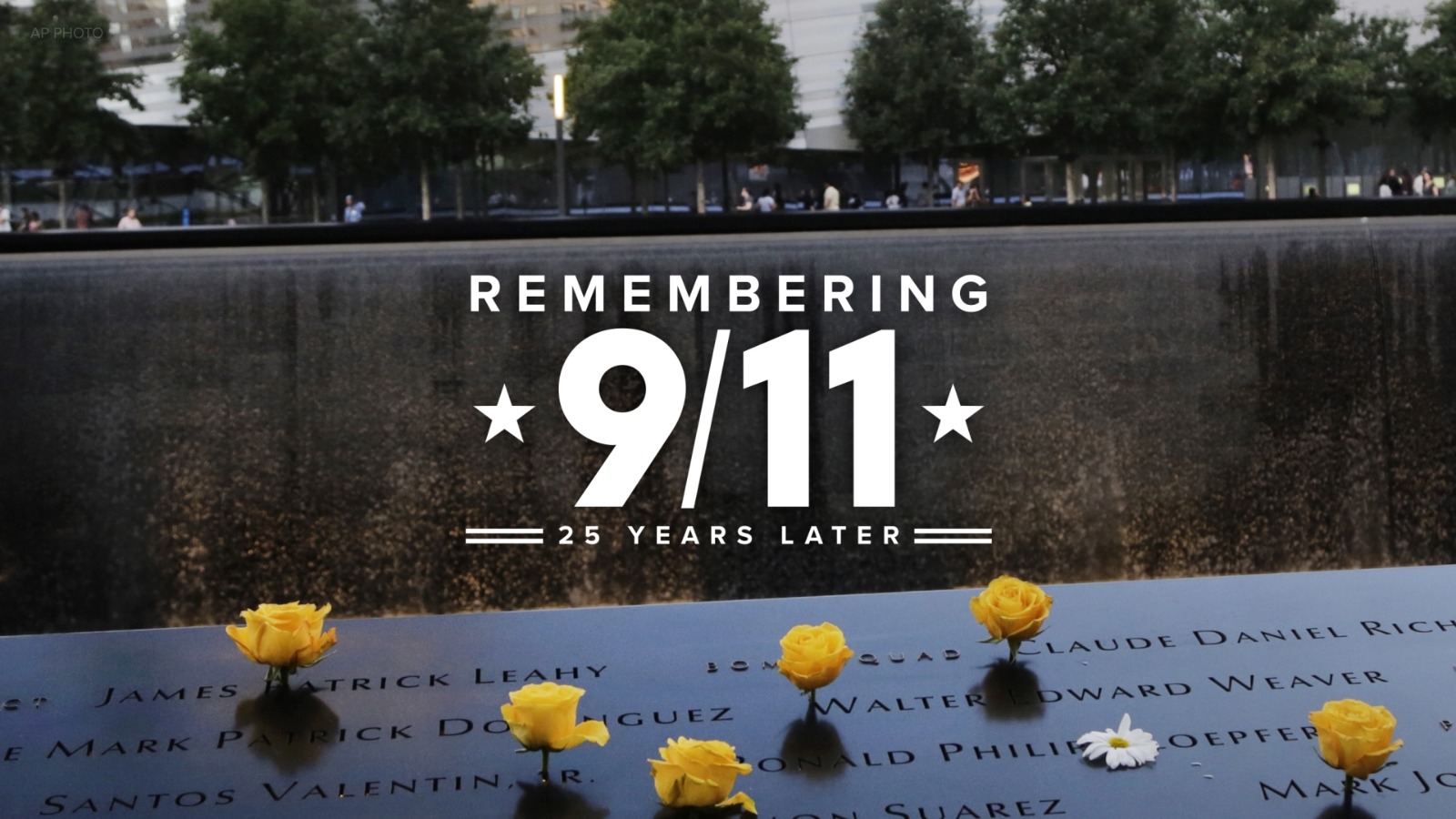
Today, a new generation is learning about September 11 without having lived through it. For them, the attacks exist in photographs, documentaries, memorials and the stories of those who remember where they were when the news broke. That makes the responsibility to preserve those stories even greater.
Twenty-five years later, “Never Forget” is not simply a call to remember the towers or the horror of their collapse; it is a call to remember the people, the courage of those who responded, the lives altered by the aftermath and the lessons of a day that changed the world’s understanding of security, conflict and vulnerability. The towers are gone, the skyline has changed and a generation has grown up, but the imprint of those 102 minutes remains firmly embedded in history.