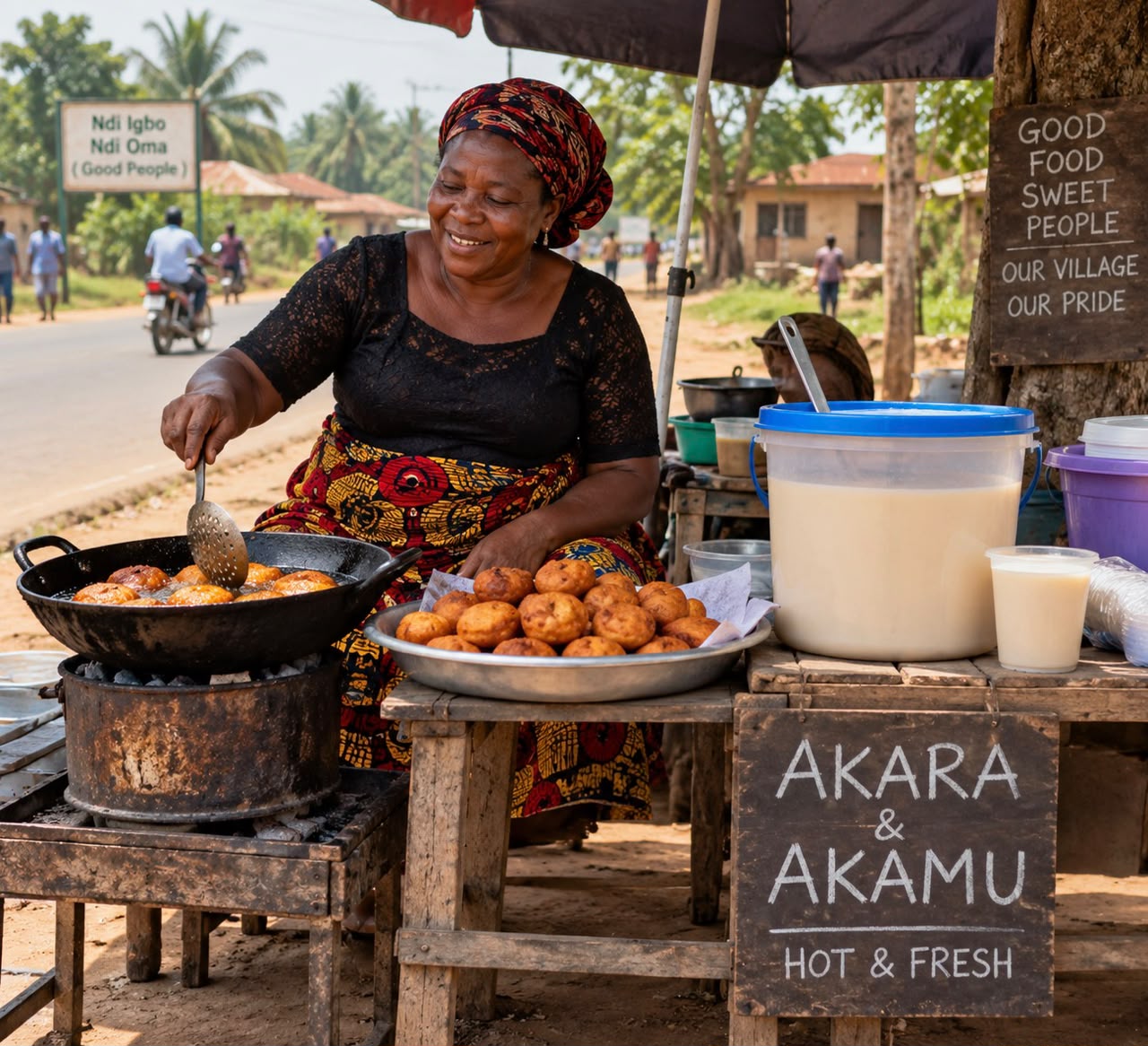
I was in my village recently for the New Yam Festival and some other engagements. Each time I travel to the village alone, my early morning routine is to step out and buy akara and akamu for breakfast. One morning, because I had travelled with some workers and therefore had more mouths to feed, I stepped out to buy enough akara and akamu before we started the day’s activities.
I approached an elderly woman frying akara and asked for N3,000 worth. To my surprise, she declined. She said she could only sell me N1,500 worth because she had to keep some for her regular customers. I asked whether they had placed orders. “No,” she said.
But if they came and found that the akara had finished, they might be unhappy. I had to find another woman to complete my purchase. A little further away, I encountered the same situation with an akamu seller. When I asked to buy what I needed, she looked at me and said, “Oga, if you buy that quantity, what will I now sell to other people?”
“But what if those people don’t come?” I asked. “They will come,” she replied confidently. I reminded her that the purpose of the business was to sell and make money. Wouldn’t she be happy to sell everything, make her money and close for the day? Her answer was revealing. She said she didn’t do the business only for the money.
She also did it to make friends, interact with people and keep herself busy. Eventually, with some persuasion from her friend, who had been listening to our conversation, she agreed to sell everything to me. I left, but the encounter stayed with me. I kept thinking about these two women.
Why would somebody who wakes up every morning, makes akara or akamu, brings it out to sell and depends on the proceeds for her daily needs turn down a customer who was ready to buy a large quantity? Was it inexperience? Was it simply the way village people have learnt to live with one another? Or was it communal living at another level? The more I thought about it, the more I began to see something beyond the akara and akamu.
These women knew their customers. They knew the people who came every morning. They knew who would normally stop by for akara and who would come for akamu. They were not prepared to sell everything to me and leave those people with nothing, even though nobody had called ahead to reserve anything.
That, for me, was the most interesting part of the encounter. In the city, if somebody walks into your shop and offers to buy everything you have, you probably see it as a good day. You sell everything, count your money and go home happy. Nobody would expect you to keep some goods aside for customers who may or may not show up.
But village life can be different. There is still a level of familiarity and consideration that sometimes makes people put community ahead of immediate profit. And perhaps that is what these women were doing without even thinking deeply about it. They were protecting their relationship with the people who patronise them every day.
Their customers were not just customers. They were people they knew, people they expected to see and, in some small way, people they felt responsible to. I found that quite touching. We talk a lot about business, profit, competition and maximising opportunities. And rightly so. But there is also something to be said for a way of life where people still think about the next person, even when doing so may cost them a little money.
It was a very ordinary encounter. Two women selling akara and akamu by the roadside. Yet, somehow, they reminded me that not everything in life should be reduced to money. The next time I travel to the village with many mouths to feed, I now know what to do. I will spread my patronage and buy from more women.
After all, there must be enough akara and akamu to go round. God bless these women. There is indeed a lot we can still learn from our village people. (c) Fred Chukwuelobe, fnipr