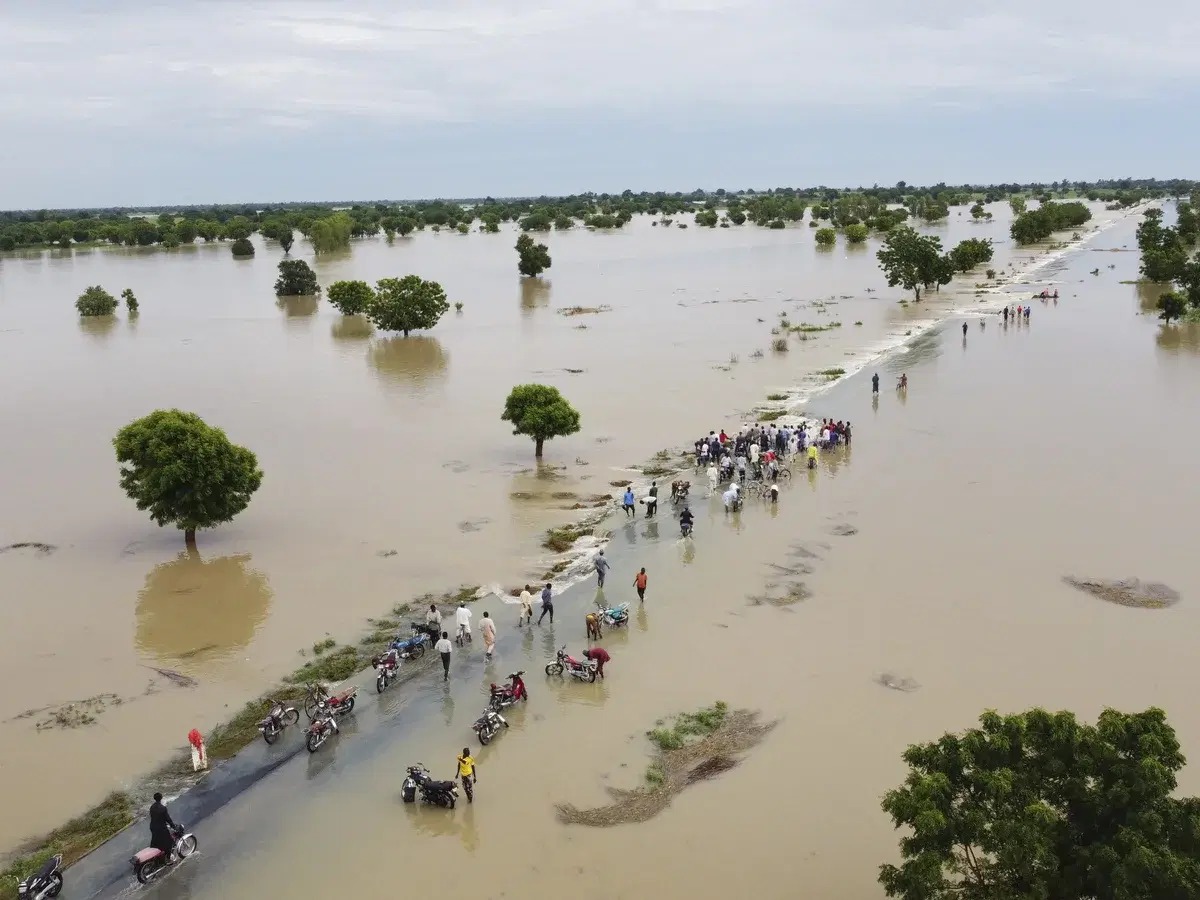
The Ogun State Government has issued an urgent flood warning to residents living in vulnerable communities and along river channels across the state, advising them to stay vigilant and relocate to safer locations.
The advisory was contained in an official statement released on Tuesday morning, September 1, 2026, by the Commissioner for Environment, Mr. Ola Oresanya. The warning comes as the state prepares for the second phase of the 2026 rainy season.
Based on predictions from the Nigeria Meteorological Agency (NiMet), the second phase of the rainy season will begin in September 2026. The state is expected to record an intense monthly rainfall average of approximately 360mm before rains decline in early November.
High rainfall, tidal fluctuations, and controlled water releases from the Oyan Dam are expected to cause river overflow and temporarily oversaturate wetlands and floodplains.
The Affected Communities include; Inland & Riverine: Isheri, Arepo, Mawere, Magboro, Akute, Warewa, parts of Abeokuta, and communities along the floodplains of the Ilo and Iju Rivers.
Coastal Areas: Makun-Omi, Iwopin, Oni, Ifaara, and Igele (Ogun Waterside LGA); Ebute-Imobi (Ijebu East LGA); and Tungeji Island and Agosasa (Ipokia LGA). Fish farmers in floodplain corridors, particularly around Eriwe, Yemule, Ilase, and Ayegbami were urged to harvest their stocks immediately to prevent heavy financial losses.
Speaking from the Ministry of Environment headquarters in Abeokuta, Commissioner Oresanya noted that the state experienced minimal impact during the first phase of the rains (mid-March to July) due to proactive desilting of major waterways like the Sokori River, Opa-Aro, Adiyan, Eruwuru, Yemule, Gbogidi Canal, and Ijamido Rivers.
To maintain safety through the end of the year, the state government has directed local government authorities, emergency response organizations, and community leaders to clear remaining drainage blockages, maintain active monitoring, and intensify public awareness campaigns to protect lives and property.