By KAA Truths
Sometimes, I genuinely wonder how Nigerian business owners sleep at night knowing that the people representing their businesses may not care whether those businesses survive.
A few weeks ago, I was in Port Harcourt when a pastor friend invited me to her church.
I travel light. Usually, just two pairs of clothes because carrying luggage around makes me very uncomfortable.
Unfortunately, everything I had was dirty, so I needed to buy something to wear to church.
We entered a shop and I saw a jacket I liked.
The one on display was obviously too big for me, so I asked the salesgirl, who was deeply concentrated on whatever was happening on her phone:
“Do you have my size?”
“Yes.”
“Okay, can I have it?”
She looked up from her phone and told me to try the oversized one on display first.
I thought I didn’t hear her well.
“How will I know if the jacket fits me by wearing one that is obviously bigger than me?”
She insisted.
She couldn’t bring out my size. I should test with the oversized one.
At this point, I became confused.
Isn’t the entire purpose of trying on clothes to know whether they fit?
How do I test the fitting of my size by wearing somebody else’s size?
But madam had returned to her phone.
Maybe there was a national emergency happening on TikTok.
We walked away.
She watched us leave without the slightest concern that a customer who was ready to spend money had just walked out of the shop.
I thought that was bad.
Then I returned to Abuja.
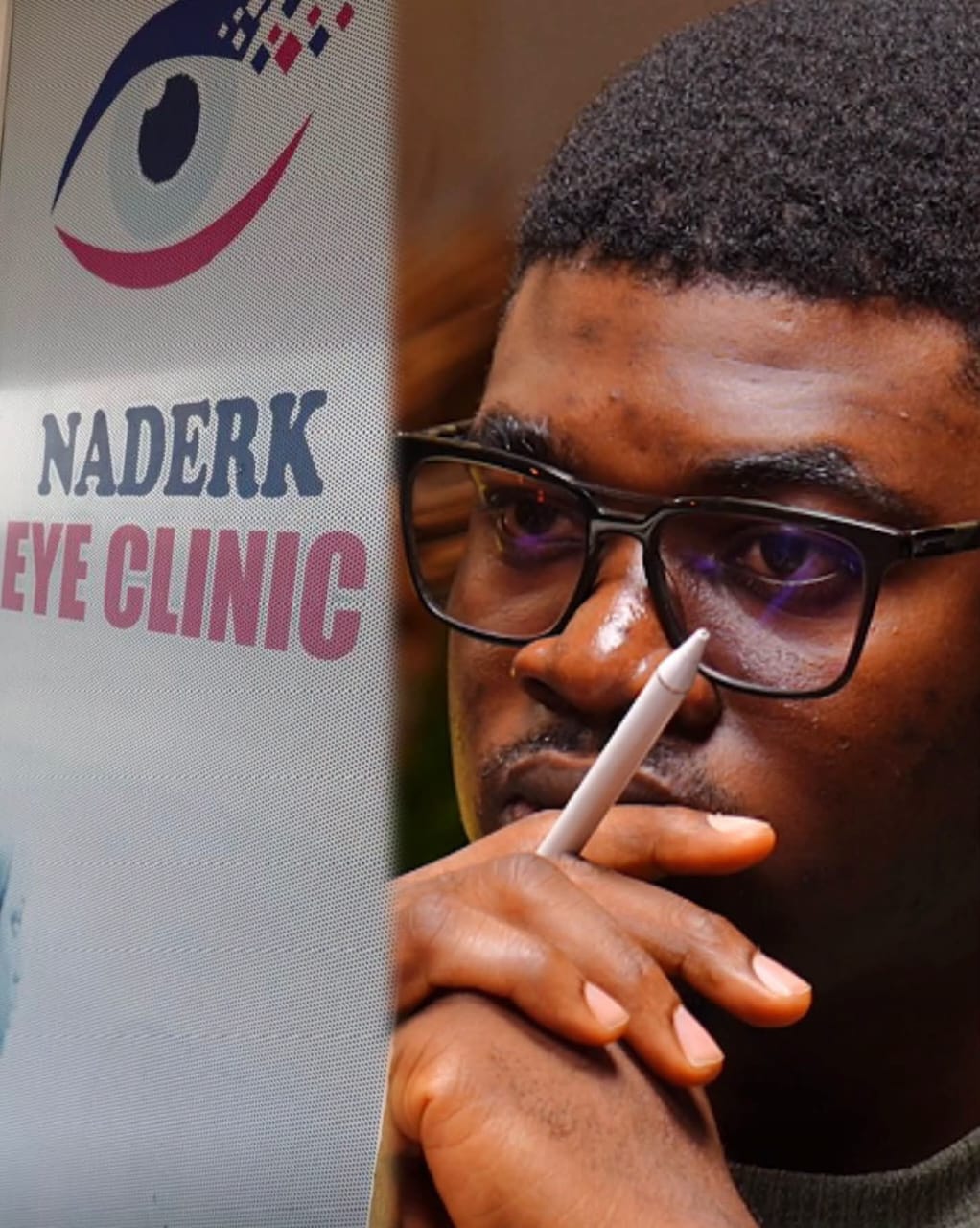
I went to Naderk Eye Clinic with three pairs of glasses.
I have used this same clinic before. In fact, I got all my prescription glasses there and it’s the same clinic where I test my eyes from time to time.
I wanted them to replace the lenses in two with my prescription computer lenses. The third already had my prescription lenses, but the frame was damaged, so I wanted a new frame.
They didn’t have a replacement frame for the third one, so that left us with two glasses.
Simple transaction.
Two glasses.
New prescription lenses.
They charged me.
I paid.
I handed over both glasses.
They said they would be ready in four days.
Three days later, my phone rang.
“Sir, you forgot one of your glasses here.”
I said, “No. I didn’t forget any glasses. I gave you two glasses.”
They said I had paid for only one, so I should come and collect the other one.
Now I was confused.
The same person who received the glasses was the same person who calculated what I should pay.
She gave me the amount.
I paid it.
Nobody told me I was paying for one pair.
Nobody said there was an outstanding balance.
So I asked to speak with the lady I had dealt with.
They said she wasn’t around but would send me her number so that I can call her myself if she’s the person I want to speak with.
While I was still speaking, they ended the call.
I called back.
No answer.
Called again.
Nothing.
Nobody called me back.
And this was the funny part: I wasn’t even refusing to pay.
If they had simply said:
“Sir, we are sorry. We mistakenly charged you for one instead of two. It was our error. Could you please pay for the second one?”
Finished.
I would have paid.
Human beings make mistakes.
But the attitude was almost as if I had inconvenienced them by bringing my money to their business.
So I went there angry and asked for an explanation.
The two ladies handed me my glasses and pushed a piece of paper towards me.
“Write your account details. I will tell my Oga to refund you.”
That was it.
No explanation.
No apology.
No attempt to resolve the misunderstanding.
Nothing.
I was standing there wondering how two employees could be so comfortable watching a paying customer walk away from a business over a problem that could have been solved with one sincere sentence.
Then I looked at the television that they were focused on.
Big Brother Naija.
Ah.
Suddenly, everything made sense.
I was disturbing something important.
They needed to dispose of this troublesome customer quickly so they could return to the serious national assignment happening on television.
I quietly wrote my account details.
As I walked out, something occurred to me.
The owner of this business was probably somewhere else working.
Thinking about rent, salaries, taxes, equipment, electricity, customer acquisition, competition, profit, loss.
Maybe even loans.
Meanwhile, the people he had entrusted with the front door of his business were inside watching Big Brother Naija while a customer walked away.
And I remembered the salesgirl in Port Harcourt.
Different city.
Different business.
Same disease.
The painful reality of entrepreneurship is that the owner may be fighting desperately to grow the business while some employees are simply waiting for closing time.
You see a customer.
They see disturbance.
You see revenue.
They see extra work.
You see the business you sacrificed years of your life to build.
They see where their salary enters from at the end of the month.
And unless you somehow build a system that makes them understand that their own progress is connected to the progress of that business, your biggest competitor may not be the business across the road.
It may be the person sitting behind your own counter with a phone in their hand.
I pity business owners in Nigeria.