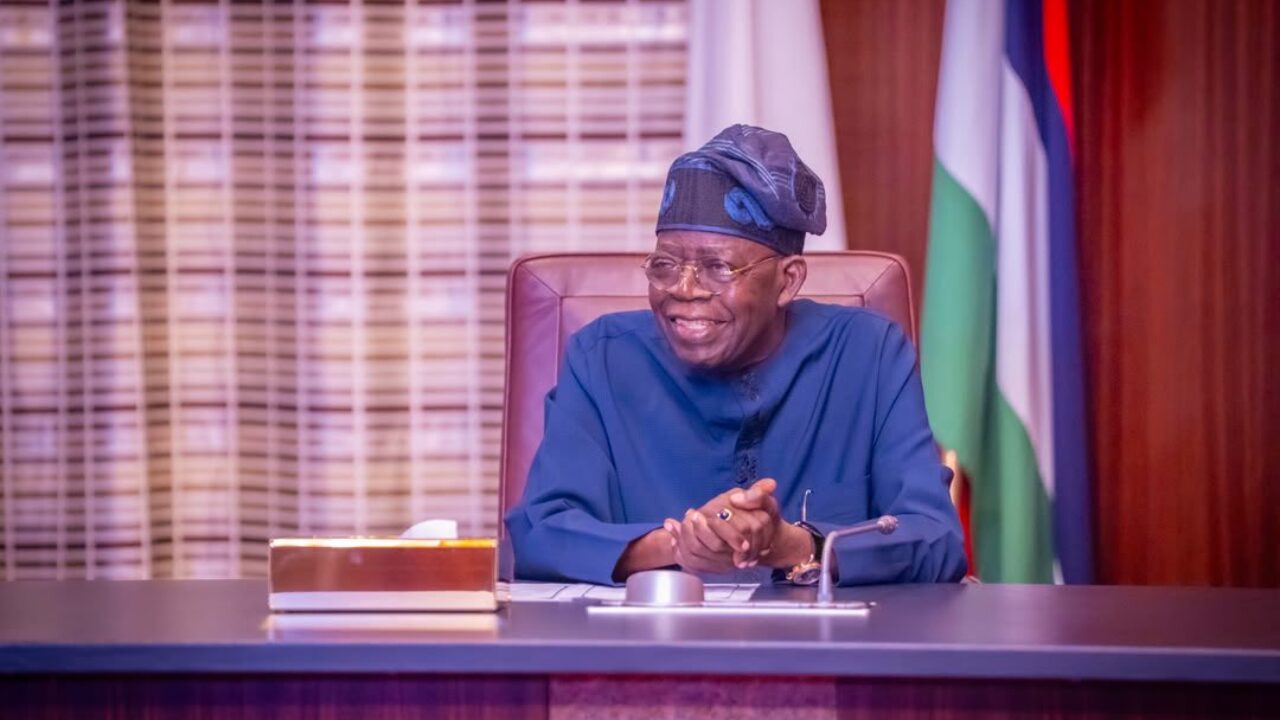
Nigerian President Bola Tinubu, through his legal team, has submitted a formal motion to the United States District Court for the District of Columbia urging the court to reject a request for the public release of his unredacted records held by the Federal Bureau of Investigation (FBI) and the Drug Enforcement Administration (DEA).
In court filings published on Saturday, August 29, 2026, attorneys Christopher Carmichael, Victor Henderson, and Oluwole Afolabi outlined four key arguments opposing the Freedom of Information Act (FOIA) motion filed by American activist Aaron Greenspan.
Tinubu’s lawyers argued that the requested records are strictly protected under Exemption 7(C) of the U.S. Freedom of Information Act and the Privacy Act, which safeguard personal information in law enforcement files from public exposure.
Citing the 1989 U.S. Supreme Court precedent Department of Justice v. Reporters Committee for Freedom of the Press, the defense emphasized that FOIA exists to shed light on government operations, not to expose personal files of private individuals.
The legal team rejected the argument that public interest in Nigeria justifies overriding privacy rights under U.S. law. They maintained that curiosity regarding a foreign leader’s fitness for office does not constitute a legally recognized public interest under U.S. FOIA regulations.
The defense accused the requester of using U.S. public disclosure laws to serve political interests in Nigeria, arguing that FOIA should not be weaponized to obtain targeted records on a sitting head of state simply due to his public profile.
Tinubu’s attorneys dismissed claims that the withheld files contain evidence of secret prosecutions or agreements, describing them as entirely speculative. They contended that unverified assertions do not meet the legal threshold required to overturn statutory privacy protections.
The legal filings have drawn sharp criticism from Nigerian political opposition figures demanding full transparency: The African Democratic Congress (ADC) Spokesperson Bolaji Abdullahi questioned the opposition to the disclosure, stating, “Why is the President opposing the release of his past records? That is suspicious. The President should allow them to be released to clear himself.”
Nigeria Democratic Congress (NDC) Spokesperson, Osa Director noted that describing the FOIA request as politically motivated should not override the public’s right to clarity, stating, “Nigerians deserve to know, and in the interest of the President, he deserves to clear the air.”
The presiding judge, U.S. District Judge Beryl Howell, is reviewing the submissions to determine whether the FBI and DEA may maintain their redactions.