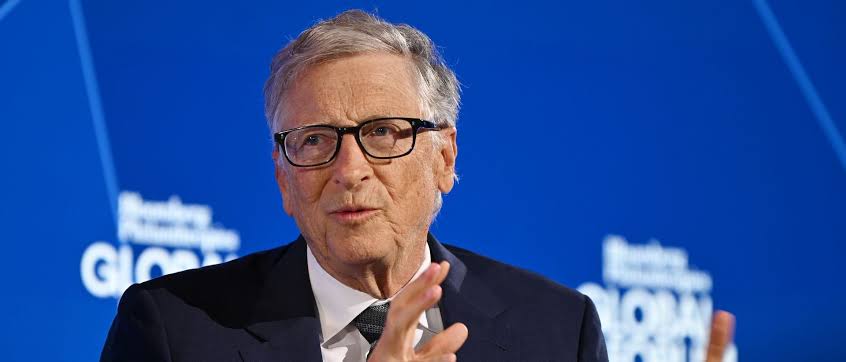
Microsoft co-founder and philanthropist Bill Gates issued a stark warning on Wednesday, cautioning world leaders, economists, and tech executives that humanity is dangerously unprepared for the rapid integration of artificial intelligence.
In a sprawling 6,000-word essay titled “The Turbulent AI Era Is Here: The Choices We Make Are Critical,” published on his personal blog GatesNotes, the 70-year-old tech pioneer declared that even under ideal circumstances, the transition to the AI age will rank among the most destabilizing social and economic shifts ever recorded.
”Even under the best circumstances, the transition to this new AI era will be one of the most turbulent times in human history,” Gates wrote. “AI will either be the greatest equalizer ever invented or the worst source of injustice. The challenge is monumental, and right now we are not preparing for it.”
Speaking in a accompanying interview with news outlet Semafor, Gates pushed back against Silicon Valley optimism. Unlike previous industrial shifts that created net-positive employment opportunities over generations, Gates warned that AI presents a unique structural challenge because it automates human cognitive labor itself.
He predicted that knowledge-based professions, including law, medicine, customer operations, and software development, face direct disruption within a decade, followed rapidly by physical labor sectors like construction as robotics fall in price.
To mitigate mass displacement, Gates proposed a policy framework centered on two core interventions: “Human-Reserved” Designation; Governments should enact laws to protect specific roles for humans, such as sensitive medical consultations and social care, even if technology can perform them more cheaply.
The AI and Token Taxes: A legislative overhaul to tax AI tokens and industrial automation, removing corporate incentives that currently treat machine replacement as a tax-deductible expense while levying heavy payroll taxes on human workers.
Beyond labor economics, Gates highlighted heightened risks in cybersecurity and youth development. He noted that bad actors are using AI to bypass legacy digital defenses faster than security teams can patch vulnerabilities, posing systemic threats to critical infrastructure, water systems, and financial networks.
Furthermore, Gates cautioned that overly agreeable AI companions could impede critical social development in children and foster psychological dependency.
The essay has already sparked intense debate across the global technology landscape. Mark Sweney, tech policy analyst, noted that Gates’s framing marks a decisive pivot away from Silicon Valley’s “laissez-faire” accelerationism.
Representatives from major AI developers, including OpenAI and Anthropic, acknowledged the validity of economic concerns, echoing calls for updated public policy while maintaining that open deployment remains vital to technological progress.
Gates concluded by urging governments to coordinate internationally rather than letting market competition dictate human welfare. “Waiting until people are already displaced will be too late,” he warned, stressing that the public democratic process must urgently drive the agenda.