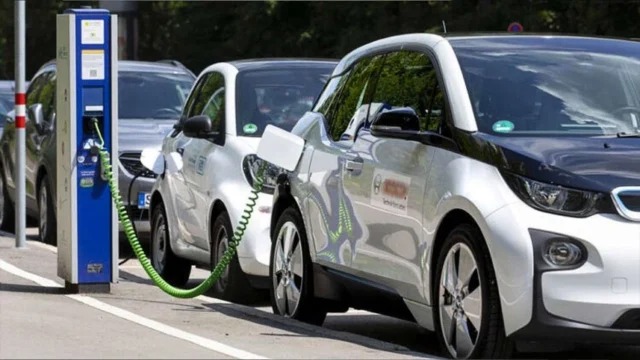
The Federal Government has officially taken delivery of the first batch of electric vehicles (EVs) promised to civil servants under President Bola Ahmed Tinubu’s administration, marking the start of a nationwide transition toward cleaner energy transportation.
The announcement was made on Wednesday, August 26, 2026, at the Presidential Villa in Abuja following a high-level meeting with President Tinubu.
Speaking to newsmen after the session, the Director-General of the National Automotive Design and Development Council (NADDC), Mr. Oluwemimo Joseph Osanipin, confirmed the arrival of the eco-friendly fleet, describing it as the beginning of a broader initiative aimed at driving down transport expenses, reducing carbon emissions, and upgrading national automotive infrastructure.
”The first batch of the electric vehicles that the President promised civil servants was delivered today, and they are all electric vehicles,” Osanipin stated. “This is the beginning of more and more that will come.”
The initial deployment forms part of the Renewed Hope Mass Transit initiative, featuring 100 domestically assembled electric buses funded through the Renewed Hope Infrastructure Development Fund.
Outgoing Head of the Civil Service of the Federation, Mrs. Didi Walson-Jack, handed over the initial 37-bus fleet on Wednesday, confirming that the remaining vehicles in the order will be delivered by December.
The initial fleet will operate on designated corridors throughout the Federal Capital Territory (FCT), connecting major residential hubs directly to the Federal Secretariat complex. NADDC has already deployed electric vehicle charging infrastructure across 16 federal universities to support operational feasibility nationwide.
In tandem with EVs, licensed Compressed Natural Gas (CNG) retail outlets nationwide have surged from 4 to 81 firms, creating complementary alternative-energy options. Vehicles are equipped with live GPS tracking, security cameras, and zero-emission electric powertrains designed to eliminate urban tailpipe pollution.
Minister of State for Labour and Employment, Nkeiruka Onyejeocha, alongside industry officials, noted that locally assembling these buses secures domestic engineering jobs while positioning Nigeria as an emerging electric mobility hub in Africa.
Osanipin concluded by noting that as the government continues scaling energy infrastructure and gas production, the next regulatory phase will focus on ensuring fleet operators pass transport savings directly on to commuters and federal workers.