When the State House, Abuja, published its roster for the ruling party’s presidential campaign directorate, the choice of Senator Abdul’aziz Yari as Director-General instantly polarised public discourse. For a populace navigating steep inflationary pressures, currency volatility, and structural economic pain, placing a former Governor whose financial trajectory has faced intense judicial scrutiny at the head of a continuity campaign invites sharp friction.
Former Minister Solomon Dalung captured this raw sentiment, pressing a blunt query that resonates far beyond partisan lines: How does a career politician amass the kind of extraordinary liquidity that allows for multi-billion-Naira corporate bailouts while the average citizen sinks deeper into precarity?
The questioning rests on public records rather than political gossip. During and after his tenure steering Zamfara State, Yari’s financial footprint drew repeated interventions from anti-corruption authorities. Court filings and enforcement actions detailed frozen accounts running into hundreds of thousands of dollars and tens of millions of Naira, alongside final forfeiture orders for substantial sums that lacked clear accounting.
When the searchlight widened to high-value real estate holdings spanning Abuja, Kaduna, and Maryland in the United States, it reinforced a sobering reality. The accumulation of immense wealth by individuals whose primary CVs list public office exposes a recurring governance crisis that defies basic economic logic.
This background threw a harsh light on recent private sector disclosures. When reports revealed that Yari, serving in a major leadership capacity at Geregu Power, deployed roughly N6 billion of his personal funds to rescue an immediate corporate bond obligation, it laid bare a staggering chest of liquidity.
For an observer watching from the outside, the core dilemma is straightforward. Wealth itself is neither illegal nor immoral, but when figures closely tied to the apparatus of state power command billions in liquid capital outside recognisable entrepreneurial roots, the public is owed answers. What specific commercial engines generated these funds? What did the ledger look like before power was handed over, and what multiplied after?
Placing such a figure at the vanguard of a presidential campaign creates a steep narrative hurdle for an administration attempting to sell a message of reform, accountability, and economic recovery. As party heavyweights rally under the structure, the central thesis, that the country has turned the corner toward prosperity risks being overshadowed by the contradictions of its messengers.
If the ruling party demands a renewed mandate from citizens weary of excuses, selective transparency will not suffice. Until the ledger is opened and the source of such formidable wealth is clearly accounted for, the appointment remains a glaring emblem of the very questions Nigerians are tired of asking in vain.
The broader implications of this appointment extend deep into the psychology of modern Nigerian elections. Every campaign cycle is built on a foundational promise of trust. When political parties hand the steering wheel to figures carrying historical baggage from anti-corruption investigations, they test the limits of public credulity. It signals a troubling normalisation of financial opacity, suggesting that proximity to power and the accumulation of mysterious fortunes are not liabilities, but credentials.
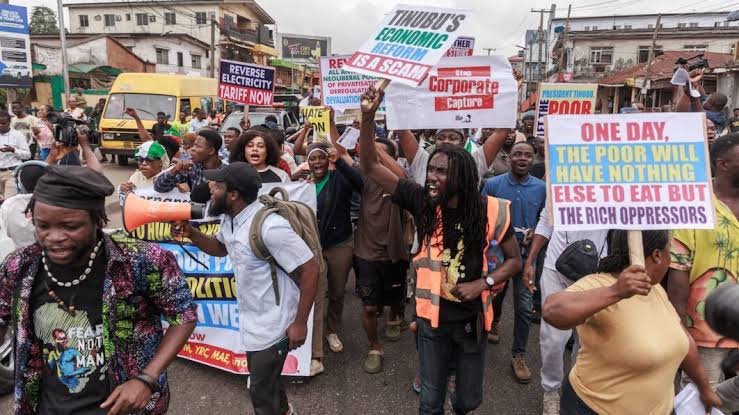
Governance in a developing democracy requires more than just legal technicalities or technical clearances from anti-corruption agencies. It demands moral clarity. When public officials transit seamlessly into corporate titans capable of tossing billions into private debt resolutions without blinking, the chasm between the governed and the governing widens into an unbridgeable gulf. Citizens who cannot afford basic healthcare, education, or stable electricity look at these multi-billion-Naira bailouts and see an indictment of the entire political class.
As the 2027 race gathers momentum, the opposition and civil society groups will undoubtedly keep these questions at the forefront. The challenge for the ruling party is whether it can successfully detach its reformist rhetoric from the heavy baggage carried by its key managers.
History shows that electorates eventually look past party symbols and focus squarely on the characters standing behind the podium. If transparency remains an elusive ideal rather than a practised standard, the campaign will find itself spending more time defending its personnel than selling its manifesto.
The billion-Naira question is no longer just about one man’s bank account; it has become a litmus test for the nation’s collective conscience.
Shaakaa can be reached on: shaakaastephanie@yahoo.com