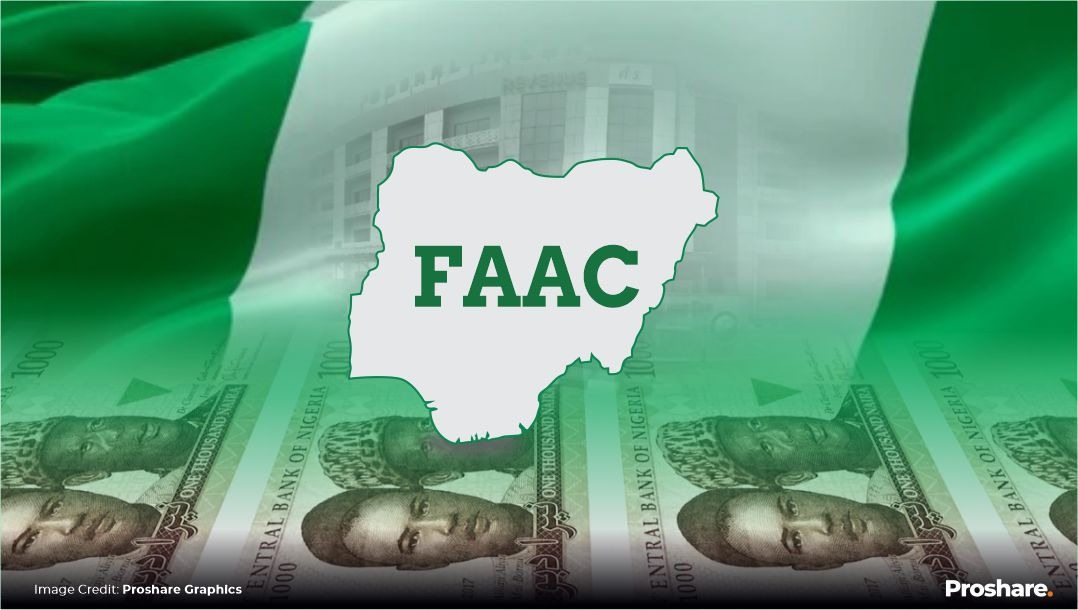
Following the recent August 2026 meeting of the Federation Account Allocation Committee (FAAC) held in Owerri, Imo State, the 36 state governors are facing aggressive pushback from civil society coalitions and policy analysts demanding a full accounting of how trillions of naira disbursed over the last three years have been spent.
The pressure follows the latest disbursement communique announced on Tuesday, August 18, 2026, by Bawa Mokwa, Director of Press and Public Relations in the Office of the Accountant-General of the Federation (OAGF). The committee approved a landmark N3.007 trillion allocation for July 2026 alone, marking the highest single monthly distribution in Nigerian history and bringing total 2026 disbursements so far to N15.997 trillion.
Despite these record-breaking allocations driven by fuel subsidy removal, foreign exchange unification, and tax reforms, public scrutiny has intensified over the disconnect between surging state revenues and persistent economic hardship.
State allocations have ballooned from roughly N2.8 trillion in 2022 to an estimated N7.3 trillion annually, yet critics argue that living conditions have not seen a corresponding improvement.
The escalating debate came to a head on the sidelines of the National Council of Federation and Economic Development (NACOFED) conference in Owerri.
Prominent civil society groups and legal advocacy organizations, including the Socio-Economic Rights and Accountability Project (SERAP), have renewed legal and public pressure on subnational leaders to publish breakdown reports of all post-subsidy revenues received.
Commenting on the subnational spending gap, former Senator Ben Murray-Bruce challenged the governors directly on their resource deployment:-
”State allocations rose from N2.8tn in 2022 to over N7tn following subsidy removal. What have you done with your own allocation? If a governor cannot find five per cent to stop his own people from suffering, then the problem in that state was never money.”
Similarly, during a groundbreaking ceremony in Delta State, Governor Sheriff Oborevwori acknowledged the mounting public pressure, stating that the era of governors citing inadequate funding as an excuse for poor governance has come to an end.
In response to the mounting criticism, state official representatives have defended their spending profiles; Abia State Okey Kanu, Commissioner for Information, cited that increased allocations helped reduce state debt by over 70%, sustain prompt salary payments, and fund critical transport and housing projects.
Delta, Rivers & Lagos States shows, despite disparities where the top five receiving states collect more than 20 lower-earning states combined, high-receipt states point toward multi-billion-naira flyovers, health insurance schemes, and infrastructure projects as direct proof of revenue deployment.
Northern States Representatives from Gombe and Benue highlighted the expansion of rural roads, agricultural funding boosts, and institutional support enabled by recent FAAC gains.
With FAAC revenues projected to stay at elevated levels under the new fiscal tax frameworks, civil society coalitions maintain that until state governments open their books for independent audits, public agitation for accountability will continue to grow.