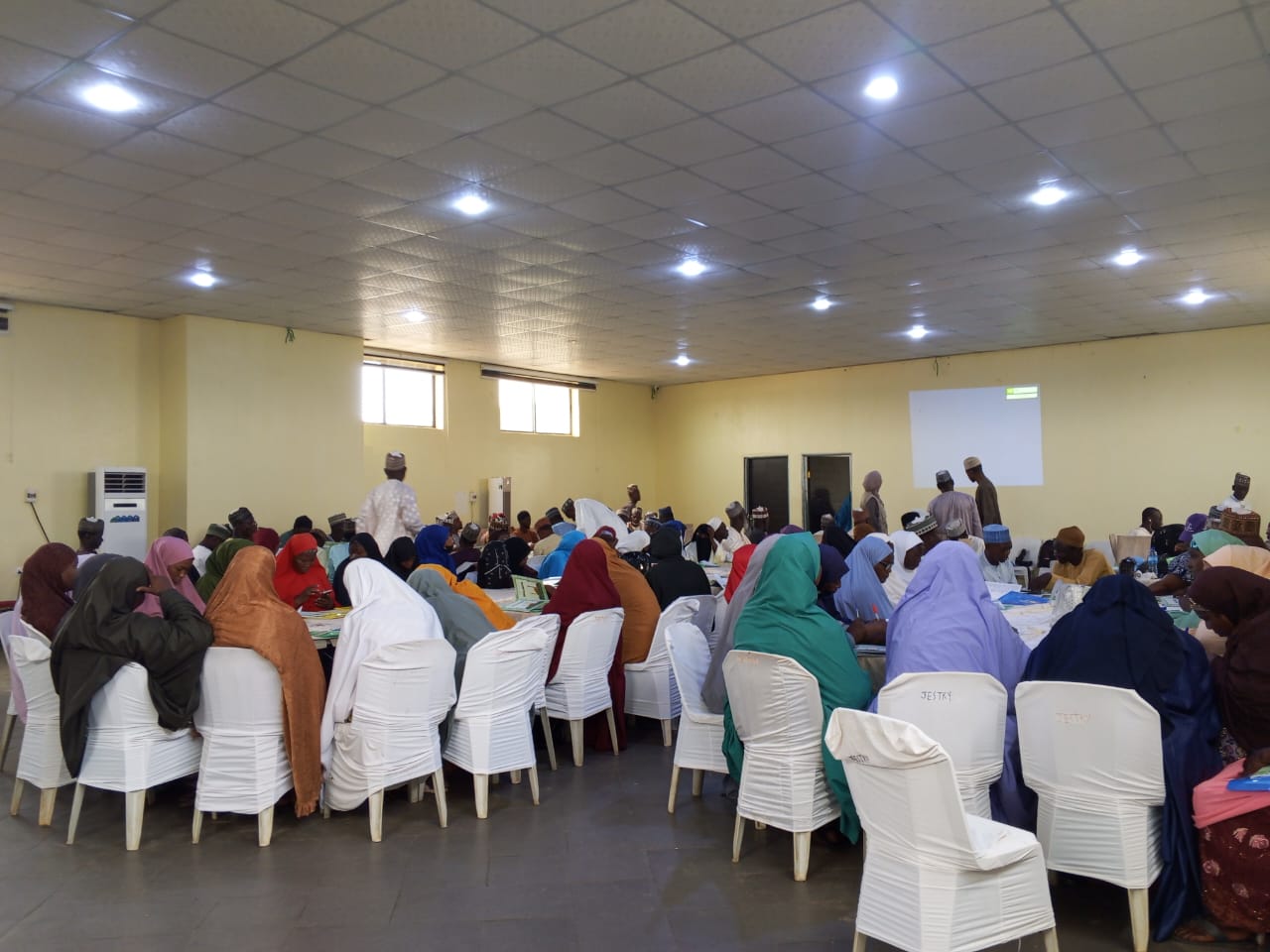
UNICEF and the Katsina State Government have mobilised religious leaders to promote routine vaccination and improve uptake of essential health services across the state.
This was unveiled on Wednesday at a “Faith for Life” engagement meeting with Imams, Pastors, and traditional leaders from the 34 Local Government Areas of the state.
Speaking at the meeting, Dr. Ogwu Enemaku, UNICEF Social and Behaviour Change (SBC) Specialist, said religious leaders were strategically positioned to build trust and encourage families to embrace vaccination.
Enemaku said their influence and regular contact with communities could help address misconceptions about vaccines and encourage parents and caregivers to present their children for routine immunisation.
He urged the religious leaders to use sermons, counselling sessions, and other platforms to promote vaccination, maternal and child health, nutrition, and disease prevention.
The meeting was organised by the Katsina State Primary Health Care Development Agency (KSPHCDA) in collaboration with the UNICEF Kano Field Office.
The gathering also focused on strengthening the role of faith leaders in improving health outcomes.
Presenting her research on “Zero Dose” children, Prof. Rukayya Aliyu of Bayero University Kano (BUK), said the term referred to children who had not received any routine vaccination.
Aliyu identified factors responsible for the existence of zero-dose children and called on religious leaders to help mobilise parents and caregivers, particularly in underserved communities, to access immunisation services.
She said religious leaders could complement the efforts of health workers by using their trusted positions to encourage families to protect children against vaccine-preventable diseases.
A major highlight of the engagement was the presentation of revised “Faith for Life” handbooks to Muslim and Christian participants.
Dr. Kabir Muhammad presented the Islamic version of the revised handbook, while Rev. Samuel Adeyemo of the Christian Association of Nigeria (CAN) presented the Christian version.
They urged faith leaders to use the scriptures and health messages contained in the handbooks during sermons and counselling to promote healthy behaviours.
Prof. Hashim Kurfi of BUK, who presented his research on the Almajiri System of Education, also called for the integration of health and education services for Almajiri children.
Kurfi urged religious leaders to support initiatives aimed at improving the welfare, education, and health of children in the Almajiri system.
Also speaking, Ms. Amaka Aninta, Deputy Director, Community Outreach and Development, National Orientation Agency (NOA), Abuja, described religious leaders as custodians of trust and values in their communities.
She said NOA was committed to partnering with KSPHCDA, UNICEF, and faith institutions to amplify messages on maternal health, immunisation, nutrition, and education.
In her remarks, the Acting Executive Secretary of the Katsina State Primary Health Care Development Agency (KSPHCDA), Dr. Shema’u Abba, described religious leaders as special guides and advocates, as well as important partners for promoting positive change in their communities.
Abba said the government could not tackle the challenges confronting primary healthcare alone, adding that respected voices within communities were needed to improve maternal and child health as well as nutrition outcomes.
She further said the influence of religious leaders could go a long way in helping families make informed decisions on the wellbeing of women and children.
The religious leaders commended UNICEF and the state government for the initiative and pledged to use their platforms to disseminate health messages and support programmes beneficial to children, women, and other vulnerable groups.