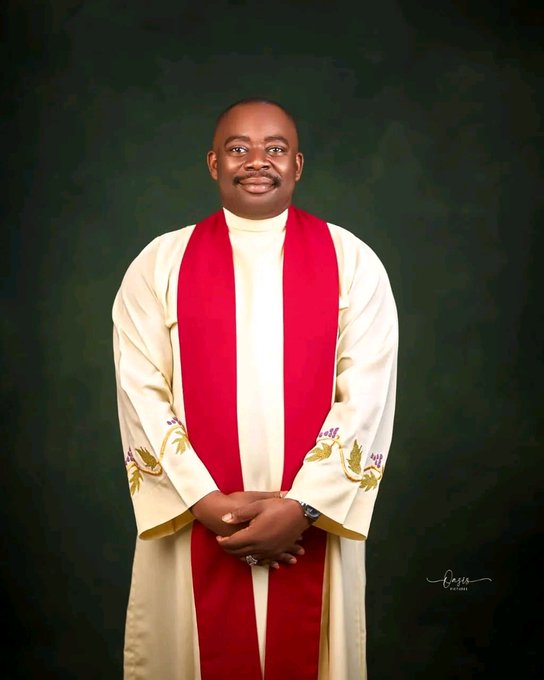
By Fr. Felix Yayock
It is an uncomfortable but essential question. The sacred office, by its very nature, carries weight, reverence, and authority. But authority without accountability becomes danger rather than blessing.
No priest, no matter how devout, is beyond the reach of correction. The tradition itself bears witness to this truth.
Prophets confronted kings. Apostles rebuked apostles. Even Peter, the rock, was corrected by Paul when he acted in contradiction to the gospel he preached. Gal 2:11-14
Holiness has never meant infallibility. It has always meant submission to truth.
The Church herself teaches this. “All the faithful must be led to a conscious and active participation in the liturgical celebrations” Sacrosanctum Concilium 14. That participation includes the duty to safeguard the faith of the Church.
So who corrects the priest?
First, the Word of God corrects the priest.
Scripture stands above every office, every title, and every tradition. “All Scripture is inspired by God and profitable for teaching, for reproof, for correction” 2 Tim 3:16.
The Catechism reminds us: “The sacred Scriptures contain the Word of God” CCC 104. It is not the priest who judges the Word, but the Word that judges the priest. When a priest strays from truth, it is not rebellion to point back to Scripture. It is obedience.
Second, the community of faith corrects the priest.
Vatican II restored the dignity of the laity. “The laity have the right, indeed at times the duty, to manifest to the sacred pastors their opinion on matters which pertain to the good of the Church” Lumen Gentium 37.
The Catechism affirms: “By reason of the knowledge, competence or outstanding ability which they have, the laity are empowered and sometimes obliged to show them to the pastors” CCC 907.
The body is not meant to be silent before its leaders. The faithful are not passive recipients of instruction but active participants in discernment. When something is spoken or done that contradicts righteousness, the community bears responsibility to speak, with respect and in proper channels.
Third, other priests and the bishop correct the priest.
Authority in the sacred order is not solitary but communal. Iron sharpens iron.
Canon Law is clear: “The diocesan bishop is to exercise vigilance so that abuses do not creep into ecclesiastical discipline” Can. 392 §1.
And to priests: “Priests are bound by a special fraternal relationship and therefore ought to help one another” Can. 275 §2.
Silence among leaders in the face of error is not unity. It is complicity.
Pope St. John Paul II also warned: “The priesthood is a gift too great to be abused” Pastores Dabo Vobis 2. Fraternal correction protects both the priest and the people.
And finally, conscience corrects the priest.
That inner witness, formed by prayer, humility, and fear of God, is often the first alarm when something is amiss. “Deep within his conscience man discovers a law which he has not laid upon himself but which he must obey” Gaudium et Spes 16.
To ignore it is to risk not only error, but hardness of heart.
The sacred office is not a shield from correction. It is a call to deeper accountability. For the higher the calling, the greater the responsibility to remain teachable, reachable, and willing to repent. “To whom much is given, much will be required” Lk 12:48.
And so the question is not whether the priest can be corrected.
It is whether he will allow himself to be corrected.
Fr. Felix Yayock
Zaria Diocese
17/08/2026