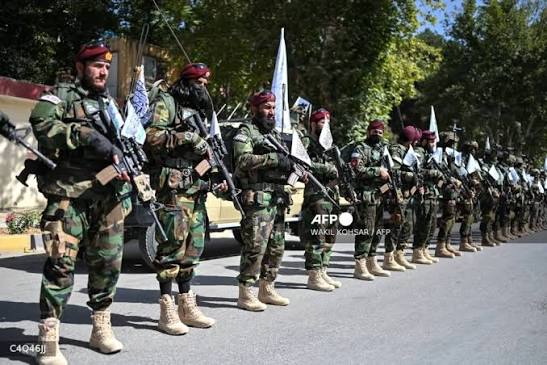
The Taliban-led government marked five years since returning to power on Saturday, August 15, 2026, hosting military parades and public rallies while international observers and human rights groups condemned the regime’s continuous erosion of civil liberties.
The official celebrations commenced around 9:00 AM local time at the Bagram Airfield, the former focal point of U.S. military operations and extended across main thoroughfares in the capital city of Kabul. White Islamic Emirate flags lined major avenues as convoys carrying heavy artillery, armored vehicles, and armed personnel paraded past gathering crowds.
Speaking from Bagram Airfield, chief Taliban spokesman Zabihullah Mujahid praised the government’s tenure, framing the anniversary as a victory for national sovereignty and public order.
”Thank God, the past five years have passed in safety and independence,” Mujahid stated in an official address. “Our focus remains on economic reconstruction, self-reliance, and enforcing Islamic values across the nation.”
Simultaneous events were held in provincial hubs, including Kandahar, the spiritual headquarters of the movement. Ministry of Information and Culture spokespersons highlighted recent infrastructure development and security achievements, asserting that regional diplomatic engagement with neighboring nations has steadily expanded.
While regime officials celebrated, civil rights advocates and international organizations presented a starkly different narrative. Over the past five years, the de facto authorities have issued nearly 100 edicts systematically restricting the movement, employment, and education of women and girls. Afghanistan remains the only country in the world where girls are barred from secondary and university education.
In a joint statement released Saturday morning, human rights watchdogs described the conditions as a severe humanitarian and rights crisis.
Millions of young women remain locked out of classrooms, and female public sector workers have been largely removed from state payrolls. Directives strictly limit women’s presence in public spaces without a male guardian (mahram) and enforce rigid dress codes codified under morality laws.
Despite claims of improved public safety, over half the population requires humanitarian aid amid widespread poverty and food insecurity.
Spokespersons for UN-backed human rights missions reiterated calls for the immediate rollback of restrictive decrees, noting that formal international recognition of the Taliban administration remains blocked primarily due to its human rights record.