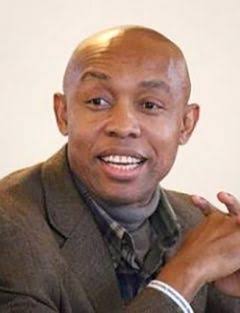
Starting a week with the joke of a joke can be very distressing. The ‘architect of modern Ekiti State’, Mr Ayodele Fayose, started his job as chairman of the Rural Electrification Agency board with a farce. And he is trending. At his farcical best, he reduced rural electrification to nights, nightlife and baby-making. Give the people electricity and they will stop uncontrolled procreation, he said on national television.
Coming from Fayose, I am not shocked by the indelicacy of the ‘joke’; the shock is in the poverty of thought behind it. Electricity, to the genius of Ekiti, is not about powering factories, farms and rural businesses; it is about keeping husbands away from their wives after 7 p.m. ‘Bedroom electrification’ and ‘sexualisation of electricity’. These are the latest additions to ‘stomach infrastructure’, Fayose’s earlier contribution to the lexicon of our democracy.
Beyond orgies and the carnality of the night, I hope Fayose knows that he is chairman of the agency’s board, and not its chief executive. I hope he knows the difference between full and half-full. His new seat may not be as royal and golden as the gubernatorial throne he sat on in Ado Ekiti. I pray that the spirit of fight does not enter the agency. I pray against sparks between the boardroom and the management, against short circuits of authority, and against the spirit of smelly farts and viral scandals.
“Allow not nature more than nature needs…” With that line from Shakespeare’s King Lear, I move from Fayose’s unrestrained sex talk to his interesting philosophy of need, excess and entitlement.
Days before his “inaugural lecture” on the conjugality of rural electrification, Fayose was in Ekiti asserting the right of the god he imagines himself to be to the till of his poor state.
“We have served this state. Priority must be given to former governors going forward. You must take very good care of me henceforth. I am growing old, almost 70, my strength is failing, I must be taken care of very well because I have paid my dues for this state.
“I need more medical care; I should travel abroad to enjoy myself, and also, I should be given an official vehicle with a pilot vehicle. The law as passed by the House of Assembly stipulates that the government should be changing our vehicles every three years. You are almost four years in office, I am yet to be given one. You must do that, Mr Governor.”
Fayose, former governor of Ekiti State and the new chairman of REA, publicly made the above demand of the Ekiti State governor last week. While he insists we must understand electricity in terms of sex and nightlife, he constructs his welfare as entitlement to state resources.
Ekiti’s ex-governor would reject any word that teaches moderation. That is why the operative word in his demand is the imperative: “must.” Fayose ordered the gentleman governor to “take very good care” of him with the state’s resources. And he was loud about it. His justification is that as governor for almost four-plus-four years, he has “paid his dues” and therefore deserves to be pampered.
I thought it was settled in Yorubaland that one does not get out of the way for ‘I-used-to-ride-a-horse’. What level of “care” would ever be enough for a yesterday’s horseman? If you ask me, who should I ask? Certainly not the audience that heard Fayose. They did not find his open expression of entitlement funny. I watched the video for clues. The faces told their own story.
I pity his colleagues, former governors who did not ask him to do babiallah (alms-begging) on their behalf but are nevertheless drenched in the ‘gbas gbos’ rainfall that follows. His unfeeling demands are magnets for umbrage. And resentment is corrosive to politics and democracy. A demand such as the one from the professor of stomach infrastructure is bound to provoke proverbs.
And proverbs are the horses of words. This moment, the words that come to me ask: What is an egungun doing with baskets near people’s farms? Elders who observe that masquerade would quickly warn farmers who have yams in their heaps: Do not sleep with both eyes closed. The proverb is shorter and more elegant when said in Yoruba: Eegun alágbọ̀n tí ó fi ọ̀nà oko ṣe ìgbàlẹ̀, àgbẹ̀ tó bá ní iṣu l’ébè kó má ṣ’àfira.
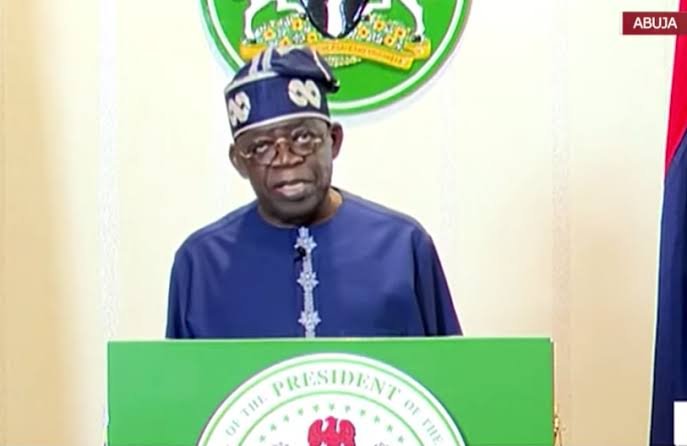
The definition of greed is what Fayose said and how he said it. For his ‘services’ to the Villa, the president rewarded him with the chairmanship of an agency with projects across the country. The combined 2026 budget of Fayose’s REA exceeds half a trillion naira. The 2026 budget document says it is N531 billion. Presiding over such a chest for a roving hyena is hardly a token blessing. Yet, like Oliver Twist in the workhouse, the former governor is asking for “some more” from Ekiti State whose 2026 budget is a paltry N415.57 billion.
I know that you, reading or listening to Fayose, would ask: Is this former governor a perennial child who must be fed for the rest of his life at public expense? Does public office create a lifetime entitlement to the taxpayers’ purse? If political service is truly service, should it become an endless claim on the commonwealth? And, the prebendal audacity that made that open demand, where did it come from?
Section 124 (5) of the Constitution of the Federal Republic of Nigeria 1999 states that “Provisions may be made by law of a House of Assembly for the grant of a pension or gratuity to or in respect of a person who had held office as governor or deputy governor and was not removed from office as a result of impeachment; and any pension granted by virtue of any provision made in pursuance of this sub-section shall be made in a charge upon the consolidated revenue of the state.” There is a similar provision for the president and vice president.
In the above provision, the constitution has already provided for the post-office life of a governor without a second address. The abuse of that provision is captured in two Yoruba names: Oladejo, which means Ola has become eight, and Oladeji, which translates as Ola is doubled. Politicians would rather bear Oladejo; Oladeji is too meagre for the life they live. Caustic criticism would say it is greed that makes a man bear Oladejo when two should be enough.
They have continued to abuse the constitution, and they are not going to say sorry for the assault. What can we do about those abused provisions of the Constitution? Nothing, unfortunately. The provisions and the abusive children they birthed in state laws will not disappear because their beneficiaries — ex-governors — make up the big boys in the Senate. No child willingly smashes the pricey feeding bottle from which he sucks.
The constitution permits some privileges. Yes. But, as someone said, permission is not prescription, and provision is not a blank cheque. Besides, if all the horses are given to the king, what will his subjects ride? The constitution, which permits states to legislate pensions, does not constitutionalise an unlimited duty to pamper former governors.
What is it that an ex-governor did for the state that entitles him to an eternity of entitlement? Can a democracy sustainably carry a political class that will never stop drawing from the public trough long after it has left elective office? When is enough enough?
In one of the Aláwìíyé series, the poet tells of the overfed cricket whose greedy fingers pierced its own bloated belly. How much state care does a leader need before, like that cricket, his own greed bursts his belly?
Restraint is dead. The vehicle of this democracy has lost its axles. A few days ago, Kano State governor, Abba Yusuf, allocated 1,540 plots of land and presented a ₦100 million cash gift to members of his All Progressives Congress (APC) Polling Unit Supporters Association, known in Hausa as Yan’akwati. An exasperated lady on Arise TV read the report aloud, paused and asked: “What does that mean?”
In ‘Politicians, Professionalization and Anti-Politics’ (2018), scholars Paul Fawcett and Jack Corbett ask: “Why are politicians so unpopular?” They point to the “professionalization of politics” and the emergence of “a professionalized political class that is increasingly detached from ‘ordinary citizens’.”
When the man and woman on the street nurse hunger on the dusty footpath of life, and a governor fetes polling unit henchmen with lands and cash, and an overfed ex-governor demands to be freighted “abroad to enjoy” himself at public expense, neither the politician, his politics nor the democracy that sustains his privileges can expect the goodwill of the people. All three are doomed to be poisoned by the bad looks of the hungry.
How much comfort does a former ‘king’ need?
Russian writer, Leo Tolstoy, in his 1886 short story, ‘How Much Land Does a Man Need?’, tells the story of Pahom, a peasant whose appetite grows with every acquisition. He starts with 40 acres, moves on to 125, rents more land and is preparing to buy 1,300 acres when he hears of a neighbouring clan who possesses vast stretches of fertile land and who sells it almost for nothing. He approaches the clan and their chief makes him an irresistible offer: “Our price is always the same: one thousand rubles a day.”
For that sum, the chief says, Pahom may have all the land he can walk around in one day, provided he returns to his starting point before sunset: “We shall go to any spot you like, and stay there. You must start from that spot and make your round, taking a spade with you. Wherever you think necessary, make a mark. At every turning, dig a hole and pile up the turf; then afterwards, we will go round with a plow from hole to hole. You may make as large a circuit as you please, but before the sun sets, you must return to the place you started from. All the land you cover will be yours.”
Really? The greed in Pahom whistles. The man sets out at dawn, taking this, holding that. He becomes like the potter who wants all the soil to be clay. Pahom keeps taking hectares after acres. He takes fields, he takes meadows, and adds entire steppes to them. But every time he thinks he has taken enough, he sees another fertile stretch that he cannot bear to leave out. He walks farther and farther until, suddenly, the sinking sun reminds him that possession has a deadline. He races desperately back towards the starting point, exhausted but unwilling to surrender what he has claimed. He reaches the hillock, the starting point, just as the sun sets, to the cheers of the locals.
But, very exhausted Pahom, that very moment of victory and achievement, drops dead.
The man won his enormous estate but lost everything. The storyteller has one final measurement to make. He says the land-grabber’s servant “picked up the spade and dug a grave long enough for Pahom to lie in, and buried him in it. Six feet from his head to his heels was all he needed.” That is all the land every man ultimately needs — and, in the end, the only land we will all get. Pray that our leaders learn, before their own final measurements are taken, when to tell themselves: ENOUGH.