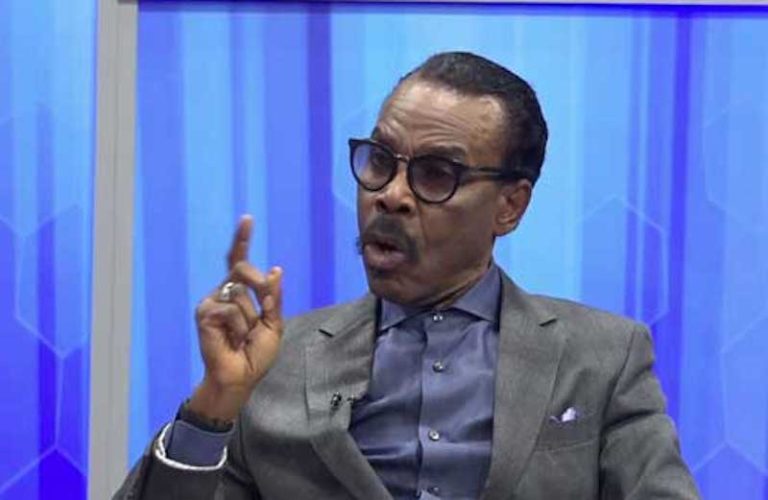
Prominent economist and Chief Executive Officer of Financial Derivatives Company (FDC), Mr. Bismarck Rewane, has urged the Federal Government to extend the recent pay increases granted to military personnel to other state security agencies, warning that selective wage hikes risk causing severe operational imbalance and weakening Nigeria’s overall security framework.
Speaking at the August 2026 edition of the monthly Lagos Business School (LBS) Breakfast Session in Lagos on Thursday, the FDC boss analyzed the macroeconomic and structural repercussions of the government’s latest wage adjustments for the Armed Forces.
The warning comes on the heels of the Federal Government’s approval of a major salary restructuring for the Nigerian Armed Forces, set to take effect on September 1, 2026. Under the revised framework, lower-ranking personnel will receive an 80% increase, mid-level officers a 50% raise, and senior general officers a 30% adjustment.
The pay adjustment raises the military’s annual personnel expenditure from N660 billion to N924 billion, adding a net cost of N264 billion to federal payroll obligations. The policy was publicly confirmed by Bayo Onanuga, Special Adviser to the President on Information and Strategy, alongside Leah Katung-Babatunde, Special Assistant to the President on Media.
Rewane cautioned that while boosting troop morale during ongoing counter-insurgency operations is vital, leaving out parallel law enforcement bodies such as the Nigeria Police Force (NPF) and the Nigeria Security and Civil Defence Corps (NSCDC) creates dangerous disparities across security institutions.
Beyond inter-agency friction, Rewane highlighted several macroeconomic risks tied to unearned wage expansion: Injecting N264 billion directly into consumer spending without a corresponding boost in domestic output could push headline inflation upward by 2 to 3 percentage points.
The wider pay gap between military and civilian security personnel will distort wage relativities throughout public administration, pressuring state governments and private sector firms to adjust compensation structures.
Implementing a similar salary review across all security institutions will significantly inflate government recurrent expenditure across federal and state tiers.
During the macroeconomic presentation, Rewane also reviewed performance metrics across Nigeria’s financial services sector:
The robust trajectory in electronic payments reflects expanding adoption in retail and e-commerce channels. However, Rewane concluded that long-term economic stability depends on combining targeted welfare improvements with broader productivity-enhancing structural reforms.