Every country has political disagreements. Mature democracies absorb them, learn from them, and move on. Nigeria, however, has developed a curious habit of turning old quarrels into national rituals. No matter how urgent the present becomes, no matter how severe the economic pain or how frightening the insecurity, our politics repeatedly reaches backward for the same familiar script. As another election season gathers momentum, the country once again finds itself listening to echoes from the years between 1999 and 2007, when President Olusegun Obasanjo and his deputy, Atiku Abubakar, moved from uneasy allies to bitter adversaries.
The names are familiar, the accusations are familiar, even the emotional choreography is familiar. Obasanjo recalls disappointment and betrayal; Atiku recalls resistance and principle. Television studios fill with veterans of old battles. Newspaper columns excavate letters, speeches, and meetings that belong to another political era. Supporters on both sides rehearse arguments that have been repeated so often they now sound less like political analysis than inherited family stories.
What should trouble us is not that two powerful men fell out. Politics has never been a monastery. What should trouble us is that a nation of more than two hundred million people continues to devote so much public attention to a quarrel that has already consumed two decades of national life. The feud has aged into something like a vintage wine of bitterness: carefully preserved, periodically uncorked, and served to a public that did not ask for another glass.
History matters, and it should be remembered honestly. The rupture between Obasanjo and Atiku did not emerge from a single disagreement. It developed through years of political competition, diverging ambitions, disputes over power within government, and, most dramatically, the controversy surrounding constitutional tenure extension. For many Nigerians, opposition to a third term became the defining moral moment of that period. For others, the story was more complicated. Reasonable people can disagree about motives, strategies, and responsibilities. What is difficult to justify is the insistence that the country must keep reliving the dispute as though its central questions remain unresolved.
The deeper issue is not historical memory; it is political captivity. Nations become unhealthy when they allow the emotional history of their leaders to occupy space that should belong to public policy. A democracy cannot spend every election season litigating the private resentments of its political aristocracy while millions of citizens are struggling to survive the present.
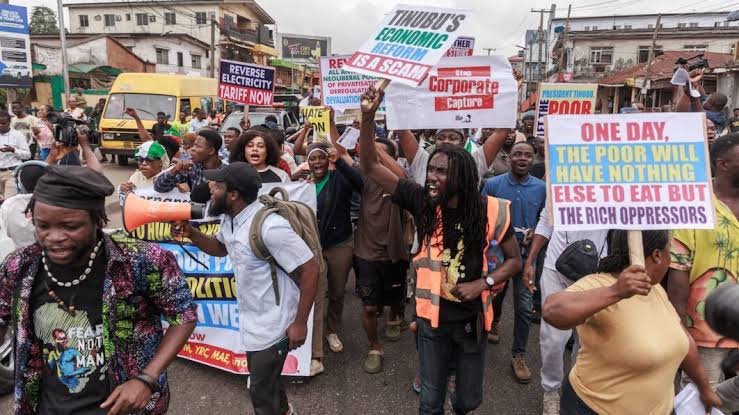
That is the real cost of this endless replay. While former leaders exchange recollections of old injuries, ordinary Nigerians confront immediate realities. Food prices rise faster than wages. Families ration electricity. Young people search for work in an economy that often seems unable to imagine a place for them. Farmers fear insecurity; entrepreneurs fear instability; parents fear what tomorrow will cost. The country is not suffering from a shortage of historical controversy. It is suffering from a shortage of solutions.
Yet the gravitational pull of elite nostalgia remains powerful. The media rewards familiar names. Political actors revive old alliances because they are easier to explain than new ideas. Public debate becomes a museum of unresolved grievances. Instead of asking what kind of state Nigeria must build over the next 20 years, we are repeatedly invited to take sides in altercations that began 20 years ago.
There is a poignant irony in this. Obasanjo is one of the most consequential figures in Nigeria’s modern history: soldier, military ruler, elected president, and elder statesman. Atiku is one of the most enduring political actors of the Fourth Republic, a man who has remained a major national contender across several electoral cycles. Both men have occupied enough public space to shape the nation’s future. Yet their relationship is now remembered less for what it built than for what it broke. A republic should not become an archive of elite disappointment.
Great statesmanship requires a difficult discipline: the ability to place the nation above the wound. It asks leaders to recognise that history will judge them not only by the battles they fought, but by the burdens they refused to impose on future generations. There comes a point when a political grievance ceases to be a matter of principle and becomes a habit of memory. That point is usually reached long before 20 years have passed.
The tragedy is that Nigeria keeps paying interest on an old emotional debt. Each renewed round of recrimination consumes attention that could be spent discussing power reform, educational collapse, industrial policy, constitutional restructuring, healthcare, insecurity, agriculture, or the future of a generation that increasingly feels excluded from the promises of democracy. Time is a national resource, and unlike oil it cannot be replenished once wasted.
A mature democracy remembers its past without becoming trapped inside it. It studies old conflicts in order to strengthen institutions, not to preserve animosities. The Obasanjo Atiku rupture belongs to Nigerian history; it should not continue to dominate Nigerian destiny.
Perhaps this is the greatest irony of all. Nations are not diminished merely by the mistakes they make. They are diminished by the mistakes they refuse to outgrow. History becomes dangerous when it ceases to be a teacher and begins to function as a permanent address.
The relationship between Olusegun Obasanjo and Atiku Abubakar belongs to an important chapter in Nigeria’s democratic journey. It deserves to be studied by historians, dissected by political scientists, and debated by students of power. It should occupy its rightful place in books, documentaries, and university classrooms. But it should not continue to dictate the emotional rhythm of our national conversation every time another election approaches. A democracy cannot forever march into the future while repeatedly turning its head toward an argument that belongs to another political generation.
There is something revealing about the ease with which our politics slips back into familiar quarrels. It is almost as if new ideas are harder to produce than old resentments. The country changes, generations come of age, technologies reshape economies, global realities shift beneath our feet, yet our political discourse often circles the same personalities, the same grievances, and the same unfinished conversations. We have become remarkably efficient at remembering yesterday and remarkably hesitant about imagining tomorrow.
That habit carries a price.
Every minute spent relitigating old political injuries is a minute that cannot be invested in confronting the questions that will define Nigeria’s future. How do we build an economy that rewards enterprise instead of proximity to power? How do we create institutions that command trust regardless of who occupies public office? How do we reform education for a century driven by knowledge rather than commodities? How do we guarantee security not as a campaign promise but as an ordinary expectation of citizenship? These are the conversations upon which nations rise or fall. They demand imagination, discipline, and courage. They cannot compete indefinitely with the irresistible drama of personalities.
This is not an argument for forgetting history. A nation that forgets its past risks repeating it. But there is an equally dangerous temptation to mistake endless remembrance for wisdom. Remembering is useful only when memory produces understanding. Once it produces only bitterness, it ceases to illuminate the road ahead and begins to obscure it.
The measure of democratic maturity is not whether political rivals once fought bitterly. Rivalry is woven into the fabric of every democracy. The real measure is whether institutions become stronger than the rivalries they contain, whether public debate grows larger than the personalities that dominate it, and whether the aspirations of ordinary citizens eventually outweigh the disappointments of extraordinary politicians.
Nigeria stands at precisely such a crossroad.
More than half of our population has no meaningful memory of the political battles that consumed the early years of the Fourth Republic. Millions of young Nigerians know those years only through newspaper archives and television clips. Their anxieties are different. They worry about finding work, building businesses, paying rent, accessing quality healthcare, raising families, and living in a country where effort is rewarded fairly. They are not asking to inherit old quarrels. They are asking to inherit a future.
Politics is ultimately an instrument, not a destination. Elections are not held so yesterday’s protagonists may continue rehearsing their disagreements before an exhausted audience. They are held so a nation may decide how it wishes to live tomorrow. When politics becomes captive to memory instead of possibility, democracy slowly loses its creative purpose. It ceases to inspire and begins merely to recycle.
Perhaps that is the question this recurring feud should leave us with. Not who was right. Not who was wrong. History will continue to examine those questions long after today’s headlines have disappeared. The more urgent question is whether Nigeria itself has become too comfortable allowing old battles to occupy spaces where new ideas ought to flourish.
Countries are not built by permanently arbitrating the emotional debts of yesterday’s leaders. They are built by freeing each generation to confront the challenges of its own time. Every republic eventually discovers that there are memories worth preserving and memories that quietly become chains. Wisdom lies in knowing the difference.
The story of Olusegun Obasanjo and Atiku Abubakar will always occupy a significant place in Nigeria’s democratic history. Nothing can erase that, nor should it. But history is meant to provide perspective, not imprisonment. It should offer a foundation upon which a nation stands, not a room in which it remains locked.
The bottle has been opened often enough. Every election season we are invited to taste the same vintage, to savour familiar notes of disappointment, betrayal, justification, and regret. Yet bitterness, however patiently aged, never becomes nourishment. It remains bitterness.
Nigeria has lingered too long at this table.
It is time to rise, leave the bottle where history placed it, and begin the far more demanding work of pouring something new.
Shaakaa can be reached on: shaakaastephanie@yahoo.com