By Emeka Alex Duru
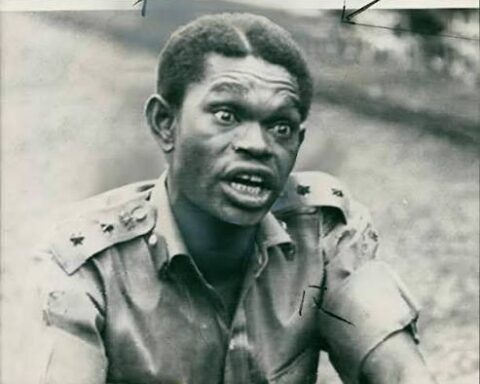
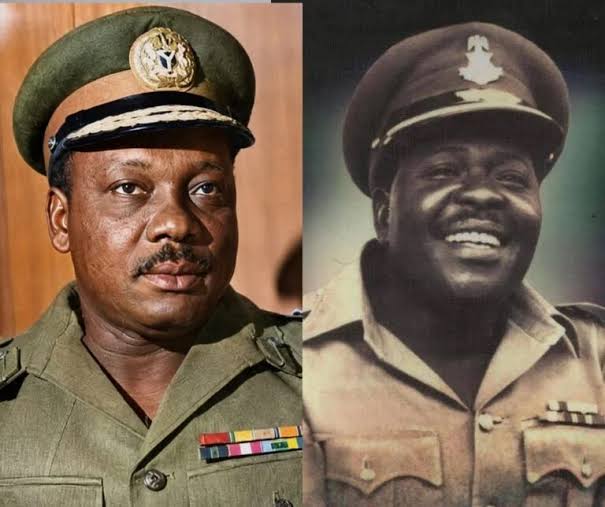
Wednesday, July 29, made it exactly 60 years that Nigeria lost two of its courageous military officers – General Johnson Thomas Umunnakwe Aguiyi-Ironsi and Colonel Francis Adekunle Fajuyi, in what has come to be regarded as a counter coup, masterminded by mainly soldiers of northern extraction, on July 29, 1966.
At the time of their death, the two held significant positions in the country’s military and political leadership. While Ironsi was the Head of State, Fajuyi was the Military Governor of the then Western Region. Aguiyi-Ironsi was visiting Ibadan on an official tour and staying at the Government House as the guest of Fajuyi, when in the early hours of July 29, 1966, mutinous Northern soldiers led by officers like Major Theophilus Danjuma surrounded the Government House and detained them.
Various accounts on the circumstances of their assassination have been rendered by those that carried out the acts and others that claim knowledge of what transpired. What has, however, not been adequately captured is the volume of lessons, if any, that has been learnt from the supreme sacrifice that the two paid to keep the country one.
The extent successive administrations in the land have gone in giving the fallen heroes their due in terms of recognition and celebration, has equally not been satisfactory. Truth be told, whatever efforts that may have been made in according respect to the ideals they pursued and lost their life for, have at best, been marginal, if not negligible.
By the time Ironsi and Fajuyi were felled, they had the option of playing the role of Nero, the Roman Emperor who played the fiddle while the empire was on fire. By their ranks and positions, they could be said to be comfortable. But fate played a fast one on them.
They responded to the call to steady the ship of the Nigerian state that had clearly gone adrift at the time. For whatever anybody could hold against them, in the six months that they held their various positions, General Ironsi and Col. Fajuyi, rose to the occasion in discharging their tasks. Though there may have been mistakes in going about their briefs, these could have been essentially errors of judgement and not borne of bad faith. But in line with the confusion of the day, they were forced to spill their blood.
Bad as that was, particularly for their families and acquaintances, in a system that is desirous of nation building, that would have counted as national sacrifice. After all, history is replete with great men and women who were martyred for noble causes. It is perhaps, in this instance that the saying – revolution is watered by the blood of men – finds relevance.
But 60 years after the two and other bright officers and civilians were wasted, the jury is still out on whether Nigeria has learnt any lessons from the exercise. Of course, it may be convenient to argue that at some levels, progress may have been recorded in material terms. The country can also be said to have attained structural advancement from its four-region setting to the current 36-state arrangement.
But at the heart of the matter is that side-by-side physical advancement of Nigeria, are the widening fault lines that have made nonsense of its size. Consequently, the factors of space and population which Nigeria could have leveraged on to explore and harness its innate potential, are turning out its nemeses. Corruption, ethnicity, intolerance, which Ironsi and Fajuyi fought against and died for, have remained the bane of the country.
From Ironsi’s unification decree which divided the country into 34 units – the major reason cited for his assassination – Nigeria has been split into 36 states, with many of the entities barely existing on monthly hand-out from the federal government.
Aguiyi-Ironsi could have carried on with the sordid situation he met on ground when the reins of power were thrown at him. If he had, perhaps, his assailants who, events later indicated were solely driven by sheer jealousy and callous vengeance, may not have had much reasons to move against him.
Fajuyi, also, could have played along. In a system that increasingly appears to reward perfidy in place of hard work and honesty, playing along could perhaps, have earned him protection and career progression. Given the circumstances of the day, he had the option of betraying Ironsi, his guest, before the rampaging soldiers as bargaining chip. But he chose the path of loyalty and integrity.
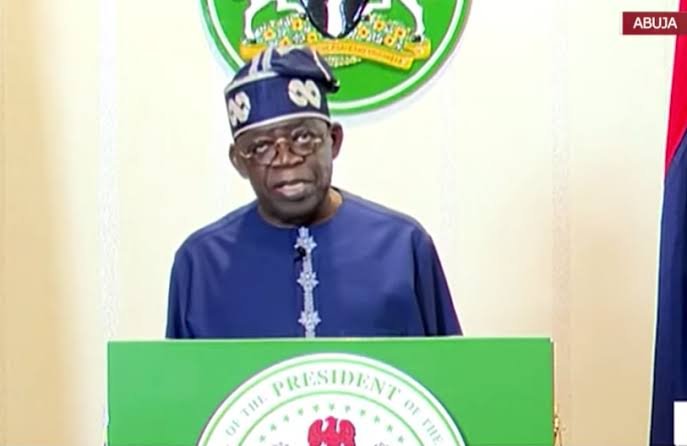
Notwithstanding the running argument that he was equally penciled down for elimination alongside Aguiyi-Ironsi on allegation of having hands in the January 15, 1966 coup, Fajuyi died a hero, great officer and patriot. Aguiyi-Ironsi who had no mention in the January putsch but only fell in the line for trying to stabilize a nation that was tottering to the brink, equally proved to be a gentleman officer, deserving of his rank. It is good that President Bola Ahmed Tinubu has paid tribute to the late General Aguiyi-Ironsi, particularly in describing him as a symbol of patriotism, courage, discipline and selfless service to the nation. More, however need to be done to accord him deserving respect and recognition.
In a country that truly proclaims that the labour of its past heroes shall never be in vain, the template of brotherliness established by Aguiyi-Ironsi and Fajuyi should have been adopted by the succeeding leadership and passed on to the younger generation. It is only in this regard that Nigeria would make a genuine start in forgetting its ugly past. It is also in this spirit, that the blood of these gentlemen and their compatriots lost in the subsequent civil war, would not have been wasted. But that, sadly, is not the case.
…Duru, Ph.D., is the Editor, TheNiche Newspapers, Lagos