The Middle East has edged closer to a full-scale regional war following a series of retaliatory strikes by Iran against Bahrain, Kuwait, and Jordan. The escalations come in the wake of an 11th consecutive night of U.S. airstrikes targeting Iranian infrastructure.
U.S. Defense Secretary Pete Hegseth confirmed the ongoing aerial campaign, revealing that the financial cost of the military operations has already surged to an estimated $37.5 billion.
In a significant escalation of hostilities, Tehran launched coordinated attacks on neighboring nations hosting U.S. military assets or maintaining close ties with Washington.
Strikes reported in Bahrain, Kuwait, and Jordan have raised panic across global markets and triggered urgent security meetings worldwide. The retaliatory strikes follow weeks of intensifying friction over the Strait of Hormuz, a vital maritime chokepoint for global oil transit.
Iran has increasingly demanded total administrative and military control over the waterway, a move that Western allies view as an illegal blockade.
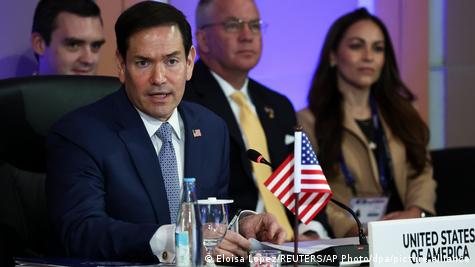
Speaking from Washington, U.S. Secretary of State Marco Rubio strongly condemned Tehran’s actions, labeling the Islamic Republic as the primary “troublemaker” in the Middle East.
“Iran’s demands to control the Strait of Hormuz set a dangerous precedent that threatens global commerce and international law,” Rubio said during a press briefing.
While Rubio emphasized that the United States remains open to diplomatic avenues to de-escalate the crisis, he explicitly drew a line regarding international waters.
“The United States will not sit by and accept Iranian hegemony or control over the Strait of Hormuz,” he warned. As the U.S.-Iran conflict threatens to consume the region, peripheral security situations continue to deteriorate:
• Gaza Strip: Intelligence reports confirm that Israeli forces have begun constructing a massive earthen barrier.
The fortification effectively divides the territory, signaling a long-term shift in Israel’s defensive and offensive posture.
• Iran-Pakistan Border: Despite the unfolding chaos, Iranian diplomats have engaged in high-level talks with Pakistani officials. The discussions are reportedly centered on enhancing bilateral counterterrorism efforts and reinforcing border management to prevent spillover instability.
With regional state actors drawn directly into the line of fire and the economic toll rapidly multiplying, international diplomats are scrambling to establish a ceasefire before the conflict spirals entirely out of control.