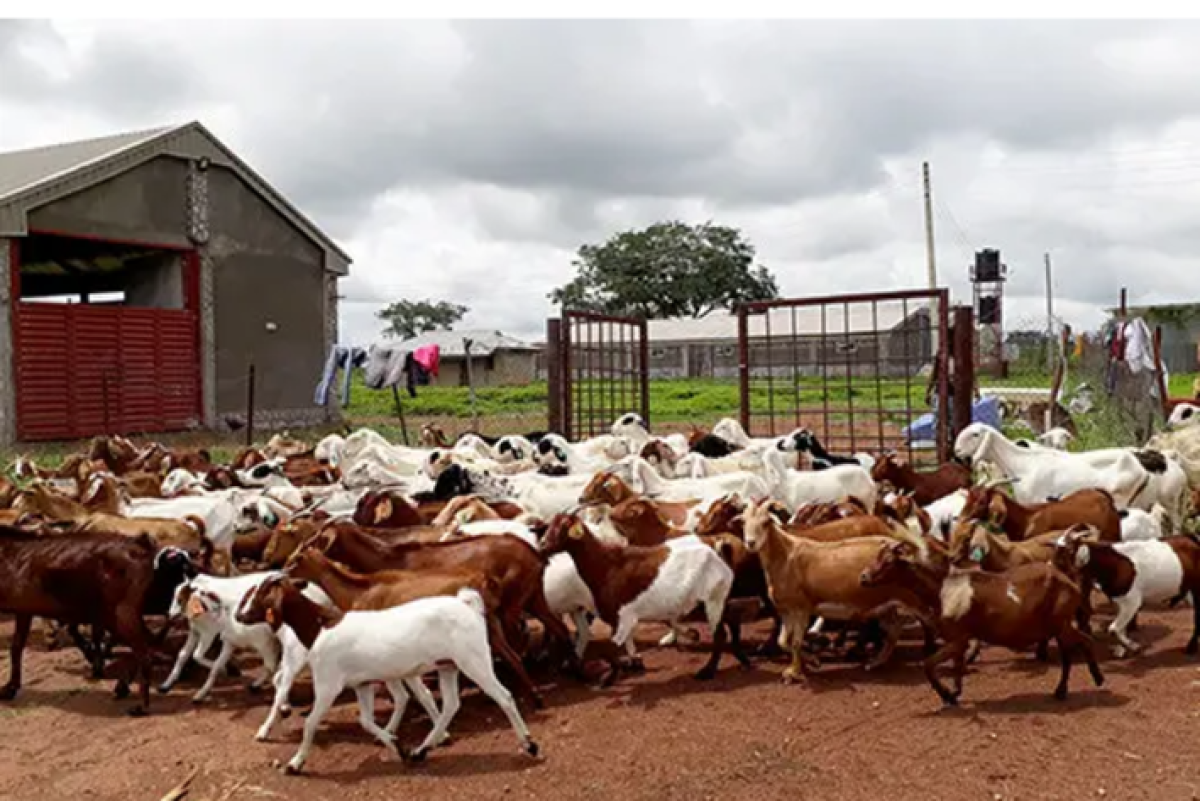
The Federal Government has reaffirmed its determination to eradicate Peste des Petits Ruminants (PPR), a highly contagious viral disease that affects sheep and goats, by the year 2030, declaring that strengthened surveillance, expanded vaccination campaigns and enhanced cross-border collaboration will remain at the heart of its national strategy.
The commitment was reiterated by the Permanent Secretary of the Federal Ministry of Livestock Development, Dr. Chinyere Akujobi, during the opening of a two-day Stakeholders’ Workshop on the Review and Update of Nigeria’s National Strategic Plan for the Control and Eradication of Peste des Petits Ruminants held in Abuja.
The development was disclosed in a statement issued on Friday by the ministry’s Deputy Director of Information and Public Relations, Henrietta Okokon, who said the workshop brought together key stakeholders in the livestock sector to evaluate existing strategies and strengthen efforts towards eliminating the devastating disease.
Speaking at the event, Akujobi described the eradication of PPR as not only an important animal health objective but also a significant national development priority capable of transforming Nigeria’s livestock industry and improving the livelihoods of millions of rural households.
She noted that sheep and goats remain critical sources of income, nutrition and financial security for many families across the country, particularly in rural communities where livestock farming serves as a major economic activity.
According to her, the continued prevalence of PPR has led to substantial economic losses through animal deaths, reduced productivity and restrictions on livestock trade, making its elimination essential for sustainable agricultural development.
Akujobi stressed that achieving the 2030 eradication target would require sustained commitment from all stakeholders, including federal and state governments, veterinary professionals, livestock farmers, development partners and neighbouring countries.
She explained that because livestock frequently move across international borders in West Africa, regional cooperation remains indispensable in preventing the spread of the virus and ensuring effective disease control.
The Permanent Secretary stated that the Federal Government would continue to strengthen disease surveillance systems to enable early detection and prompt response to outbreaks while expanding vaccination programmes to protect vulnerable animal populations across the country.
She also emphasised the importance of regular data collection, scientific research, improved laboratory capacity and effective reporting mechanisms in supporting evidence-based decision-making and monitoring progress toward eradication.
Akujobi noted that the review of the National Strategic Plan offers an opportunity to align Nigeria’s disease control efforts with global and regional frameworks aimed at eliminating PPR by 2030.
She said the updated strategy would incorporate lessons learned from previous interventions while identifying new approaches to overcome existing challenges affecting implementation.
According to her, successful eradication of the disease would contribute significantly to poverty reduction by protecting the assets of smallholder livestock farmers whose incomes largely depend on sheep and goat production.
She added that healthier livestock populations would increase meat and milk production, improve food and nutritional security, strengthen rural economies and create additional employment opportunities across the livestock value chain.
Akujobi further explained that eliminating PPR would enhance Nigeria’s competitiveness in regional and international livestock markets by improving animal health standards and boosting confidence in the country’s livestock products.
Participants at the workshop are expected to review current achievements, identify implementation gaps and recommend practical measures for strengthening Nigeria’s response to the disease over the coming years.
The discussions are also expected to focus on improving coordination among government agencies, enhancing partnerships with international organisations, increasing community awareness and promoting greater participation by livestock owners in vaccination campaigns.
Experts believe that widespread awareness among farmers will be crucial to the success of eradication efforts, as early reporting of suspected cases and adherence to vaccination schedules remain key components of disease control.
The Federal Ministry of Livestock Development reiterated that Nigeria remains fully committed to supporting global efforts coordinated by international animal health organisations to eliminate PPR, recognising that effective disease control will require sustained investment, strong political will and close collaboration among all stakeholders.
With renewed determination and an updated national strategy, the government expressed confidence that Nigeria is on course to achieve its 2030 target of eradicating Peste des Petits Ruminants, paving the way for a more productive livestock sector, improved rural prosperity and stronger economic growth.