On Wednesday, June 24, 2026, the Nigerian Senate approved the State Police Bill. This is a landmark move after 66 years of federal-only policing in Nigeria. The Senate vote actually passed the Constitution of the Federal Republic of Nigeria (Alteration) (State Police) Bill, 2026. The House of Representatives had earlier passed it 289-4 on June 11. Senate reportedly had a 30-minute technical scare when e-voting crashed, so they did manual show-of-hands. More than 2/3 voted yes.
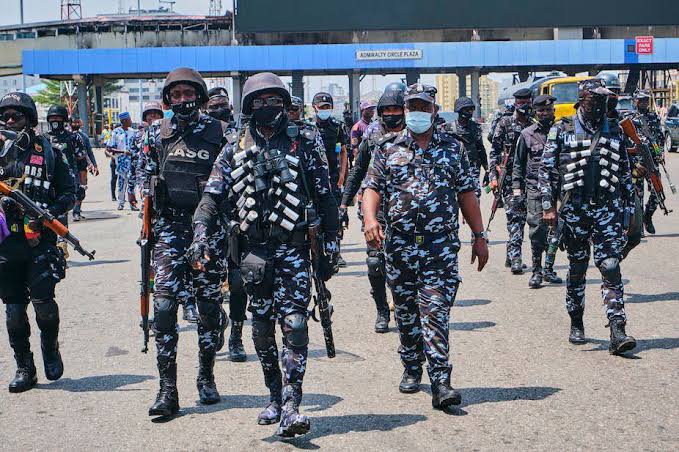
These changes have introduced dual model, meaning that Nigeria now has Federal Police Service and State Police Services. NPF no longer has a monopoly. There is Constitutional shift*: Sections 214, 215 and 216 of the 1999 Constitution will be altered to allow state policing. Policing moves from Exclusive to Concurrent Legislative List. State Governors can now appoint State Commissioners of Police, subject to confirmation by State Houses of Assembly. States can issue policy directives on public safety.
However, the Federal Government still retains some powers: The NPF handles terrorism, border protection, federal offences. The State Police Service Commissions: will handle recruitment, training, oversight meant to stop political interference. There are Constitutional firewalls: The Bill bans governors from using state police for “partisan, ethnic, religious, sectional, or personal purposes”. National standards would be maintained. Independent commissions plus federal minimum standards and federal intervention in exceptional cases.
As it were, the bill is NOT law yet. It needs: 24 out of 36 State Houses of Assembly to approve it with President Tinubu’s assent. Governor Sanwo-Olu of Lagos State called it “epochal” and urged state assemblies to pass it fast. The Labour Party also backed it. Many senators say it’s needed because NPF is overstretched. Security expert Orji says it’s the result of Ekweremadu’s 12-year advocacy.
But CUPP called it “hasty” and said Tinubu’s government failed to properly fund NPF first. Others worry about LGA weakness and abuse by governors. Why is the Bill coming now? Government says insecurity – banditry, kidnapping, farmer-herder clashes – exposed limits of centralized policing. Truth is Senate has cleared the biggest hurdle. But until 24 state assemblies vote yes, it’s still just a bill. If it scales, Lagos and other states could have their own police force by 2027/2028. The Senate has passed it. Nigeria is one step closer to having state police after 66 years of only federal policing.
There is the “fear factor, which is why safeguards are built in. The biggest fight for 30 years has been: “Governors will use it as private armies to rig elections, crush opposition”. So the bill adds “firewalls”: State Police Service Commissions would regulate recruitment, training, oversight – to prevent political interference State police is limited only for state laws, public safety, local crimes , among others.
The question burning in the mind of Nigerians is can the states run state police well? Will the governors abuse it? Truth is that some states will run it well, while some governors will try to abuse it. That’s why they bill built “firewalls”. It’s the exact fight that held up state police for 30 years. State police could work well in some aspects like funding and recruitment: States like Lagos, Rivers, Kano have bigger budgets than NPF per capita. They can recruit locally, pay better, equip faster. Lagos already runs LNSC, Taskforce, and funds NPF heavily.
Local intelligence: Banditry in Zamfara, kidnapping in Kogi, cultism in Rivers, herder-farmer clashes in Benue. Local officers speak the language, know the terrain, get tips faster. than NPF from Abuja posting takes 6 months to learn.
Response time: NPF DPO in Port Harcourt might have 2 patrol vans for 5 LGAs. State police can station 1 team per LGA. Response drops from 45 to 10 minutes.
Where it could fail: Weak LGAs: Security expert Ubani said “weakness of local government administration is the greatest challenge”. If a LGA can’t pay salaries, state police will be broke too.
Training/Standards: Without federal minimum standards, you get 36 different police forces. Some professional, some militia.
Equipment: Some states will still need Federal Government for forensic labs, cybercrime, anti-terror gear. State police can’t fight Boko Haram alone.
The question of abuse by governors is why National Assembly spent 3 decades blocking this bill. The fear is that some governors will turn it into “Private army” to rig elections. State Police Service Commission must approve recruitment and postings. The Federal Government can intervene in “exceptional circumstances”
Muzzle journalists/opposition The Bill bans the use for “partisan, ethnic, religious, sectional or personal purposes”. Victims can sue at Federal High Court. Extortion/checkpoints everywhere National policing standards and NPF oversight will be required. State CP needs House of Assembly confirmation
Use against political opponents Governors can give “policy directives” but not “operational orders” on specific cases. That line is blurry though. Senate Leader Opeyemi Bamidele called these “constitutional firewalls to ensure governors can direct general security policy, but never political persecution”.
Real-world examples from Nigeria already. We have tested it in parts of the country like Amotekun in the SW worked well on kidnapping/farmers but accused of targeting Fulani herders. Still no arrest powers – had to hand over to NPF. Ebube Agu in the SE is accused of extrajudicial killings and used against IPOB suspects and political opponents. Civilian JTF in Borno: is effective against Boko Haram but no legal framework, no accountability.
From these experiences, the track record is mixed. What determines if your state succeeds or fails include State Assembly strength*: If the House of Assembly is independent, they can reject a bad CP appointment. If it’s a “rubber stamp”, governor runs it.
Commission setup: Who sits on the State Police Service Commission? Retired judges, CSOs, or governor’s boys? Funding source: If it’s 100 percent state budget, poor states would mean poor police. If FG gives grants, situation will be better. Civil society oversight: Can media, NBA, NGOs sue when abused?
It needs to be stressed that some governors will surely abuse it.. Nigeria is Nigeria. Power corrupts. But can it still improve security? Certainly yes because the.NPF with only 370,000 officers for 225 million people can’t do it alone. The bill passed because NASS decided: “Risk of abuse < Risk of doing nothing while people die”.
For Lagos specifically: Governor Sanwo-Olu is pushing hard for it. With Lagos’ budget and LNSC experience, it would likely be one of the best-run state police. The test is whether the Lagos Assembly and courts can check the governor?
To be honest, which is better? A flawed State Police that responds in 10 minutes, to crime is better than a “perfect on paper” NPF that comes in 2 hours after a crime had been committed. That is the trade-off Nigeria just voted for
Dr. Onyekakeyah, a former member of The Guardian Editorial Board, is a public affairs commentator and a Daily Query columnist.