The Palestinian Islamist movement Hamas has announced the dissolution of the body that has governed the Gaza Strip for nearly two decades, marking a significant political development that could reshape civilian administration in the war-ravaged territory.
The decision clears the way for the establishment of a technocratic committee expected to oversee civilian governance in the Gaza Strip, a move widely seen as part of broader efforts to stabilize the territory following months of conflict and political negotiations.
The announcement was made on Monday, with Hamas confirming that the head of its emergency government committee, Mohammed al-Farra, had officially stepped down from his position.
Speaking to AFP, the head of Hamas’ government media office, Ismail al-Thawabta, confirmed the development.
“The head of the government’s emergency committee, Mohammed al-Farra, has officially submitted his resignation,” al-Thawabta said.
The move represents one of the most significant political changes within Gaza since Hamas assumed control of the coastal enclave in 2007 after a violent power struggle with its rival, Fatah.
Hamas had first emerged as the dominant political force after winning the 2006 Palestinian legislative elections.
However, tensions with Fatah escalated into armed clashes the following year, culminating in Hamas taking full control of Gaza while the Palestinian Authority, led by Fatah, retained authority over parts of the occupied West Bank.
Since then, the Gaza Strip has remained under Hamas administration, while repeated attempts at reconciliation between the rival Palestinian factions have produced only limited results.
The latest announcement follows months of diplomatic discussions that intensified after a ceasefire between Hamas and Israel came into effect last October.
Since the ceasefire began, Hamas has repeatedly indicated its willingness to relinquish responsibility for the day-to-day administration of Gaza, arguing that governance could be transferred to an independent, technocratic body capable of managing civilian affairs and coordinating reconstruction efforts.
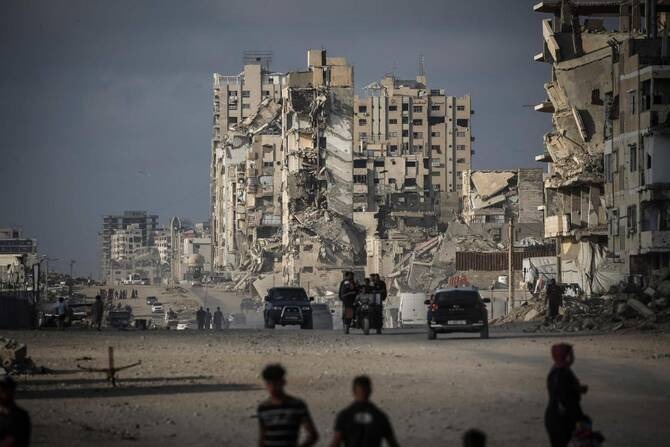
Analysts say the dissolution of the governing body could help facilitate international support for rebuilding Gaza, where infrastructure, public services and housing have suffered extensive damage after months of conflict.
A technocratic administration, composed of professionals rather than political figures, is expected to focus primarily on essential services, humanitarian coordination, healthcare, education and reconstruction without direct involvement in partisan politics.
Despite the political shift, one of the most contentious issues remains unresolved, the future of Hamas’ military wing and its weapons.
The question of disarmament has become a central point in discussions involving regional mediators and international stakeholders seeking a long-term political settlement.
Israel has consistently maintained that any lasting arrangement must include the dismantling of Hamas’ military capabilities, while Hamas has repeatedly rejected calls to surrender its weapons, describing them as necessary for Palestinian resistance.
As a result, although the transfer of civilian administrative responsibilities may represent progress toward a new governance structure, broader negotiations over security and the political future of Gaza remain highly complex.
The humanitarian situation in Gaza also continues to present enormous challenges.
Large sections of the territory require extensive reconstruction, while displaced families continue to depend on humanitarian assistance for food, shelter, healthcare and other essential services.
International organizations have repeatedly stressed that effective governance and stable civilian institutions will be critical to coordinating relief operations and managing long-term recovery efforts.
The formation of a technocratic committee is therefore being viewed by many observers as an important step toward restoring administrative functions while reducing political tensions surrounding governance.
The committee is expected to consist of qualified professionals tasked with overseeing public administration, although details regarding its composition, mandate and relationship with existing Palestinian institutions have yet to be fully disclosed.
Political observers note that the success of the transition will depend largely on cooperation among Palestinian factions, support from regional mediators and acceptance by the international community.
The development also comes amid renewed calls for Palestinian political unity, with many arguing that reconciliation between Hamas and Fatah remains essential for achieving lasting peace and establishing a unified Palestinian leadership.
While the dissolution of Hamas’ governing body marks a notable shift after nearly 20 years of direct administration in Gaza, significant challenges remain before a comprehensive political settlement can be achieved.
Issues surrounding reconstruction, security arrangements, governance reforms, humanitarian assistance and the broader Israeli-Palestinian conflict are expected to continue dominating diplomatic efforts in the months ahead.
For now, Hamas’ decision to step away from direct civilian governance signals a major political adjustment, one that could shape the future administration of Gaza even as negotiations over the territory’s long-term future continue.