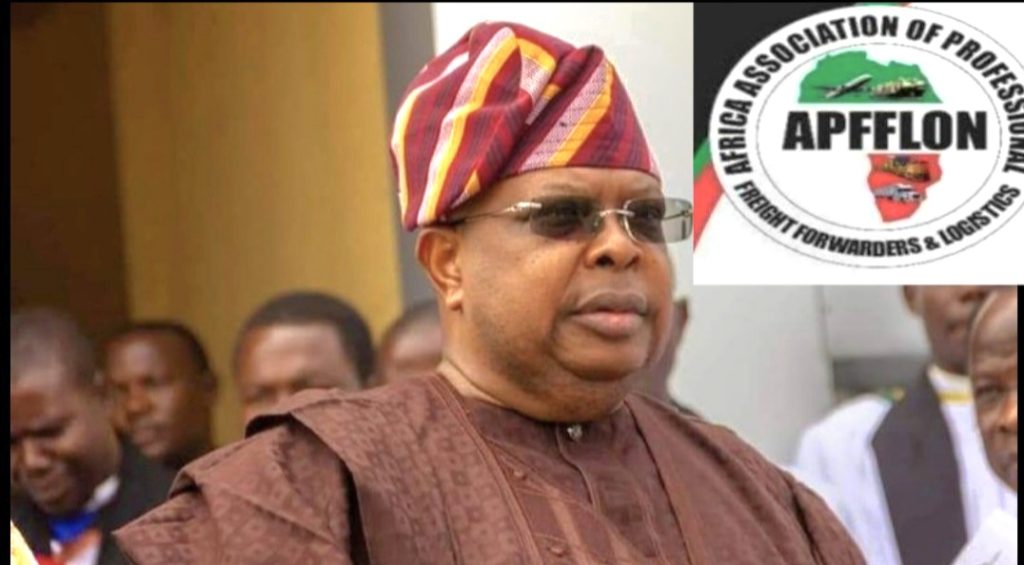
The Africa Association of Professional Freight Forwarders and Logistics of Nigeria (APFFLON) has challenged the newly appointed Minister of Power, Joseph Tegbe, to urgently translate his recent assurances on electricity sector reforms into visible, measurable improvements in power supply.
In a strongly worded statement signed by its National President, Otunba Frank Ogunojemite, the association warned that Nigerians have grown weary of policy announcements and public speeches, adding that the real test of leadership will be the consistent availability of electricity to homes, businesses, and critical infrastructure.
According to APFFLON, Nigeria’s persistent electricity crisis remains one of the largest obstacles to economic growth, industrialization, and foreign investment.
The association highlighted that the maritime and logistics sector is currently among the worst hit, with unstable power heavily disrupting cargo handling and port operations, warehousing and cold-chain logistics and manufacturing and transportation, leading to a spike in the prices of daily goods for consumers.
”No nation can build a globally competitive economy while operating in darkness,” Ogunojemite stated. “Stable electricity is not a luxury, it is the foundation upon which industries grow, investors gain confidence, jobs are created, and businesses flourish.”
The association expressed frustration that despite billions of naira channeled into the power sector over successive administrations, businesses are still forced to depend on expensive diesel and petrol generators. This reliance on alternative power has pushed Nigeria’s production costs to among the highest in Africa, driving away investors and fueling unemployment.
While APFFLON acknowledged Minister Tegbe’s background as a corporate strategist and technocrat, it emphasized that the maritime community and the broader public expect immediate structural changes. The group called for an end to the culture of “rhetoric” and urged the Ministry to deliver practical frameworks that will finally stabilize the national grid and power Nigeria’s struggling economy.