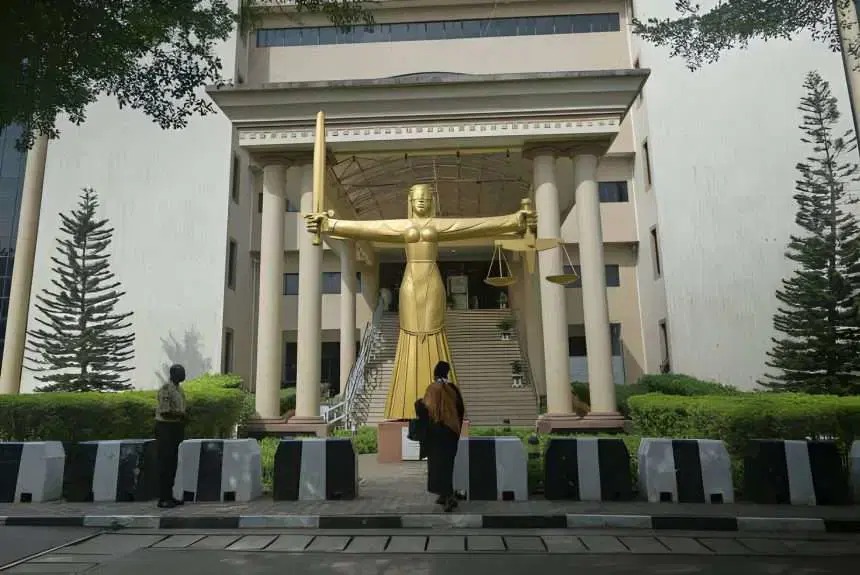
The Federal High Court has introduced the Pre-Election Practice Directions, 2026, a new set of procedural guidelines aimed at ensuring the fair, impartial and speedy determination of pre-election disputes across Nigeria ahead of future electoral contests.
The new practice directions were issued on Tuesday by the Chief Judge of the Federal High Court, Justice John Tsoho, as part of efforts to strengthen the administration of electoral justice and reduce delays in the hearing of pre-election matters.
The development was announced in a statement released in Abuja by the Director of Information of the Federal High Court, Dr Catherine-Oby Christopher.
According to the statement, the Chief Judge exercised the powers conferred on him under Sections 254, 285(9), 285(10) and 285(14) of the 1999 Constitution (as amended), Sections 29(5) and 88(2) of the Electoral Act, 2026, as well as other enabling legal provisions.
The new procedural framework is designed to guide the handling of pre-election cases filed before the Federal High Court and ensure that such disputes are resolved within the constitutional timelines.
Justice Tsoho explained that the practice directions seek to promote fairness, efficiency and consistency in the adjudication of election-related matters, while ensuring that all parties receive equal treatment before the court.
According to him, one of the key objectives of the new guidelines is to ensure that parties focus strictly on issues that are genuinely in dispute, thereby eliminating unnecessary arguments and procedural distractions that often prolong litigation.
The Chief Judge noted that pre-election cases are time-sensitive by nature and require prompt resolution to avoid disrupting the electoral process.
He said the practice directions would significantly reduce the amount of time spent on interlocutory applications, which have frequently contributed to delays in the determination of election-related disputes.
By streamlining court procedures, the guidelines are expected to enable judges to concentrate on the substantive issues before them and deliver judgments within the constitutionally prescribed period.
Justice Tsoho also stated that the new framework encourages parties to explore the possibility of amicable settlement before proceeding to full trial where appropriate.
According to him, promoting alternative dispute resolution mechanisms in suitable cases could help reduce the burden on the courts while fostering more efficient resolution of disputes.
He further explained that the practice directions are intended to minimise unnecessary adjournments, which have often slowed the progress of cases and affected the timely administration of justice.
The Chief Judge stressed that judicial officers, lawyers and litigants are expected to comply fully with the new procedures to ensure that pre-election cases are handled expeditiously and in accordance with the law.
He said the practice directions were carefully developed to align with the provisions of the Constitution, the Electoral Act, 2026, and other applicable laws governing electoral disputes in Nigeria.
Legal observers have long argued that the effective management of pre-election litigation is critical to safeguarding the integrity of Nigeria’s electoral process.
Pre-election cases typically involve disputes arising from party primaries, nomination of candidates, qualification or disqualification of aspirants, and other matters that must be resolved before elections are conducted.
Given the constitutional deadlines attached to such cases, delays in their determination have often generated uncertainty for political parties, candidates and electoral authorities.
The introduction of the 2026 Pre-Election Practice Directions is therefore expected to provide greater clarity on court procedures while enhancing the efficiency of judicial proceedings.
The Federal High Court has consistently played a central role in resolving pre-election disputes, making procedural reforms an important aspect of efforts to strengthen confidence in the country’s electoral justice system.
Analysts believe the new guidelines could contribute to reducing procedural bottlenecks, improving case management and ensuring that election-related disputes are determined on their merits rather than being delayed by technical objections.
With political activities expected to intensify ahead of future elections, the implementation of the new practice directions is seen as a significant step toward promoting timely justice, protecting the rights of political actors and supporting credible democratic processes in Nigeria.
The Federal High Court expressed confidence that the new framework will enhance the efficient administration of pre-election cases, reinforce public trust in the judiciary and ensure that electoral disputes are resolved fairly, transparently and within the timelines prescribed by law.