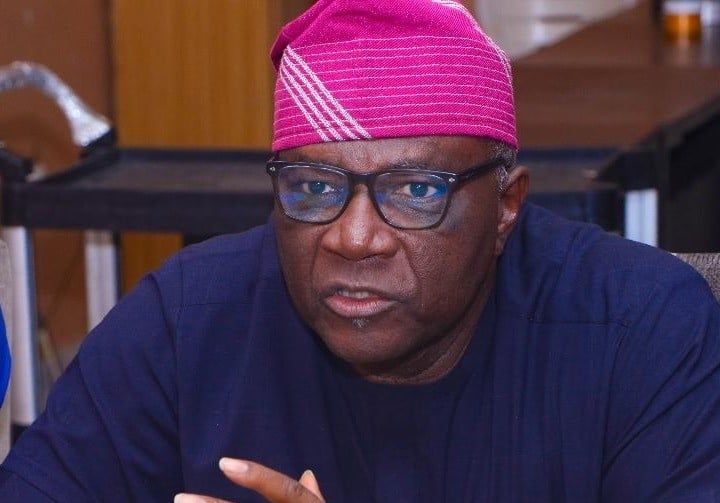
The Special Adviser to the President on Information and Strategy, Bayo Onanuga, has defended the economic policies of President Bola Ahmed Tinubu, insisting that the administration’s reforms are beginning to yield tangible benefits despite widespread concerns about economic hardship and the rising cost of living across the country.
Speaking during an interview on Arise Television on Tuesday, Onanuga maintained that while challenges remain, he does not personally observe the level of hunger frequently portrayed in public discussions and media reports.
The presidential aide argued that the Federal Government’s interventions, infrastructure investments and social support programmes are gradually improving conditions for many Nigerians and laying the foundation for long-term economic growth.
His comments come amid ongoing national debates over the impact of key economic reforms introduced by the Tinubu administration, including the removal of fuel subsidies, exchange-rate reforms and efforts to restructure public finances.
While critics have linked the reforms to soaring inflation, rising transportation costs and declining purchasing power, government officials have consistently maintained that the measures are necessary to stabilize the economy and attract investment.
Defending the administration’s record, Onanuga pointed to ongoing road infrastructure projects as visible evidence that government policies are producing results.
He recounted a recent journey from Ibadan to Lagos, explaining how improved road networks significantly reduced travel difficulties and demonstrated the benefits of public investment in infrastructure.
According to him, he had initially planned to travel through the usual route into Lagos but decided to take an alternative route after receiving traffic updates from Google Maps.
“One day, I was traveling from Ibadan to Lagos, and Google Maps told me that there’s a go-slow in the approach to Lagos, and I decided to take Ijebu-Ode via Shagamu,” he said.
The presidential adviser noted that the road conditions along the route reflected substantial government efforts in infrastructure development, making travel easier and safer for commuters.
He argued that such improvements are often overlooked in public conversations that focus primarily on economic difficulties.
According to him, investments in transportation infrastructure not only enhance mobility but also stimulate economic activities by facilitating the movement of goods and services across different parts of the country.
Onanuga further emphasized that beyond infrastructure, several government initiatives are already providing support to citizens.
He maintained that the administration has introduced programmes aimed at cushioning the effects of economic reforms, particularly for vulnerable groups.
The adviser said the government remains committed to implementing policies that encourage job creation, improve productivity and strengthen social welfare systems.
According to him, the benefits of some reforms may not be immediately visible, but their long-term impact will become clearer as implementation continues.
He stressed that major economic transformations often require difficult decisions and patience before their positive outcomes can be fully realized.
Onanuga’s remarks are likely to generate further debate among economists, labour unions and civil society groups who have repeatedly raised concerns about worsening living conditions.
Over the past year, many Nigerians have grappled with rising food prices, increased transportation fares and higher costs of essential goods and services.
Data released by government agencies and independent economic analysts have shown persistent inflationary pressures, particularly in food and energy sectors.
Labour organizations have also continued to push for measures to alleviate the burden on workers and low-income households.
Several protests and public demonstrations have been organized in different parts of the country over economic challenges, with participants urging the government to introduce more effective relief measures.
However, government officials insist that the current difficulties are temporary and necessary consequences of reforms designed to correct long-standing structural weaknesses in the economy.
Since assuming office in May 2023, President Tinubu’s administration has repeatedly defended its economic agenda, arguing that previous subsidy regimes and foreign exchange distortions placed unsustainable pressure on public finances.
Officials say the reforms are intended to promote fiscal discipline, improve government revenue and attract local and foreign investment.
Supporters of the administration contend that infrastructure projects, increased state revenues and renewed investor confidence are indicators that the reforms are beginning to achieve their objectives.
They also point to ongoing investments in roads, railways, agriculture and energy as evidence of efforts to create a more competitive economy.
Critics, however, maintain that the immediate social costs of the reforms have been severe and that many households continue to struggle with rising expenses and declining real incomes.
Political analysts say comments such as Onanuga’s highlight the need for greater engagement between government officials and citizens regarding the impact of economic policies.
Some observers argue that while infrastructure improvements are important, many Nigerians judge economic performance primarily through their ability to afford food, transportation, healthcare and education.
Others believe the government must continue to communicate the objectives and expected outcomes of its reforms more effectively to maintain public confidence.
As discussions over the state of the economy continue, the Tinubu administration remains under pressure to balance long-term reform goals with immediate measures aimed at easing the hardships faced by millions of Nigerians.
For now, the debate over whether the benefits of the government’s policies are reaching ordinary citizens is likely to remain a central issue in Nigeria’s political and economic discourse, with both supporters and critics offering sharply different assessments of the administration’s performance.