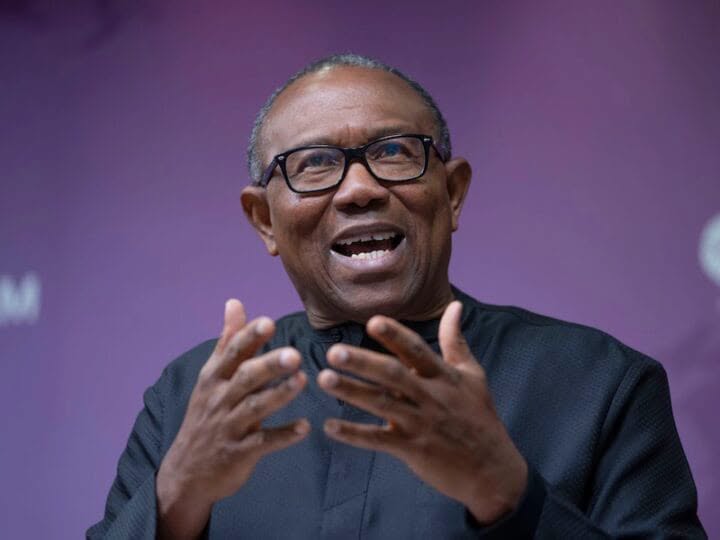
The presidential candidate of the Nigeria Democratic Congress, Peter Obi, has strongly criticized the remand of activist and publisher Omoyele Sowore at the Kuje Correctional Centre, describing the development as a troubling setback for democratic governance and a warning sign of shrinking civic space in Nigeria.
Obi expressed concern that the increasing use of state institutions against critics and dissenting voices could weaken democratic values and undermine the constitutional rights of citizens if left unchecked.
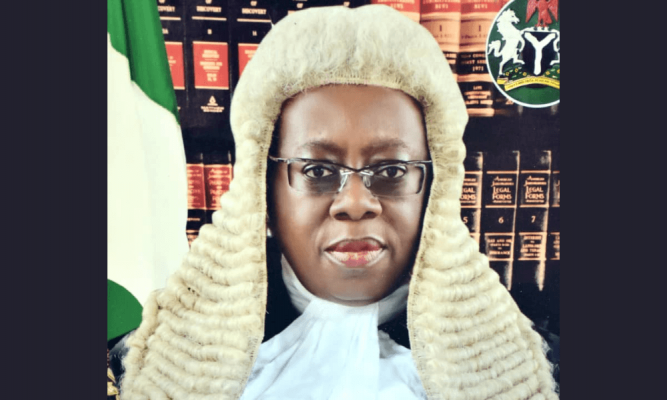
His reaction followed a ruling delivered on Monday by a Federal High Court in Abuja, where Justice Mohammed Umar ordered Sowore’s remand pending the determination of an application seeking a stay of execution of an earlier court order that revoked his bail.
The court also dismissed an application requesting the judge’s recusal from the matter over allegations of bias, clearing the way for the proceedings to continue under his supervision.
In a statement released on Tuesday, Obi said the circumstances surrounding Sowore’s remand raise serious questions about the protection of civil liberties and freedom of expression in the country.
According to him, democratic societies thrive when citizens are able to express opinions, criticize government actions and participate freely in public discourse without fear of intimidation or undue punishment.
The former Anambra State governor warned that any action perceived as targeting dissenting voices could erode public confidence in democratic institutions and weaken the principles upon which democracy is built.
Describing the development as a “dangerous regression for our democracy,” Obi said Nigeria must remain committed to protecting the rights guaranteed under the Constitution, including freedom of speech, association and peaceful expression.
He argued that democracy is strengthened not by suppressing criticism but by encouraging open dialogue and respecting differing viewpoints.
Obi emphasized that adherence to the rule of law remains essential to sustaining democratic governance and ensuring justice for all citizens.
While acknowledging the role of the judiciary in interpreting and applying the law, he stressed the importance of ensuring that legal processes do not create the impression that institutions are being used to silence political opponents, activists or government critics.
According to him, public trust in state institutions depends largely on the perception that such institutions operate independently, fairly and without political interference.
He noted that Nigeria’s democratic journey has been shaped by the sacrifices of citizens who fought for greater freedoms and accountability, making it imperative to safeguard those gains.
The politician further urged authorities to handle matters involving civil rights with caution and sensitivity in order to preserve national unity and democratic stability.
Sowore, a well-known activist, publisher and former presidential candidate, has remained one of Nigeria’s most prominent voices on issues relating to governance, accountability and human rights.
Over the years, he has been involved in several legal battles arising from his activism and public criticism of government policies.
The latest court proceedings stem from issues surrounding the revocation of his bail, a development that has generated significant public interest and debate among legal practitioners, civil society organizations and political observers.
Following Monday’s ruling, attention has shifted to the pending application seeking a stay of execution of the earlier order, which could determine the next phase of the case.
The court’s decision to remand Sowore pending the hearing of that application has attracted mixed reactions from different quarters.
While some have argued that judicial decisions should be respected and allowed to run their course, others have expressed concerns about the broader implications for civil liberties and political freedoms.
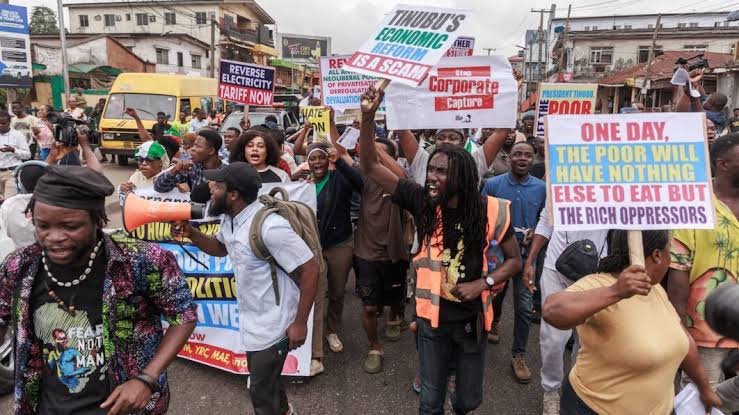
The development has also drawn reactions from human rights groups and pro-democracy advocates who have closely monitored Sowore’s legal battles over the years.
Many activists contend that democratic societies must create room for robust debate and criticism, even when such views are uncomfortable for those in positions of authority.
According to several advocacy groups, the protection of dissent remains a cornerstone of democratic governance and should be preserved regardless of political considerations.
Observers note that concerns over freedom of expression and civic space have increasingly featured in national conversations about governance and democratic consolidation.
The debate surrounding Sowore’s remand has therefore extended beyond the courtroom, becoming part of a broader discussion on the balance between law enforcement, judicial authority and civil liberties.
In his statement, Obi stressed that dissent should not be viewed as a threat to democracy but as an essential component of it.
He argued that constructive criticism often contributes to better governance by highlighting shortcomings and encouraging accountability among public officials.
According to him, nations that embrace open dialogue and tolerate opposing viewpoints are generally better positioned to address challenges and strengthen democratic institutions.
He warned that attempts to suppress dissenting opinions could create an atmosphere of fear and discourage active citizen participation in governance.
“Democracy flourishes when citizens can freely express their opinions and engage in public discourse without intimidation,” Obi stated.
Political analysts say the controversy surrounding Sowore’s remand reflects broader concerns about civic freedoms and the state of democratic institutions in Nigeria.
As the country continues to navigate political, economic and social challenges, issues relating to human rights, judicial independence and freedom of expression remain subjects of national importance.
The outcome of the ongoing legal proceedings is expected to be closely watched by political actors, civil society organizations and members of the international community.
For many observers, the case represents not only a legal dispute but also a test of the country’s commitment to democratic principles and constitutional freedoms.
As Sowore remains in custody pending further judicial proceedings, debates over the protection of civic space, the role of state institutions and the future of democratic freedoms in Nigeria are likely to continue.
With prominent figures such as Obi adding their voices to the discussion, the matter has become one of the most closely followed political and legal developments in the country, underscoring the enduring importance of freedom, justice and accountability in a democratic society.