By Darlington Onedibe
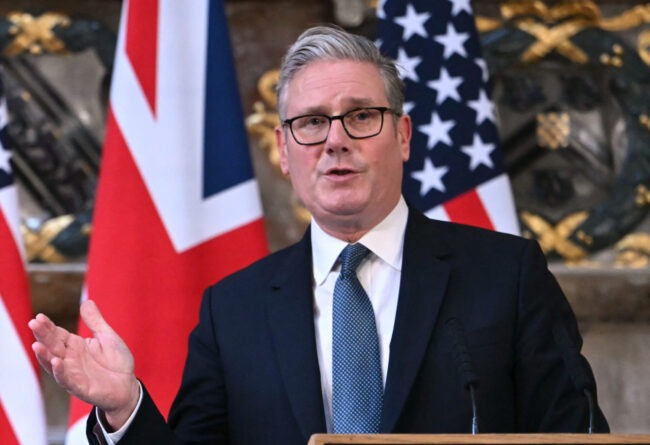
Keir Starmer has resigned as the Prime Minister of Britian.In an emotional early morning announcement today, Starmer, who had in the sparse audience close associates most notably his wife Victoria, stated that a succession process which will include nominations for his replacement will commence in July to ensure a full and orderly transition process.
Starmer’s resignation has long been predicted but gained greater traction after the recent greater Manchester election and leaves Great Britain with the unappealing record of seven prime ministers in ten years.
Starmer’s resignation triggers an immediate leadership contest within his party to determine who will take over the keys to Number 10.
Keir Starmer’s political journey, spanning a swift transformation from a distinguished legal career to a historic, yet brief, occupancy of 10 Downing Street has reached its final chapter following his emotional resignation announcement.
His path to the peak of British politics, and his sudden descent, marks one of the most turbulent eras in modern UK history.
Before entering the halls of Westminster, Starmer built a formidable reputation in the justice system. He served as the Director of Public Prosecutions (DPP) from 2008 to 2013, a role for which he received a knighthood.
Entering Parliament as the MP for Holborn and St Pancras in 2015, Starmer quickly climbed the ranks of the Labour Party. Following the party’s devastating electoral defeat in 2019 under Jeremy Corbyn, Starmer assumed the leadership in 2020. He immediately set to work aggressively reshaping the party:
He systematically purged the party’s hard-left factions and focused heavily on rooting out internal antisemitism. His strategic repositioning culminated in July 2024, when he led Labour to a massive landslide victory, securing a 174-seat majority and ending 14 years of Conservative rule.
Despite the historic scale of his election win, Starmer’s mandate was built on a fragile foundation, recording the smallest popular vote share of any majority government in modern history.
Once in office, his administration was quickly besieged by a relentless cost-of-living crisis, public sector disputes, and controversial policy decisions, most notably the cutting of winter fuel payments for pensioners. By late 2025, a series of domestic policy U-turns, combined with foreign policy friction over international conflicts, triggered a steep decline in public approval.
By the turn of 2026, polling data placed Starmer among the most unpopular Prime Ministers in British history, with net favorability ratings drawing stark comparisons to the brief, turbulent tenure of Liz Truss.
The final blow to Starmer’s premiership mounted rapidly through the spring of 2026. Devastating local election losses ignited an internal Labour Party rebellion, with over 100 backbenchers and several frontbench ministers openly calling for his departure.
The political pressure reached a breaking point last week when veteran Labour heavyweight Andy Burnham won a pivotal parliamentary by-election, clearing a direct path for an immediate leadership challenge. Faced with an insurmountable cabinet mutiny, Starmer chose an early morning address to announce his resignation, bringing a dramatic and emotional end to a political journey that promised stability but ultimately succumbed to an unprecedented era of Westminster churn.